Category: Financial Planning

  • What If Buying Property Started With Questions, Not Projects?

    What If Buying Property Started With Questions, Not Projects?

    A different way to think about property buyers, developers and better decisions

    When people start looking for a property, the first question is often:

    “Which property should I buy?”

    Perhaps we should be asking a different question first:

    “What am I actually looking for?”

    It sounds like a small difference.

    It isn’t.

    Today, property buyers have access to more information than ever before. They can compare prices online, watch property tours, read reviews, study locations, look at transaction data and explore dozens of projects without leaving home.

    Yet having more information does not necessarily mean making better decisions.

    In fact, sometimes it creates another problem.

    Information overload.

    A buyer may know the price, size, facilities, tenure and estimated rental yield of a property — but still not know whether the property actually makes sense for them.

    And this is where I believe the property conversation needs to change.

    Start With the Buyer, Not the Project

    Most property journeys begin with a project.

    A buyer sees an advertisement.

    A friend recommends a development.

    A property consultant introduces a new launch.

    A developer presents an attractive package.

    The project becomes the starting point of the conversation.

    From there, the buyer begins asking:

    Is the price good?
    Is the location good?
    Will it appreciate?
    Can I rent it out?
    Is this a good investment?

    But there is an important question that often comes much earlier:

    Good for whom?

    A property can be an excellent project and still be the wrong property for a particular buyer.

    The location may be excellent, but unsuitable for the buyer’s lifestyle.

    The rental potential may look attractive, but the numbers may not work after financing costs and expenses.

    The future development potential may be strong, but the buyer may need liquidity much sooner.

    The property itself may be good.

    The decision may still be wrong.

    The Developer Sees the Property Differently

    This isn’t necessarily because developers are doing something wrong.

    Developers have a responsibility to present their projects — the location, design, facilities, specifications, pricing and value proposition.

    They need buyers to understand what they are offering.

    But buyers are looking at the same property through a completely different lens.

    They are asking:

    “What does this mean for me?”

    That is where the gap can appear.

    Developers communicate the value of the project.

    Buyers are trying to understand the value of the decision.

    Those two things are related — but they are not exactly the same.

    And perhaps there is an opportunity to bring them closer together.

    Better Questions Can Lead to Better Decisions

    I have spent many years working across banking, investment, property and education, and one thing has become increasingly clear to me:

    The quality of a property decision often depends on the quality of the questions being asked.

    Instead of immediately asking:

    “Is this a good property?”

    we could ask:

    • Does it fit the way I intend to live?
    • What opportunity does this location create?
    • Can I comfortably afford it?
    • What happens if my circumstances change?
    • What is the potential exit value?
    • What risks am I overlooking?
    • Am I buying because the property makes sense — or because I am being persuaded that it makes sense?

    These questions do not make the buying process more complicated.

    They make it more meaningful.

    This Is Where Property Discovery System™ Comes In

    This thinking was one of the reasons I developed the Property Discovery System™ (PDS).

    PDS is not designed to tell a buyer which property to buy.

    Instead, it provides a structured way to discover, evaluate and understand a property before making the decision.

    At the heart of the system is the HOME™ Property Assessment Framework:

    H — Habitability
    Does the property and its environment make sense for the way it will actually be used?

    O — Opportunity
    What does the location, market and surrounding environment potentially offer?

    M — Money
    Does the financial commitment make sense based on affordability, cash flow and overall financial considerations?

    E — Exit Value
    If circumstances change, what potential options and value does the property offer when the buyer eventually needs to exit?

    The objective is not to produce a magical number that says “buy” or “don’t buy.”

    Property decisions are rarely that simple.

    The objective is to help a buyer think more clearly before deciding.

    And What About Developers?

    This approach is not only useful for buyers.

    I believe it can also create value for developers.

    Imagine a buyer arriving at a project presentation already understanding:

    • what they are looking for;
    • what matters to them;
    • how the location fits their needs;
    • what financial considerations they need to evaluate;
    • and what questions they should be asking.

    The developer can then spend less time simply trying to convince the buyer that the project is attractive.

    Instead, the conversation can move towards:

    “Let us show you why this project may — or may not — fit what you are looking for.”

    That is a different kind of conversation.

    And I believe it is a healthier one.

    Perhaps Buyers and Developers Are Not Opposite Sides

    The property industry sometimes makes it appear as though buyers and developers sit on opposite sides of the table.

    I don’t see it that way.

    A responsible buyer wants to make a sound decision.

    A good developer wants its project to attract the right buyers and deliver what it promises.

    Both sides benefit when the buyer understands the decision better.

    That is why I see PDS not as another property sales tool, but as a bridge between property discovery and property decision-making.

    The developer still presents the project.

    The buyer still makes the decision.

    But the conversation starts from a more informed place.

    Maybe We Have Been Starting Too Late

    Perhaps the property buying journey should not begin when a buyer walks into a show gallery.

    Perhaps it should begin much earlier.

    Before the brochure.

    Before the show unit.

    Before the sales presentation.

    Before the question:

    “How much is it?”

    It should begin with:

    “What am I trying to achieve?”

    Then:

    “What should I be looking for?”

    And only after that:

    “Which property fits?”

    That is the thinking behind Property Discovery System™.

    Because I don’t believe people need more property projects to choose from.

    They need a better way to discover which properties deserve their attention in the first place.

    Discover Better. Decide Smarter.

    That, to me, is where a better property journey begins.

    From The Desk Of

    Miichael Yeoh

  • Is the Property Market Slowing Down… Or Are Buyers Becoming More Picky?

    Is the Property Market Slowing Down… Or Are Buyers Becoming More Picky?

    Lately, many people have been asking:

    “Is the property market slowing down?”

    Some projects are taking longer to sell.
    Some launches are seeing slower take-up.
    Buyers seem to be hesitating more before committing.

    At first glance, it may appear that the market is becoming weak.

    But when we look deeper into the numbers and buyer behaviour, the story may actually be different.

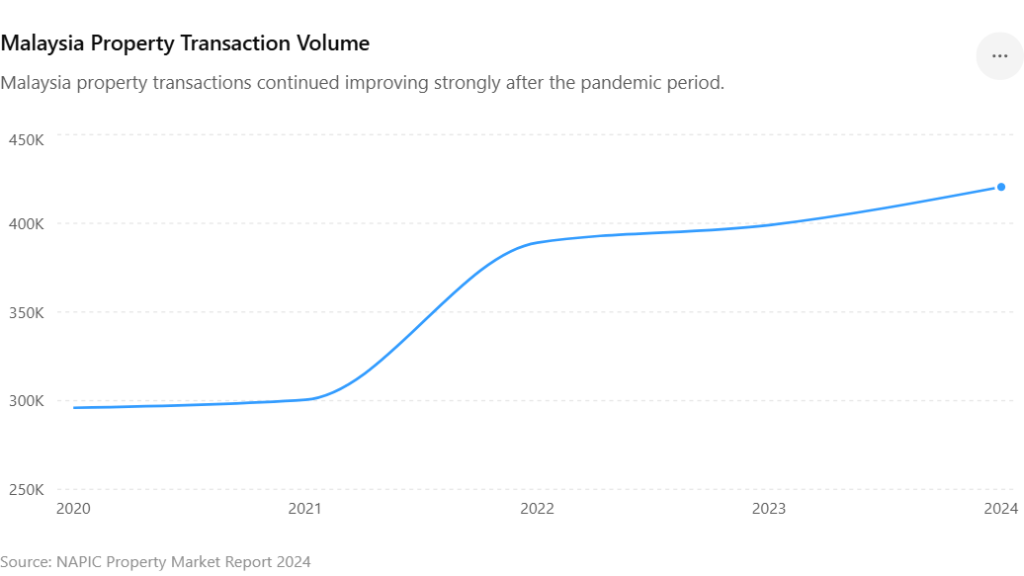
    According to the National Property Information Centre (NAPIC), Malaysia recorded more than 420,000 property transactions in 2024 — one of the strongest performances in the past decade.

    This tells us something important:
    The market still has buyers.

    However, today’s buyers are no longer buying property the same way they did years ago.

    Buyers today are becoming more informed, more cautious, and more selective before making decisions.

    In the past, some buyers purchased based on emotions, marketing hype, showroom designs, rebates, or fear of missing out (FOMO).

    Today, buyers are asking more questions:

    • Is the pricing reasonable?
    • Is there real demand in the area?
    • Can the property generate rental income?
    • Is the developer reliable?
    • Is there oversupply nearby?
    • Will the property still hold value in the future?

    In short — buyers today are becoming more picky.

    And honestly, that is not necessarily a bad thing.

    A property purchase is one of the biggest financial commitments for most people. Buyers today are thinking carefully about:

    • Monthly instalments
    • Interest rates
    • Maintenance fees
    • Cash flow commitments
    • Rental demand
    • Future resale value
    • Lifestyle suitability
    • Long-term financial stability

    This explains why some projects continue to perform well while others struggle with slower take-up.

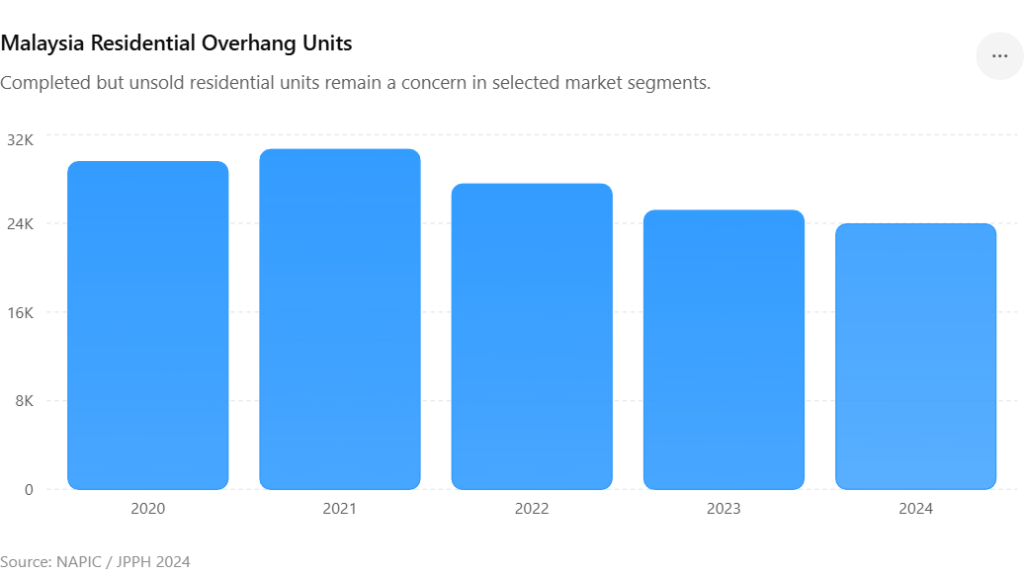
    In fact, NAPIC data also shows that Malaysia continues to face residential overhang issues in certain market segments. This means completed units remain unsold due to factors such as pricing mismatch, oversupply, poor accessibility, weak product positioning, or changing buyer preferences.

    This does not mean there are no buyers in the market.
    It simply means buyers are becoming more selective about where they place their money.

    Before buying any property project, buyers should spend time understanding:

    • The actual market demand
    • Existing and future supply in the area
    • Nearby competing developments
    • Developer track record and credibility
    • Connectivity and infrastructure plans
    • Market pricing compared to surrounding projects
    • Rental and resale potential
    • Their own financial holding power
    • Whether the property truly fits their long-term goals

    Many people still buy emotionally.
    But smart buyers buy strategically.

    A beautiful showroom alone should never be the reason to purchase a property.

    One thing I always encourage buyers to do before committing is to attend property seminars, educational talks, and market-sharing sessions.

    Why?

    Because knowledge reduces expensive mistakes.

    A good seminar can help buyers:

    • Understand current market trends
    • Learn from real case studies
    • Compare projects more objectively
    • Understand buyer psychology and market cycles
    • Avoid common investment mistakes
    • Gain confidence before making a large commitment

    In today’s market, education is becoming one of the most important tools for property buyers.

    The market may not necessarily be weak.
    It may simply be that buyers today are smarter, more informed, and more selective than before.

    And personally, I believe that is a healthy direction for the property market.

    From the Desk of,

    Miichael Yeoh

    Property Strategist

    Disclaimer: This reflects the author’s personal views based on market experience and current observations. It is not financial advice. Smart investors do their own research before making any move.

  • New Car Loan Rules in June 2026: A Win for Malaysian Consumers

    New Car Loan Rules in June 2026: A Win for Malaysian Consumers

    “The salesman smiled. You smiled. The bank smiled. The only thing not smiling was your wallet.”

    Many Malaysians can tell you the interest rate of their car loan.

    “Mine is only 2.8%.”

    “Mine is 3%.”

    Sounds cheap, right?

    But what if I told you that for decades, many Malaysians have been paying much more interest than they realised — even when the loan agreement proudly displayed a seemingly low interest rate? The good news is that starting 1 June 2026, the rules are changing, and for once, consumers may finally get a fairer deal.

    As someone who spends a lot of time talking about wealth building, property investment, and financial freedom, I believe this is one of the most important financial changes Malaysians should understand this year.

    Because whether you are buying a Myvi, a Hilux, a Tesla, or a luxury continental car, your loan could impact your ability to buy a house, invest, or retire comfortably.


    The Great Malaysian Love Affair With Cars

    Let’s be honest.

    Malaysians love cars.

    Some people change cars more often than they change mobile phones.

    The moment a bonus comes in, somebody is already browsing car websites and calculating monthly instalments.

    “Only RM1,500 a month.”

    “Only RM2,000 a month.”

    The word “only” has probably destroyed more wealth than inflation.

    Most buyers focus on three things:

    ✅ Monthly instalment

    ✅ Down payment

    ✅ Car colour

    Very few ask:

    ❌ How much interest am I really paying?

    ❌ What happens if I settle the loan early?

    ❌ Is the advertised interest rate actually the real interest rate?

    Unfortunately, under the old system, the answer was often not very transparent.


    The Problem With the Old Car Loan System

    For decades, Malaysian hire purchase loans used something called the flat rate system together with the infamous Rule of 78.

    Sounds like something from a mathematics textbook nobody wanted to read.

    Here’s what it actually meant.

    Imagine you borrow RM60,000 to buy a car.

    Under the old system, interest was calculated based on the original RM60,000 throughout the entire loan period.

    Even after years of making payments and reducing your debt, the interest calculation still pretended you owed the full amount.

    It’s like renting a hotel room for ten nights and still being charged for all ten nights even after checking out on Day 3.

    Makes no sense, right?

    Yet that was effectively how many car loans worked.


    The Rule of 78: The Rule That Nobody Asked For

    Then comes the famous Rule of 78.

    This method front-loads interest payments.

    In simple English:

    The bank takes most of the interest first.

    You reduce the principal later.

    That means during the early years of your loan, a large portion of your monthly instalment goes towards paying interest rather than reducing your actual debt.

    This creates a frustrating situation.

    After faithfully paying your instalments for several years, you decide:

    “I want to settle my loan early and save money.”

    You call the bank.

    Then you receive the settlement figure.

    And suddenly you wonder whether the bank accidentally sent you somebody else’s loan balance.

    The amount still looks surprisingly high.

    Why?

    Because under the old structure, you already paid a significant portion of the interest upfront.


    The “3%” Loan That Wasn’t Really 3%

    This is where things become interesting.

    Research highlighted that a car loan advertised at a 3% flat rate could actually be equivalent to approximately 5.5% Effective Interest Rate (EIR).

    In other words:

    The number you saw wasn’t necessarily the true cost of borrowing.

    Imagine walking into a restaurant and ordering a RM10 nasi lemak.

    After taxes, service charge, packaging fee, convenience fee, and mystery fee, the bill becomes RM18.

    Technically, nobody lied.

    But the full picture wasn’t exactly obvious either.


    What Changes On 1 June 2026?

    Malaysia’s Hire-Purchase (Amendment) Act 2026 introduces major reforms to make car financing more transparent and consumer-friendly.

    The two biggest changes are:

    1. Effective Interest Rate (EIR)

    Banks must disclose the Effective Interest Rate.

    This shows the true cost of financing and allows consumers to compare loans more accurately.

    Finally, borrowers can compare apples with apples instead of apples with durians.

    2. Reducing Balance Method

    Interest will now be calculated based on the outstanding loan balance.

    As your debt decreases, your interest charges also decrease.

    This is similar to how housing loans have long been calculated.

    And frankly, many people are wondering why car loans didn’t work this way years ago.


    Why This Matters More Than Most People Think

    Many Malaysians view a car as transportation.

    But financially speaking, a car is often the second-largest purchase after a house.

    A small difference in financing costs can mean thousands of ringgit over the life of a loan.

    More importantly, excessive car commitments can affect:

    • Home loan eligibility
    • Debt service ratio (DSR)
    • Monthly cash flow
    • Investment capacity
    • Retirement savings

    I’ve met people driving luxury vehicles while claiming they cannot afford a property deposit.

    Sometimes the issue isn’t income.

    It’s debt allocation.

    A RM2,500 monthly car commitment can dramatically reduce your borrowing power for property investment.


    The Biggest Winner: People Who Settle Early

    This is perhaps the most consumer-friendly improvement.

    Under the new reducing balance system, borrowers who settle early can enjoy significantly greater savings because future interest charges reduce together with the remaining principal.

    In short:

    Being financially responsible finally gets rewarded.

    What a revolutionary concept.


    Existing Borrowers Are Not Completely Left Out

    If you already have an existing car loan, don’t rush to the showroom and buy another vehicle just because the rules changed.

    Existing agreements generally remain under their original structure. However, banks have announced a goodwill discount initiative for eligible borrowers who choose to settle their loans early after the new framework begins.

    If you have been considering early settlement, it may be worth contacting your bank and asking for the updated settlement figure after June 2026.

    You might be pleasantly surprised.


    The Real Lesson Isn’t About Car Loans

    This story isn’t really about car loans.

    It’s about financial literacy.

    Too many people buy based on monthly instalments.

    We should instead focus on:

    • Total repayment amount
    • Effective borrowing cost
    • Opportunity cost
    • Impact on long-term wealth

    Before signing any loan agreement, ask yourself:

    “Will this purchase move me closer to financial freedom or further away from it?”

    The answer might change your decision.


    Final Thoughts

    The new car loan rules are a positive step for Malaysian consumers.

    Greater transparency.

    Fairer interest calculations.

    Better early settlement benefits.

    All of these should help borrowers make smarter financial decisions.

    But remember:

    The cheapest car loan is not necessarily the best financial move.

    And the best financial move is not always the newest car.

    Sometimes the smartest investment is not what sits in your driveway.

    It’s what sits in your bank account, your investment portfolio, or your property portfolio.

    Because while a car helps you reach your destination…

    Financial freedom helps you choose where you want to go.

    From the Desk of

    Miichael Yeoh


    Disclaimer: This reflects the author’s personal views based on market experience and current observations. It is not financial advice. Smart investors do their own research before making any move.

  • Before You Buy Property, Do This First — Or You’re Just Guessing

    Before You Buy Property, Do This First — Or You’re Just Guessing

    Smart Investors Don’t Start With Property — They Start With Demand

    Most people think property investment starts with:

    Location.
    Price.
    Developer.

    It doesn’t.

    It starts with a much more fundamental question:

    Are you buying for own use… or for investment?

    Because if you get this wrong, everything else becomes noise.


    Step 1: Define Your Purpose (No Grey Area)

    I’ve seen buyers say they are investing…

    But make decisions based on:

    • Design
    • Lifestyle
    • Personal preference

    That’s not investing.

    That’s emotion.

    If it’s own stay, you follow your lifestyle.

    If it’s investment, you follow demand and numbers.


    Step 2: Know Your Budget (This Sets Your Playing Field)

    Before anything else:

    • What is your true affordability?
    • What is your financing capacity?
    • What is your holding strength?

    Because in property:

    You don’t lose money when you buy wrong.
    You lose money when you can’t hold.

    Especially for investors—cash flow and holding power are everything.


    Step 3: Real Investors Do One Thing Differently — They RESEARCH

    This is the biggest gap in the market.

    Most buyers rely on:

    • Marketing materials
    • Sales narratives
    • “Good location” claims

    But experienced investors?

    They study the market before they commit.


    What Do You Actually Research?

    1. Demand & Demographics (The Real Starting Point)

    Forget the building first.

    Ask:

    Who is the end user of this property?

    • Young professionals?
    • Families?
    • Tourists?
    • Businesses?

    If you don’t understand demand,
    you’re not investing—you’re guessing.


    And This Is Where Industrial Property Becomes Interesting

    For big-budget investors, the shift is already happening.

    Demand is no longer driven by lifestyle.

    It’s driven by business movement and capital flow.

    Look at what’s happening:

    • Manufacturing relocation into Malaysia
    • Growth in logistics and warehousing
    • E-commerce expansion
    • Supply chain restructuring across ASEAN

    This creates a different type of demand:

    • Larger space requirements
    • Functional layouts over aesthetics
    • Accessibility to ports, highways, and labour
    • Long-term tenancy from businesses (not individuals)

    In other words:

    Industrial demand is economic-driven, not sentiment-driven.

    And that’s exactly what sophisticated investors are looking for.


    2. Price Per Square Foot (Entry Determines Exit)

    You make money when you buy right.

    Compare:

    • Nearby transactions
    • Competing projects
    • Replacement cost

    If you enter too high, your upside is already limited.


    3. Surrounding Supply (The Silent Risk)

    Most investors ignore this.

    But supply determines:

    • Rental pressure
    • Vacancy risk
    • Exit liquidity

    Too much incoming supply?

    Even a “good project” can underperform.


    4. Infrastructure & Connectivity (Follow the Growth)

    No area grows randomly.

    Growth follows:

    • Highways
    • Ports
    • Rail (LRT / MRT / logistics links)
    • Industrial corridors

    If infrastructure is expanding, demand usually follows.


    5. Rental & Yield Reality Check

    At the end of the day:

    Can it generate income?

    • What is the realistic rental?
    • Who is the tenant profile?
    • What is the occupancy expectation?

    If the numbers don’t work on paper,
    don’t rely on hope.


    What I’ve Learned From the Ground

    After evaluating multiple projects and markets, one thing is clear:

    The winners are not those who buy the most.
    The winners are those who understand demand the best.

    Every property I consider goes through:

    • Demand validation
    • Market comparison
    • Supply analysis
    • Financial assessment

    Because once you commit,
    you’re not just buying property…

    You’re locking in a decision for years.


    Final Thought

    Property investment has evolved.

    It’s no longer about chasing what’s popular.

    It’s about understanding why demand exists—and where it’s going next.

    Those who do the work will always have an edge.

    Those who don’t…

    Will always be reacting.


    Disclaimer: This reflects the author’s personal views based on market experience and current observations. It is not financial advice. Smart investors do their own research before making any move.

    From the Desk of

    Miichael Yeoh

  • Property Is Still Alive — But the Game Has Changed

    Property Is Still Alive — But the Game Has Changed

    Buying a property today is very different compared to 10 or 20 years ago.

    Back then, property could sell very easily.
    Developers launched, buyers queued, and decisions were made quickly.

    Today, the world has changed.

    The way people buy property has changed.
    The way markets behave has changed.
    And more importantly, the way buyers think has changed.

    Buyers today are far more informed.

    Before even paying a booking fee, many would have already:

    • Compared multiple projects
    • Studied pricing trends
    • Checked developer track record
    • Analysed location fundamentals
    • Calculated loan eligibility and cash flow

    In other words, today’s buyers are not just buyers — they are researchers.


    At the same time, the global environment is not exactly calm.

    We are seeing ongoing geopolitical tensions — from the US–Iran situation to instability in parts of the Middle East.
    Interest rates, inflation, and currency movements continue to shift.

    All these create one thing: uncertainty.

    And when uncertainty comes in, market behaviour changes.

    From what I observe in today’s property market:

    • Investors are waiting — not exiting
    • Sellers are holding — not reducing
    • Buyers are selective — not absent

    Let that sink in.

    The market is not dead.
    It is simply… more cautious.


    And here is something many people miss:

    👉 When the market is not stable, that is where the opportunity lies.

    Why?

    Because:

    • Less emotional buying
    • More rational pricing
    • More room for negotiation
    • More time to analyse properly

    In a hot market, people chase.
    In a cautious market, people choose.

    And those who choose well, win.


    This is exactly why I started focusing on Property Market Intelligence.

    Not just looking at property as a product,
    but understanding:

    • Market timing
    • Buyer psychology
    • Financing structure
    • Exit strategy
    • Risk positioning

    This approach is built from more than 25 years in the property and banking industry.

    I have gone through multiple market cycles:

    • Asian Financial Crisis
    • Global Financial Crisis
    • Property slowdowns
    • Policy changes
    • And shifting buyer behaviours across decades

    Every cycle teaches one thing:

    👉 The market will always move — but not everyone moves with it.


    Today, success in property is no longer about:
    “Buy and wait.”

    It is about:
    “Buy with clarity.”

    Because in today’s market:

    • Information is everywhere
    • But insight is rare

    If you are buying today, don’t just ask:

    “Is this a good property?”

    Ask instead:

    • Who will buy from me later?
    • What is the demand driver here?
    • How does financing affect my holding power?
    • What happens if the market stays slow for 3–5 years?

    That is how professionals think.


    The market has not disappeared.

    It has simply matured.

    And in a mature market,
    strategy will always beat impulse.


    Miichael Yeoh
    Property Strategist | Author

    Author of:
    Think Like a Banker, Act Like a Player
    Property Investment BLT
    Buying Property Like a Pro (MPH Bestseller)

  • Will the US–Israel–Iran War Affect Property in Malaysia?

    Will the US–Israel–Iran War Affect Property in Malaysia?

    Will the US–Israel–Iran War Affect Property in Malaysia?

    Most people think war is “far away”.

    Middle East… not Malaysia… not our problem.

    But if you’ve been in property long enough, you’ll realise this:

    What happens globally will always find its way into your loan, your instalment, and your tenant’s wallet.

    Let’s break it down — from a real-world property perspective.


    1. The Impact Will Not Be Direct — But It Will Be Real

    Malaysia is not at war.

    Our property market is not suddenly crashing tomorrow.

    In fact, economists say the direct impact on Malaysia is limited — but the indirect effects are where things get interesting.

    And property… is always affected by indirect forces.


    2. The First Domino: Oil Prices

    Right now, oil prices are already spiking above USD100 due to the conflict.

    Why does this matter?

    Because oil affects everything:

    • Construction cost (cement, steel, transport)
    • Developer margins
    • Inflation
    • Interest rates

    When oil goes up → cost of living goes upbuyers become more cautious

    And this is where property sentiment starts to shift.


    3. Rising Cost of Living = Slower Property Decisions

    Experts already warn that prolonged conflict will push up:

    • Food prices
    • Fertiliser costs
    • Transportation costs

    We are already seeing supply chain disruptions globally.

    Simple logic:

    When people feel poorer… they delay big decisions.

    And property is the biggest decision of all.

    From my experience:

    • First-time buyers will hesitate
    • Investors will become more selective
    • Loan approvals may tighten

    4. Interest Rates — The Silent Killer

    War → Inflation → Central banks stay cautious

    Even if Bank Negara doesn’t immediately raise rates, the global environment matters.

    If inflation remains high:

    • Financing cost stays elevated
    • Instalments stay high
    • Yield becomes more important than ever

    This is where many investors get it wrong.

    They buy based on “price appreciation”.

    But in uncertain times:

    Cash flow becomes king.


    5. Currency & Investor Sentiment

    During global conflict:

    • Money flows to “safe havens”
    • Emerging markets (like Malaysia) can see weaker currency

    This affects:

    • Foreign investment
    • High-end property demand
    • Developer confidence

    It doesn’t crash the market…

    But it slows momentum.


    6. The Hidden Opportunity (Most People Miss This)

    Here’s the part many don’t talk about.

    Malaysia is actually in a neutral advantage position:

    • We are politically stable
    • Not directly involved
    • Still attractive compared to more volatile regions

    Historically, during global uncertainty:

    Smart investors don’t exit — they reposition.

    Opportunities may appear in:

    • Undervalued projects
    • Developers needing stronger sales
    • Better packages (rebates, freebies, furnished units)

    Sound familiar?


    7. My Personal Take (From the Ground)

    I’ve gone through multiple cycles — financial crisis, policy changes, Covid.

    War is just another external shock.

    And property always reacts in the same pattern:

    Phase 1: Fear
    Phase 2: Slowdown
    Phase 3: Adjustment
    Phase 4: Opportunity

    Right now, we are somewhere between Phase 1 and 2.


    Final Thought

    Will this war affect Malaysia property?

    Yes — but not in the way most people think.

    It won’t crash the market overnight.

    But it will:

    • Change buyer behaviour
    • Shift investor strategy
    • Reward those who understand fundamentals

    And this is where experience matters.


    My Advice

    If you are buying:

    • Don’t panic
    • Don’t rush
    • Focus on cash flow, not speculation

    If you are investing:

    This is the time to be sharper — not quieter.


    Miichael Yeoh
    Property Strategist | Author

    Author of:
    Think Like a Banker, Act Like a Player
    Property Investment BLT
    Buying Property Like a Pro (MPH Bestseller)

  • How AI Is Reshaping the Way We Buy Property

    How AI Is Reshaping the Way We Buy Property

    In today’s digital world, buying property is no longer just about location, price, and site visits. Artificial Intelligence (AI) is quietly influencing how buyers think, search, and eventually make decisions.

    Whether you realize it or not, AI is already part of your property journey.


    1. How AI Affects Our Buying Decisions

    AI has changed the way we consume information.

    In the past, buyers relied on agents, brochures, and physical visits. Today, what you see online is curated based on your behavior:

    • What you search
    • What you click
    • What you watch

    Over time, AI builds a profile of your preferences and starts feeding you properties that match your interest.

    Many buyers feel like they “found” the property themselves.

    But in reality, AI has already filtered the options for you.


    2. Property Marketing vs Other Products — Same Model, Different Weight

    From my experience, property marketing is not very different from other products.

    It follows a similar digital marketing structure.

    But the difference is this:

    👉 Property is a high-value, long-term commitment

    You are not buying something for RM1. You are committing hundreds of thousands or even millions.

    Because of that, the marketing is designed to:

    • Build trust
    • Educate
    • Reassure
    • Reduce risk

    It is less about pushing a sale, and more about guiding a decision.


    3. The Sales Funnel Is Always There

    Every product follows a sales funnel.

    Some marketers execute it well. Some only do part of it. Some only focus on getting attention.

    In property, you will typically go through stages like:

    • Seeing ads
    • Clicking to learn more
    • Registering interest
    • Communicating with salespeople
    • Visiting or evaluating

    Whether you notice it or not, you are being guided step by step.


    4. “Why Am I Suddenly Seeing Property Ads Everywhere?”

    This is something many people experience.

    You talk to a friend about buying property… You search a few listings…

    Next thing you know, when you open Facebook or Instagram:

    👉 Property ads start appearing everywhere.

    This is how AI and digital tracking work.

    It picks up signals from your behavior and starts showing you more relevant content.

    It is not magic — it is data.


    5. The Moment You Click, Your Journey Changes

    Once you click on an ad, your journey becomes more intentional.

    You may start seeing:

    • More related ads
    • Follow-up messages
    • Invitations to previews
    • Additional information and content

    This is how modern property marketing works today.


    6. Not All Campaigns Are the Same

    The experience you get depends on the developer or salesperson.

    Some are very basic. Some are more structured and consistent.

    But regardless of how advanced the system is, one thing remains the same:

    👉 The final decision is still yours.


    7. My Perspective as a Property Buyer

    From my own experience in property, one thing is very clear:

    👉 We cannot avoid AI.

    It is already part of how information is delivered to us.

    But here is the part many people overlook:

    AI can influence your interest, but it should not replace your judgment.

    At the end of the day:

    • You are not buying a cheap product
    • You are committing significant capital
    • You are making a long-term financial decision

    Because of that, buyers must still:

    ✔ Do proper research ✔ Understand the numbers ✔ Assess their holding power ✔ Evaluate the location and fundamentals

    And most importantly:

    👉 Listen to people who have real experience in property

    Not everything online tells the full story.


    Final Thoughts

    AI is a powerful tool.

    It can help you discover opportunities faster. It can guide you through options you may not have seen before.

    But it should never replace:

    • Due diligence
    • Critical thinking
    • Experience-based advice

    In property, the difference between a good decision and a bad one is not the advertisement you saw…

    It is the quality of the decision you make after that.

    At the end of the day, AI may influence what you see…

    But it should never replace how you think.

    Property is not a small purchase.
    It’s a long-term financial commitment.

    The difference is not in the advertisement you saw —
    It’s in the decision you make after that.

    Make sure it’s a well-informed one

    From the Desk of

    Miichael Yeoh

    Property Strategist | Author

    Author of:

    Think Like a Banker, Act Like a Player

    Property Investment BLT Buying

    Property Like a Pro (MPH Bestseller)

    P.S. Follow for consistent, experience-based property insights — beyond what marketing tells you.

  • Think Like a Banker Before You Buy Property

    Think Like a Banker Before You Buy Property

    One thing I learned from working closely with banks is this:

    Banks are extremely careful before approving a property loan.

    They analyse risks, stress-test your finances, and study whether you can survive difficult situations.

    But here’s the irony.

    Many property buyers don’t analyse their purchase the same way.

    They look at the show unit.
    They listen to marketing promises.
    They follow what others are buying.

    But they rarely ask the same questions a banker would ask.

    If you want to invest in property wisely, start by thinking like a banker.

    Here are three things bankers always analyse.


    1️⃣ Debt Ratio – Are You Stretching Yourself Too Thin?

    Banks look closely at your Debt Service Ratio (DSR).

    This measures how much of your income is used to pay debts.

    Even if a bank approves your loan, you should still ask yourself:

    • What happens if interest rates increase?
    • What if my income drops temporarily?
    • Will I still feel comfortable servicing the loan?

    A property might look affordable today.

    But bankers always plan for tomorrow’s risks.


    2️⃣ Holding Power – Can You Hold Through Market Cycles?

    Property markets don’t always go up.

    There will be slow periods.

    Bankers evaluate whether a borrower has the financial strength to continue paying during tough times.

    Smart investors should ask:

    • Can I hold this property for 5–10 years if needed?
    • Do I have cash reserves?
    • What if the market takes longer to recover?

    Many investors fail not because they bought the wrong property…

    They fail because they cannot hold it long enough.


    3️⃣ Rental Sustainability – Can the Property Support Itself?

    Another banker mindset is income sustainability.

    Before buying, ask:

    • Is there real rental demand here?
    • Who are the potential tenants?
    • Can the rental help support the loan?

    A strong investment property should ideally generate rental income that supports part of the financing.

    This reduces pressure and improves long-term stability.


    Final Thought

    Successful property investors don’t buy emotionally.

    They evaluate property like a banker evaluating risk.

    Before your next purchase, ask yourself:

    Does this property pass the banker’s test?

    When you start thinking like a banker, you don’t just buy property.

    You build a stronger and safer property portfolio.


    Miichael Yeoh
    Property Strategist | Developer Consultant | Investment & Mortgage Expert
    Author of Think Like a Banker, Act Like a Player

  • What Is OPR in Malaysia and How Does It Affect Housing Loan Interest Rates?

    What Is OPR in Malaysia and How Does It Affect Housing Loan Interest Rates?

    By Miichael Yeoh

    As someone who has spent nearly three decades in banking, mortgage advisory and property strategy, one question I get repeatedly from investors and homebuyers is:

    “Why did my bank increase (or educe) my interest rate when I didn’t change anything?”

    The answer almost always traces back to one key number — the Overnight Policy Rate (OPR).

    Let’s break down how OPR is derived, who decides it, and how it directly affects your housing loan, business financing, and even fixed deposits.


    What Is OPR?

    Bank Negara Malaysia (BNM) uses the Overnight Policy Rate (OPR) as its main monetary policy tool.

    The OPR is the interest rate at which banks lend money to one another overnight. It serves as the benchmark rate that influences all other interest rates in the country.

    Think of it as the “master switch” of Malaysia’s financial system.


    How Is OPR Derived?

    OPR is not randomly adjusted. It is decided by BNM’s Monetary Policy Committee (MPC) based on several key economic indicators:

    1️⃣ Inflation (Price Stability)

    If inflation is rising too quickly, BNM may increase OPR to slow down spending and borrowing.
    If inflation is low or the economy is weak, BNM may reduce OPR to stimulate growth.

    2️⃣ Economic Growth (GDP)

    Strong economic growth may lead to higher OPR to prevent overheating.
    Weak GDP growth may lead to lower OPR to encourage borrowing and investment.

    3️⃣ Employment & Consumer Spending

    High unemployment? Lower OPR to boost activity.
    Strong consumer demand? Possibly tighten policy.

    4️⃣ Global Economic Conditions

    US Federal Reserve rates, global trade trends, currency strength, and geopolitical risks all influence Malaysia’s monetary decisions.

    5️⃣ Financial System Stability

    BNM ensures banks remain liquid and stable. OPR adjustments help manage systemic risk.

    In simple terms:

    OPR balances growth and inflation.


    How OPR Affects Banks’ Interest Rates

    When OPR changes, banks adjust their benchmark rates such as:

    • BR (Base Rate)
    • SBR (Standardised Base Rate)

    Most housing loans today are priced as:

    SBR + Spread (e.g., SBR + 1.5%)

    When OPR increases:

    • SBR increases
    • Monthly instalments increase
    • Loan affordability reduces

    When OPR decreases:

    • SBR decreases
    • Monthly instalments reduce
    • Borrowing becomes cheaper

    Example: How It Impacts a Housing Loan

    Let’s say:

    • Loan: RM500,000
    • Tenure: 35 years
    • Rate: SBR 3.00% + 1.50% = 4.50%

    If OPR increases by 0.25%:

    • SBR may rise to 3.25%
    • New rate becomes 4.75%
    • Monthly instalment increases

    Even a 0.25% increase can mean thousands of ringgit extra over the loan tenure.

    This is why property investors must monitor OPR closely.


    Impact on Different Groups

    🏠 Homeowners

    Higher OPR = higher instalments (if on floating rate).

    🏢 Property Investors

    Rental yield may be squeezed if instalments rise but rental cannot increase proportionally.

    💼 Businesses

    Cost of financing increases, affecting expansion decisions.

    💰 Savers

    Good news — Fixed deposit rates usually improve when OPR rises.


    Why OPR Matters in Property Strategy

    As a developer consultant and property strategist, I always advise clients:

    Don’t only calculate today’s instalment. Stress-test at +1% or +2%.

    Markets move in cycles. OPR will not stay low forever.

    Smart investors:

    • Lock in good spreads during low-rate environments
    • Structure debt efficiently
    • Maintain cash flow buffers

    Final Thoughts

    OPR is not just a technical banking term.

    It is the heartbeat of the financial system, influencing property prices, loan affordability, rental yields, and overall market sentiment.

    Understanding how it works allows you to:

    • Make better borrowing decisions
    • Time property acquisitions strategically
    • Structure financing intelligently

    If you are planning your next property move, always ask:

    “What is the interest rate cycle telling me?”

    Because in property investing,
    Timing and financing strategy often matter more than price.

  • Before You Buy Any Property, Run It Through This Simple Checklist

    Before You Buy Any Property, Run It Through This Simple Checklist

    Most property mistakes don’t happen after you buy.
    They happen before you sign.

    Over the years — working in banks, speaking on stages, and educating buyers and investors — I’ve noticed one consistent pattern:

    People buy property based on emotion, marketing, or price,
    instead of structure, numbers, and risk.

    Good property decisions are rarely accidental.
    They are the result of asking the right questions early.

    Let me show you the checklist I personally use — and teach — before anyone commits to a property purchase.


    1. Start With the Right Question (Not “Can I Buy?”)

    The wrong question is:

    “Can I get a loan?”

    The better question is:

    “Is this property right for me?”

    Before you look at projects, promotions, or discounts, be clear on your purpose:

    • Are you buying for own stay, rental income, or long-term growth?
    • Do you want monthly stability, future upside, or both?
    • How long are you prepared to hold this property?

    A good property for someone else can be a bad property for you.

    Clarity always comes before commitment.


    2. Understand Your Financial Comfort Zone

    Many buyers confuse approval with affordability.

    Just because you can commit, doesn’t mean you should.

    Before buying, be honest about:

    • Your monthly commitments after purchase
    • Your buffer if interest rates rise or income changes
    • Whether the property adds pressure or flexibility to your life

    A simple rule I often share:

    If a property causes stress from Day One, it’s already a bad decision.

    Property should support your long-term plan — not trap you in it.


    3. Protect Yourself Before You Celebrate

    Buying property is not just about price and location.
    It’s about rights, responsibilities, and clarity.

    Before you sign anything, make sure you understand:

    • What you truly own
    • Any conditions or restrictions attached to the property
    • Your obligations now and in the future
    • What happens if things don’t go according to plan

    Many buyers only realise what they signed after problems arise.
    By then, it’s often too late.

    Confidence comes from understanding — not assumptions.


    4. Look at the Real Cost, Not Just the Purchase Price

    The purchase price is only the beginning.

    You need to consider:

    • All upfront costs
    • Ongoing holding expenses
    • The impact of rental income on your overall finances
    • What you walk away with — not just what comes in

    A property that looks attractive on paper can disappoint once all costs are considered.

    Smart buyers focus on net outcome, not headline numbers.


    5. Evaluate the Property Like an Investor, Even If You’re Not One

    Even if you’re buying for own stay, think ahead.

    Ask yourself:

    • Who else would want this property in the future?
    • Is supply increasing in this area?
    • Are rental expectations realistic?
    • If you needed to sell, who would be your buyer?

    Hope is not a strategy.
    Every property should have a clear future story.


    6. A Simple Yes / No Filter I Personally Use

    Before I say yes to any property, I run through this:

    • ✅ Does this make sense financially over time?
    • ✅ Do I fully understand what I’m committing to?
    • ✅ Am I comfortable holding this through different market cycles?
    • ✅ Does this fit my life plan — not just today, but later?
    • ✅ Do I have flexibility if things change?

    If any answer is No, I pause.

    Property rewards patience far more than pressure.


    Final Thought: Learn First, Buy Second

    Property is not about buying fast or buying early.
    It’s about buying wisely.

    Too many people buy first — and learn later.
    The cost of that mistake can last decades.

    That’s why I believe education must always come before action.

    When you understand the decision fully, confidence follows naturally.

    And confident buyers make better property decisions — every time.

    From the desk of

    Miichael Yeoh

  • Property Refinancing in Malaysia

    Property Refinancing in Malaysia

    New Rules, Regulations & When Refinancing Actually Makes Sense

    Over the years, refinancing has been one of the most powerful financial tools for Malaysian homeowners and property investors. Used correctly, it can improve cash flow, reduce interest costs, or unlock equity for smarter investments.

    However, recent regulatory changes by Bank Negara Malaysia (BNM) mean refinancing is no longer as straightforward as before — especially when it involves cash-out.

    If you’re considering refinancing your property in 2025 or beyond, here’s what you must understand before making a move.


    What Is Property Refinancing?

    Property refinancing simply means replacing your existing home loan with a new loan, usually with another bank, based on your property’s current market value.

    Homeowners typically refinance to:

    • Get a lower interest rate
    • Reduce monthly instalments
    • Adjust loan tenure
    • Access cash from accumulated property equity
    • Consolidate high-interest debts

    The strategy itself hasn’t changed — the rules have.


    What’s New? Key Refinancing Rules You Must Know

    1. Cash-Out Refinancing Is Now More Restrictive

    One of the biggest changes affects cash-out refinancing.

    If you refinance and take extra cash for personal use (such as lifestyle spending, personal debts, or non-income-generating purposes), that portion may now be treated as personal financing, not a housing loan.

    👉 Key impact:

    • The cash-out portion may be capped at a maximum repayment tenure of 10 years
    • Monthly instalments will be significantly higher compared to spreading it over 30–35 years

    This is a major shift. In the past, many borrowers stretched cash-out amounts across the full home loan tenure, keeping instalments low but debt long.


    2. Stronger Affordability & DSR Checks

    Banks are now applying stricter Debt Service Ratio (DSR) assessments, especially for:

    • Multiple property owners
    • Refinancing with cash-out
    • Borrowers with existing personal loans or credit card balances

    Even if your property value has increased, approval is no longer guaranteed if your cash flow doesn’t support the new repayment structure.


    3. More Transparency on Loan Costs

    BNM has reinforced rules to ensure:

    • Clear disclosure of effective interest rates
    • Transparent breakdown of total repayment costs
    • Fair interest calculations based on reducing balance, not outdated methods

    This protects borrowers — but it also means banks are less flexible with “creative structuring”.


    Why Did Bank Negara Tighten Refinancing Rules?

    The objective is simple: reduce unhealthy household debt behaviour.

    Over the years, many Malaysians:

    • Used refinancing repeatedly for lifestyle spending
    • Rolled short-term debts into long-term housing loans
    • Focused on “low monthly instalment” instead of total debt impact

    The new rules encourage:

    • Responsible borrowing
    • Better financial planning
    • Using refinancing for productive purposes, not emotional decisions

    So… Why Should You Refinance a Property?

    Refinancing still makes sense — if done for the right reasons.

    1. To Lower Your Interest Rate

    If your current loan is:

    • On an old package
    • Above current market rates

    Refinancing can reduce:

    • Monthly instalments
    • Total interest paid over the loan tenure

    This is the cleanest and safest reason to refinance.


    2. To Improve Monthly Cash Flow

    Some homeowners refinance to:

    • Extend tenure
    • Reduce instalments
    • Create breathing space for cash flow

    This can be helpful during:

    • Business expansion
    • Income transition
    • Temporary financial tightening

    However, it must be done strategically, not emotionally.


    3. To Access Equity for Income-Producing Purposes

    This is where refinancing still shines — when the cash is used productively, such as:

    • Renovating a rental property
    • Funding another investment
    • Business expansion with clear returns

    Banks are generally more supportive when refinancing is tied to income generation, not consumption.


    4. Debt Consolidation (With Caution)

    Refinancing to clear:

    • Credit cards
    • Personal loans

    can reduce interest costs if discipline improves after refinancing.

    If spending habits remain unchanged, refinancing only delays the problem.


    5. To Restructure Your Property Portfolio

    For investors, refinancing can be used to:

    • Optimise loan structure across multiple properties
    • Release equity to rebalance portfolio risk
    • Improve overall holding power

    This requires proper planning — not just chasing approval.


    What You Should Consider Before Refinancing

    Before signing anything, ask yourself:

    ✔ Does refinancing truly save money after legal & valuation costs?
    ✔ Can I comfortably afford repayments if cash-out tenure is shorter?
    ✔ Am I refinancing for strategy — or short-term relief?
    ✔ Does this move strengthen my financial position 5–10 years from now?

    Refinancing is a tool. Used correctly, it builds wealth. Used wrongly, it creates silent financial stress.


    Final Thoughts from Miichael

    In today’s environment, refinancing is no longer about “how much cash can I take out”.

    The real question is:

    Does this refinancing decision improve my financial position — or just make today easier at tomorrow’s expense?

    With tighter rules in place, planning matters more than approval.

    If you’re unsure whether refinancing makes sense for your situation, get proper advice before committing. The cost of a wrong decision today can take years to undo.

  • The Property Guru Trap: How to Separate Education from Marketing

    The Property Guru Trap: How to Separate Education from Marketing

    By Miichael Yeoh


    Let’s be honest.

    Today, the property industry is noisier than ever. Everywhere you look — social media, webinars, billboards, YouTube ads — there’s a new “property guru” promising fast riches, zero-risk investments, and financial freedom in record time.

    The problem? Most Malaysians are not confused because property is complicated. They’re confused because they are overloaded with marketing disguised as education.

    And that’s where many fall into what I call The Property Guru Trap.


    When Marketing Pretends to Be Education

    Here’s the uncomfortable truth: not all property educators are educators. Many are simply excellent marketers.

    Their formula is simple:

    • Showcase luxury lifestyle
    • Highlight “student success” without context
    • Push urgency: Buy now or miss out forever
    • Sell emotion, not strategy

    You’re not being taught how to think. You’re being told what to buy.

    Real education gives you clarity. Marketing creates pressure. One empowers. The other manipulates.


    A Real Story I See Too Often

    Just last year, a couple in their early 30s came to me after attending my property seminar. They had purchased three so-called “hot projects” based on hype incentives.

    On paper, it looked attractive. In reality:

    • Both units were negative cashflow
    • Rental demand was weak
    • Their monthly commitments were choking their lifestyle

    They weren’t irresponsible. They were simply following loud voices instead of clear frameworks.

    And sadly, this is becoming the norm — not the exception.


    The Real Cost of Following the Wrong Advice

    I’ve met too many people who:

    • Bought units with negative cashflow
    • Overleveraged based on “hot tips”
    • Ended up with properties that can’t be rented
    • Are stuck servicing loans that don’t perform

    Not because they were careless — but because they trusted confidently delivered advice without understanding the fundamentals.

    A true educator helps you analyze. A salesperson helps you justify.

    There is a difference.


    How to Tell If You’re Learning or Being Sold To

    ✅ Real Education Will:

    • Teach you how to calculate ROI, yield, and risk
    • Help you understand bank approval logic
    • Show both pros AND cons of a deal
    • Focus on your personal financial situation
    • Encourage long-term thinking

    🚩 Pure Marketing Will:

    • Avoid numbers and focus on hype
    • “Guaranteed rental must make sense”
    • Emphasize lifestyle more than strategy
    • Create fear of missing out
    • Push for immediate commitment

    If the main goal is to close you fast — it’s not education. It’s sales.


    Property Success Is Built on Structure, Not Excitement

    Smart investors don’t rely on tips. They rely on process.

    They understand:

    • Why banks approve or reject loans
    • How debt strategy impacts long-term wealth
    • The difference between speculation and investment
    • That timing alone doesn’t beat fundamentals

    This is why structured learning matters. Not a weekend motivation high — but a system that builds independent decision-makers.


    The Role of a Real Property Educator

    A real educator doesn’t create dependency. They create capability.

    You should walk away able to:

    • Analyse any project yourself
    • Question assumptions
    • Say NO to bad deals
    • Build a property plan based on your life goals, not someone else’s wins

    Because the ultimate goal is not to follow a guru. It is to become your own strategist.


    My Commitment to Property Education

    For over a decade, my focus has never been about selling you a project. It has always been about equipping you with a framework:

    • A banker’s mindset to assess risk
    • An investor’s eye to spot opportunity
    • A player’s strategy to move smartly in the real world

    Property is a powerful wealth tool — but only when approached with clarity, structure, and knowledge.

    Not hype. Not shortcuts. Not empty promises.


    Final Thought

    Before you follow any advice, ask yourself:

    “Am I being educated — or am I being persuaded?”

    The moment you learn to differentiate the two, you stop being a follower… And start becoming a true property investor.


    Property Matching: The Missing Link Most Gurus Ignore

    One of the biggest differences between real education and marketing is this:

    Marketing pushes projects. Education focuses on property matching.

    Property matching means selecting a property based on who YOU are — not what the developer wants to sell.

    It considers:

    • Your income structure
    • Your existing commitments
    • Your risk profile
    • Your investment timeline
    • Your cashflow capability
    • Your long-term objectives

    Instead of asking: “Which project is hot now?”

    The right question is: “Which property fits my current financial position and future strategy?”

    This is exactly why many buyers end up stressed. They buy what is popular — not what is suitable.

    A proper property matching process helps you:

    • Avoid overcommitting
    • Prevent loan rejection issues
    • Choose units with realistic rental demand
    • Align property type with your wealth plan

    There is no such thing as a universally good property. Only a property that is good for the RIGHT person.

    And this step is often skipped in high-pressure sales environments — because matching takes time, analysis, and honesty.

    That’s not convenient for fast sales. But it is essential for sustainable investing.


    Ready to Learn Property the Right Way?

    If you’re serious about building wealth through property — not just buying based on emotion — then it’s time to approach it with strategy.

    ✅ Learn how banks really assess your loan ✅ Understand cashflow before committing ✅ Build a property roadmap aligned to your life goals

    Join my upcoming property programme or consultation session and start making decisions with clarity, not pressure.

    Because wealth is not built on motivation. It is built on informed decisions.