A major financial scandal in Malaysia has exposed a corrupt syndicate involving consultancy firms and bank officials, who siphoned 35% of approved loans from borrowers, primarily civil servants. The Malaysian Anti-Corruption Commission (MACC) revealed that these firms manipulated loan processes, securing multiple overlapping loans for victims, leaving them with crippling debts. Over RM700 million in loans were processed, but borrowers received only a fraction after exorbitant fees. The MACC’s ongoing crackdown has arrested 27 individuals and frozen RM22 million in assets, but the financial and emotional toll on victims remains severe.

This issue has persisted for years, with many property buyers enticed to purchase multiple properties beyond their means. For instance, individuals with a RM5,000 salary were lured into buying 10 properties with high cashback offers, only to face financial ruin. In one case, a couple after attending my seminar shared how they were encouraged by a “Property Guru” to buy five properties at once, exploiting bank loopholes. They later discovered the properties were overpriced and unrentable, leaving them bankrupt with RM16,000 monthly installments and two young children to support. This highlights the dangers of reckless investment decisions. Always verify sources, avoid intermediaries charging excessive fees, and ensure investments align with your financial capacity.
From the Desk of
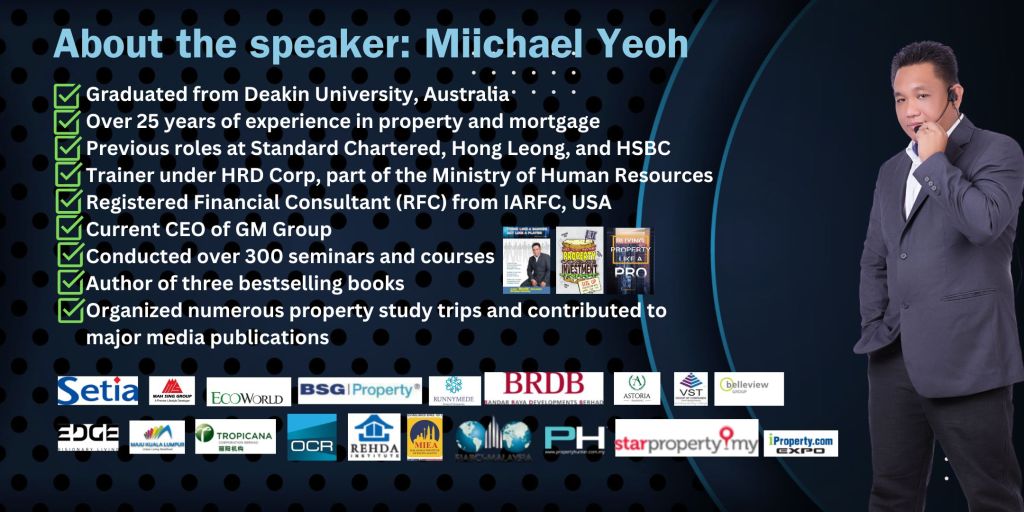
Miichael Yeoh
Read the full article…..
Bank Loan Scandal: How Consultancy Firms Pocketed 35% from Borrowers’ Loans
By: Kpost
A financial scandal of massive proportions has rocked Malaysia’s banking sector, exposing a corrupt syndicate that preyed on borrowers, especially civil servants, by siphoning off exorbitant fees from approved bank loans.
The Malaysian Anti-Corruption Commission (MACC) recently uncovered that financial consultancy firms, operating under the guise of loan facilitators, were pocketing at least 35% of the approved loan amounts, leaving victims with far less than what they had borrowed.

A Web of Deceit: How Borrowers Were Trapped
The scheme involved consultancy firms manipulating the loan approval process in collusion with corrupt bank officials. According to MACC Chief Commissioner Tan Sri Azam Baki, the syndicate exploited desperate borrowers by securing multiple loans from various financial institutions simultaneously, orchestrating a complex scam that resulted in borrowers being burdened with insurmountable debts.
“These firms orchestrated ‘multiple loans’ by manipulating bank systems and turn-around times, making it seem as if previous loans had been settled when, in reality, they had not. This deception ensured that borrowers would receive overlapping loans, only to have substantial portions deducted as ‘fees,’” said Azam.
Many victims, entangled in financial distress and seeking funds to settle previous debts, unknowingly agreed to the terms set by these firms. In addition to the 35% consultancy fee, borrowers were also subjected to loan settlement charges of up to 40%, further exacerbating their financial woes.
RM700 Million in Loans: But Victims Still Drowning in Debt
The investigation, codenamed Ops Sky, revealed that the syndicate managed to secure approximately RM700 million in loans for borrowers. However, instead of receiving their full loan amounts, victims were left with only a fraction of what they applied for, leading to a debt crisis far beyond their means to repay.
Despite the dismantling of the syndicate, the damage has already been done. Many victims now owe three times more than their financial capabilities allow, making repayment virtually impossible. “Even though the syndicate has been dismantled, borrowers remain indebted to the banks and must continue servicing their loans,” Azam stated.

Massive Crackdown: Bank Officers and Syndicate Members Arrested
In a coordinated crackdown, MACC and Bank Negara Malaysia raided 24 locations across the Klang Valley, including residences and offices linked to the syndicate. The operation led to the arrest of 12 key individuals, including bank officials and employees of the financial consultancy firms involved.
Further investigations revealed that 98 company and personal bank accounts worth over RM22 million had been frozen, and nearly 4,000 documents seized as part of the evidence collection.
A total of 27 individuals, including 18 bank officers, eight financial consultancy employees, and one member of the public, were detained before being released on bail.
Social Media and Celebrities Used to Lure Victims
Adding another layer to the scandal, the syndicate aggressively marketed its services using social media influencers, celebrities, and public figures to gain credibility.
Advertisements flooded Facebook, TikTok, and Instagram, targeting schoolteachers, nurses, and government employees.
The firms even conducted surveys, roadshows, and CSR programs at schools and hospitals, falsely promoting their services as legitimate financial solutions.
What’s Next? Ongoing Investigations and a Warning to the Public
The MACC has vowed to continue its investigations under Ops Sky, with more witnesses expected to be summoned. The public is urged to be cautious when dealing with financial consultancy firms that promise easy loans, especially those charging high service fees upfront. “This case serves as a stark warning and always verify loan processes directly with the bank and avoid intermediaries who demand excessive fees,” Azam cautioned.
As investigations continue, Malaysians are left questioning how such large-scale corruption involving multiple financial institutions could have persisted unchecked for so long. The financial burden on victims remains heavy, and the battle for justice is far from over.
Information Source: Newswav