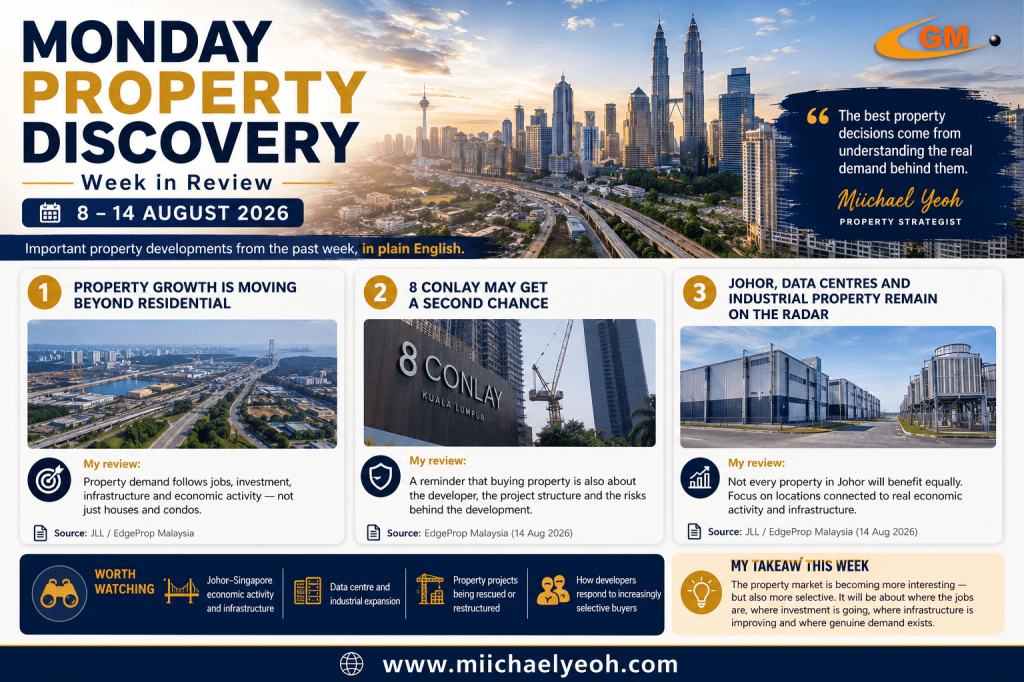
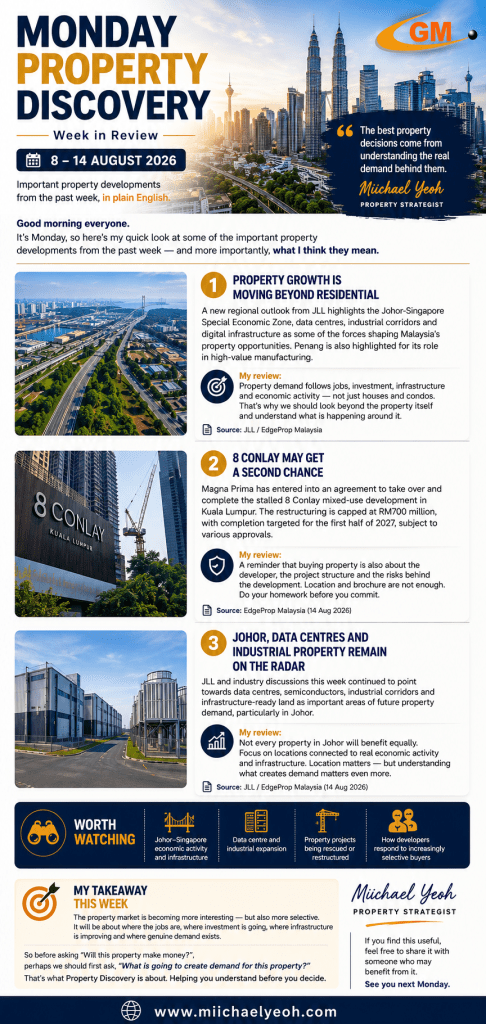
Last week reminded us of one important lesson: property value is no longer driven by location alone. Regulation, tourism and economic activity are becoming equally important.
Here are the three developments that caught my attention.
Penang has introduced a new licensing framework for short-term rental accommodation (STRA), giving operators a two-month grace period to register before enforcement begins. The new rules apply to eligible properties and aim to improve safety, accountability and neighbourhood management.
Why it matters
This is significant for thousands of apartment owners who rely on Airbnb income. Going forward, operating a short-term rental will increasingly depend on compliance with licensing requirements and individual building rules—not simply listing a unit online.
Miichael’s Review
As someone who has studied Penang’s Airbnb market for years, I don’t see this as simply good or bad.
I see it as the market becoming more professional.
For property buyers, the question is no longer “Can this unit do Airbnb?” The better question is:
“Is this building legally and operationally suitable for short-term rental?”
That could make a huge difference to future investment returns.
2. Malaysia’s Economy Continues to Support Property Demand
What happened
Malaysia’s recent economic momentum continues to be supported by manufacturing, construction and business investment, creating stronger employment opportunities across key growth regions.
Miichael’s Review
A healthy economy creates demand for homes, offices and commercial space—but not every property benefits equally.
I still believe buyers should focus on where jobs, infrastructure and population growth are actually happening before making an investment decision.
3. Penang’s Industrial Growth Remains a Long-Term Story
What happened
Penang continues strengthening its position as one of Southeast Asia’s leading semiconductor and advanced manufacturing hubs, attracting both local and international investment.
Miichael’s Review
Industrial growth is exciting, but we should avoid assuming every nearby property will appreciate.
The real winners are usually locations with sustainable employment, good connectivity and genuine housing demand.
👀 Worth Watching
I’ll be watching how Penang’s new STRA licensing framework is implemented over the coming months. It could reshape parts of the short-term rental market and influence future investment decisions for apartment owners. <Cite ref=turn0search4/>
🎯 My Takeaway This Week
Property investment is becoming more selective.
Success will depend less on following trends and more on understanding regulation, demand and long-term fundamentals before buying.
That’s what Property Discovery is about—helping you understand before you decide.
A different way to think about property buyers, developers and better decisions
When people start looking for a property, the first question is often:
“Which property should I buy?”
Perhaps we should be asking a different question first:
“What am I actually looking for?”
It sounds like a small difference.
It isn’t.
Today, property buyers have access to more information than ever before. They can compare prices online, watch property tours, read reviews, study locations, look at transaction data and explore dozens of projects without leaving home.
Yet having more information does not necessarily mean making better decisions.
In fact, sometimes it creates another problem.
Information overload.
A buyer may know the price, size, facilities, tenure and estimated rental yield of a property — but still not know whether the property actually makes sense for them.
And this is where I believe the property conversation needs to change.
Start With the Buyer, Not the Project
Most property journeys begin with a project.
A buyer sees an advertisement.
A friend recommends a development.
A property consultant introduces a new launch.
A developer presents an attractive package.
The project becomes the starting point of the conversation.
From there, the buyer begins asking:
Is the price good? Is the location good? Will it appreciate? Can I rent it out? Is this a good investment?
But there is an important question that often comes much earlier:
Good for whom?
A property can be an excellent project and still be the wrong property for a particular buyer.
The location may be excellent, but unsuitable for the buyer’s lifestyle.
The rental potential may look attractive, but the numbers may not work after financing costs and expenses.
The future development potential may be strong, but the buyer may need liquidity much sooner.
The property itself may be good.
The decision may still be wrong.
The Developer Sees the Property Differently
This isn’t necessarily because developers are doing something wrong.
Developers have a responsibility to present their projects — the location, design, facilities, specifications, pricing and value proposition.
They need buyers to understand what they are offering.
But buyers are looking at the same property through a completely different lens.
They are asking:
“What does this mean for me?”
That is where the gap can appear.
Developers communicate the value of the project.
Buyers are trying to understand the value of the decision.
Those two things are related — but they are not exactly the same.
And perhaps there is an opportunity to bring them closer together.
Better Questions Can Lead to Better Decisions
I have spent many years working across banking, investment, property and education, and one thing has become increasingly clear to me:
The quality of a property decision often depends on the quality of the questions being asked.
Instead of immediately asking:
“Is this a good property?”
we could ask:
Does it fit the way I intend to live?
What opportunity does this location create?
Can I comfortably afford it?
What happens if my circumstances change?
What is the potential exit value?
What risks am I overlooking?
Am I buying because the property makes sense — or because I am being persuaded that it makes sense?
These questions do not make the buying process more complicated.
They make it more meaningful.
This Is Where Property Discovery System™ Comes In
This thinking was one of the reasons I developed the Property Discovery System™ (PDS).
PDS is not designed to tell a buyer which property to buy.
Instead, it provides a structured way to discover, evaluate and understand a property before making the decision.
At the heart of the system is the HOME™ Property Assessment Framework:
H — Habitability Does the property and its environment make sense for the way it will actually be used?
O — Opportunity What does the location, market and surrounding environment potentially offer?
M — Money Does the financial commitment make sense based on affordability, cash flow and overall financial considerations?
E — Exit Value If circumstances change, what potential options and value does the property offer when the buyer eventually needs to exit?
The objective is not to produce a magical number that says “buy” or “don’t buy.”
Property decisions are rarely that simple.
The objective is to help a buyer think more clearly before deciding.
And What About Developers?
This approach is not only useful for buyers.
I believe it can also create value for developers.
Imagine a buyer arriving at a project presentation already understanding:
what they are looking for;
what matters to them;
how the location fits their needs;
what financial considerations they need to evaluate;
and what questions they should be asking.
The developer can then spend less time simply trying to convince the buyer that the project is attractive.
Instead, the conversation can move towards:
“Let us show you why this project may — or may not — fit what you are looking for.”
That is a different kind of conversation.
And I believe it is a healthier one.
Perhaps Buyers and Developers Are Not Opposite Sides
The property industry sometimes makes it appear as though buyers and developers sit on opposite sides of the table.
I don’t see it that way.
A responsible buyer wants to make a sound decision.
A good developer wants its project to attract the right buyers and deliver what it promises.
Both sides benefit when the buyer understands the decision better.
That is why I see PDS not as another property sales tool, but as a bridge between property discovery and property decision-making.
The developer still presents the project.
The buyer still makes the decision.
But the conversation starts from a more informed place.
Maybe We Have Been Starting Too Late
Perhaps the property buying journey should not begin when a buyer walks into a show gallery.
Perhaps it should begin much earlier.
Before the brochure.
Before the show unit.
Before the sales presentation.
Before the question:
“How much is it?”
It should begin with:
“What am I trying to achieve?”
Then:
“What should I be looking for?”
And only after that:
“Which property fits?”
That is the thinking behind Property Discovery System™.
Because I don’t believe people need more property projects to choose from.
They need a better way to discover which properties deserve their attention in the first place.
Discover Better. Decide Smarter.
That, to me, is where a better property journey begins.
Why Some Penang Properties Generate Strong Rental Income While Others Struggle
Over the years, I’ve met many property investors who ask me the same question:
“Miichael, which property should I buy?”
My answer is usually the same.
The better question is:
“Why do some properties perform better than others?”
Today, Penang continues to be one of Malaysia’s most attractive destinations. People come here for the food, culture, medical tourism, business opportunities, education, and lifestyle.
As tourism and visitor arrivals continue to grow, so does the demand for short-term accommodation.
This has created exciting opportunities for property investors.
However, here’s something many people overlook.
Not every property benefits equally.
I’ve seen investors buy properties in popular locations only to discover that rental demand wasn’t as strong as expected.
I’ve also seen investors achieve impressive returns because they understood something others missed.
The difference often comes down to understanding the numbers.
Location matters.
Demand matters.
Timing matters.
What do ADR (Average Daily Rate) and occupancy rates really tell us?
But perhaps most importantly, understanding rental data matters.
How do you identify an area before prices start moving?
How do you distinguish between a property that looks good and a property that actually performs well?
These are the questions every investor should be asking.
Another common misconception is that you need a large amount of capital to invest successfully.
While capital helps, I’ve seen many investors structure their purchases intelligently through financing strategies, proper planning, and understanding market opportunities.
Sometimes it’s not about how much money you have.
It’s about how well you use it.
That’s why I’ve decided to host a small-group sharing session in Penang where I’ll be revealing some of my latest research and observations on the rental market.
We’ll discuss:
✔️ Insights from Penang’s Short-Term Rental Surge
✔️ How to identify high-yield property trends and focus areas
✔️ How to spot the right location before prices move
✔️ Understanding ADR, occupancy rates and real rental numbers
✔️ Building a profitable short-term rental strategy
✔️ Low-capital strategies that may help investors improve their returns
Most importantly, this won’t be a typical seminar.
We’ll be having discussions over coffee in a relaxed setting where you can ask questions and exchange ideas with fellow investors.
Participants will also be invited to join an exclusive Property Study Tour to further enhance their understanding of location, demand drivers, and market opportunities.
If you’re serious about understanding where Penang’s rental market is heading and how to position yourself for future opportunities, I believe you’ll find this session valuable.
Disclaimer: This reflects the author’s personal views based on market experience and current observations. It is not financial advice. Smart investors do their own research before making any move.
A Powerful Sunday at YBK Industrial Park, Rimbayu South
Last Sunday, we had an absolutely fantastic session at YBK Industrial Park, Rimbayu South. This was a private, invitation-based event—and we had a full house. The room was filled with serious participants who came prepared, not just to listen, but to understand where the next wave of industrial opportunity is heading.
I started my session at 11:20 AM. As always, my role was to set the stage before the project presentation begins. We walked through the macro environment—global capital movement, supply chain shifts, and why industrial assets are becoming increasingly relevant. From there, I narrowed it down to Malaysia’s positioning, and eventually to why locations like Rimbayu South are quietly gaining traction.
Because at the end of the day, a good investment is not about chasing trends—it’s about understanding timing and positioning.
Benjamin from YBK followed up with a solid presentation on the project itself. Straightforward, structured, and backed by fundamentals. No unnecessary noise—just clarity on what the project offers, how it is planned, and where it stands in today’s market.
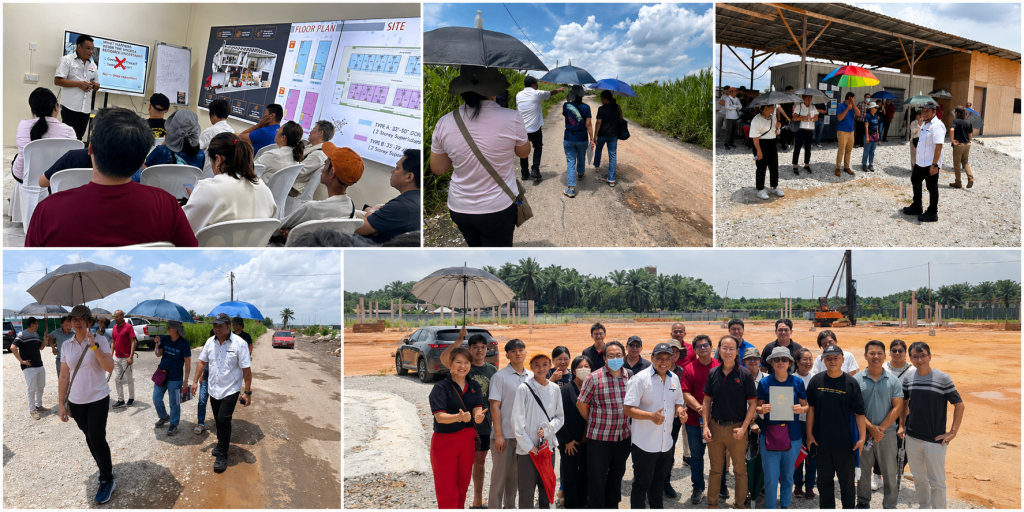
At 12:40 PM, we moved into what I always consider the most important part of any session—the site visit.
The project is located just directly opposite the sales gallery, making it extremely convenient. But more importantly, it allows participants to experience the site physically, not just conceptually.
It was a hot and humid afternoon—but honestly, that’s part of the process. Property is not meant to be understood in air-conditioned rooms alone.
Participants were given a choice—to walk with me or take a comfortable MPV arranged by the developer. Some came prepared with umbrellas and caps. Some didn’t—but still came along anyway. That’s the kind of commitment I like to see.
We started the short walk together, and along the way, I shared additional insights on upcoming developments surrounding YBK Industrial Park. This is where many investors begin to see the bigger picture—because value is not just about what is built, but what is coming next.
YBK Industrial Park @ Rimbayu South
Within just 3 minutes, we arrived at the site.
And this is where the real conversation begins.
Questions started coming in—sharp, practical, and focused on real investment considerations. From layout and access to tenant demand and future positioning. Both myself and the developer team addressed everything directly, on-site, under the 1 PM sun.
No slides. No filters. Just real answers on real ground.
After that, we took a slow walk back, captured a group photo, and wrapped up the session over lunch. It was a simple but highly productive session—exactly how property engagement should be.
Not just presentation. But experience.
Missed This Session?
If you couldn’t make it for this round, here’s your next opportunity.
Join my upcoming webinar:
“When Countries Fight, Capital Moves. Are you positioned to capture Malaysia’s Next Industrial Growth Wave?”
This session will go deeper into the macro forces shaping capital flow, and more importantly, how to position yourself ahead of the next industrial growth cycle.
If you are serious about understanding where the market is heading—not just where it has been—this is a session you should not miss.
Miichael Yeoh
Property Strategist
Disclaimer: This reflects the author’s personal views based on market experience and current observations. It is not financial advice. Smart investors do their own research before making any move.
Smart Investors Don’t Start With Property — They Start With Demand
Most people think property investment starts with:
Location. Price. Developer.
It doesn’t.
It starts with a much more fundamental question:
Are you buying for own use… or for investment?
Because if you get this wrong, everything else becomes noise.
Step 1: Define Your Purpose (No Grey Area)
I’ve seen buyers say they are investing…
But make decisions based on:
Design
Lifestyle
Personal preference
That’s not investing.
That’s emotion.
If it’s own stay, you follow your lifestyle.
If it’s investment, you follow demand and numbers.
Step 2: Know Your Budget (This Sets Your Playing Field)
Before anything else:
What is your true affordability?
What is your financing capacity?
What is your holding strength?
Because in property:
You don’t lose money when you buy wrong. You lose money when you can’t hold.
Especially for investors—cash flow and holding power are everything.
Step 3: Real Investors Do One Thing Differently — They RESEARCH
This is the biggest gap in the market.
Most buyers rely on:
Marketing materials
Sales narratives
“Good location” claims
But experienced investors?
They study the market before they commit.
What Do You Actually Research?
1. Demand & Demographics (The Real Starting Point)
Forget the building first.
Ask:
Who is the end user of this property?
Young professionals?
Families?
Tourists?
Businesses?
If you don’t understand demand, you’re not investing—you’re guessing.
And This Is Where Industrial Property Becomes Interesting
For big-budget investors, the shift is already happening.
Demand is no longer driven by lifestyle.
It’s driven by business movement and capital flow.
Look at what’s happening:
Manufacturing relocation into Malaysia
Growth in logistics and warehousing
E-commerce expansion
Supply chain restructuring across ASEAN
This creates a different type of demand:
Larger space requirements
Functional layouts over aesthetics
Accessibility to ports, highways, and labour
Long-term tenancy from businesses (not individuals)
In other words:
Industrial demand is economic-driven, not sentiment-driven.
And that’s exactly what sophisticated investors are looking for.
2. Price Per Square Foot (Entry Determines Exit)
You make money when you buy right.
Compare:
Nearby transactions
Competing projects
Replacement cost
If you enter too high, your upside is already limited.
3. Surrounding Supply (The Silent Risk)
Most investors ignore this.
But supply determines:
Rental pressure
Vacancy risk
Exit liquidity
Too much incoming supply?
Even a “good project” can underperform.
4. Infrastructure & Connectivity (Follow the Growth)
No area grows randomly.
Growth follows:
Highways
Ports
Rail (LRT / MRT / logistics links)
Industrial corridors
If infrastructure is expanding, demand usually follows.
5. Rental & Yield Reality Check
At the end of the day:
Can it generate income?
What is the realistic rental?
Who is the tenant profile?
What is the occupancy expectation?
If the numbers don’t work on paper, don’t rely on hope.
What I’ve Learned From the Ground
After evaluating multiple projects and markets, one thing is clear:
The winners are not those who buy the most. The winners are those who understand demand the best.
Every property I consider goes through:
Demand validation
Market comparison
Supply analysis
Financial assessment
Because once you commit, you’re not just buying property…
You’re locking in a decision for years.
Final Thought
Property investment has evolved.
It’s no longer about chasing what’s popular.
It’s about understanding why demand exists—and where it’s going next.
Those who do the work will always have an edge.
Those who don’t…
Will always be reacting.
Disclaimer: This reflects the author’s personal views based on market experience and current observations. It is not financial advice. Smart investors do their own research before making any move.
Buying a property today is very different compared to 10 or 20 years ago.
Back then, property could sell very easily. Developers launched, buyers queued, and decisions were made quickly.
Today, the world has changed.
The way people buy property has changed. The way markets behave has changed. And more importantly, the way buyers think has changed.
Buyers today are far more informed.
Before even paying a booking fee, many would have already:
Compared multiple projects
Studied pricing trends
Checked developer track record
Analysed location fundamentals
Calculated loan eligibility and cash flow
In other words, today’s buyers are not just buyers — they are researchers.
At the same time, the global environment is not exactly calm.
We are seeing ongoing geopolitical tensions — from the US–Iran situation to instability in parts of the Middle East. Interest rates, inflation, and currency movements continue to shift.
All these create one thing: uncertainty.
And when uncertainty comes in, market behaviour changes.
From what I observe in today’s property market:
Investors are waiting — not exiting
Sellers are holding — not reducing
Buyers are selective — not absent
Let that sink in.
The market is not dead. It is simply… more cautious.
And here is something many people miss:
👉 When the market is not stable, that is where the opportunity lies.
Why?
Because:
Less emotional buying
More rational pricing
More room for negotiation
More time to analyse properly
In a hot market, people chase. In a cautious market, people choose.
And those who choose well, win.
This is exactly why I started focusing on Property Market Intelligence.
Not just looking at property as a product, but understanding:
Market timing
Buyer psychology
Financing structure
Exit strategy
Risk positioning
This approach is built from more than 25 years in the property and banking industry.
I have gone through multiple market cycles:
Asian Financial Crisis
Global Financial Crisis
Property slowdowns
Policy changes
And shifting buyer behaviours across decades
Every cycle teaches one thing:
👉 The market will always move — but not everyone moves with it.
Today, success in property is no longer about: “Buy and wait.”
It is about: “Buy with clarity.”
Because in today’s market:
Information is everywhere
But insight is rare
If you are buying today, don’t just ask:
“Is this a good property?”
Ask instead:
Who will buy from me later?
What is the demand driver here?
How does financing affect my holding power?
What happens if the market stays slow for 3–5 years?
That is how professionals think.
The market has not disappeared.
It has simply matured.
And in a mature market, strategy will always beat impulse.
Miichael Yeoh Property Strategist | Author
Author of: Think Like a Banker, Act Like a Player Property Investment BLT Buying Property Like a Pro (MPH Bestseller)
In today’s digital world, buying property is no longer just about location, price, and site visits. Artificial Intelligence (AI) is quietly influencing how buyers think, search, and eventually make decisions.
Whether you realize it or not, AI is already part of your property journey.
1. How AI Affects Our Buying Decisions
AI has changed the way we consume information.
In the past, buyers relied on agents, brochures, and physical visits. Today, what you see online is curated based on your behavior:
What you search
What you click
What you watch
Over time, AI builds a profile of your preferences and starts feeding you properties that match your interest.
Many buyers feel like they “found” the property themselves.
But in reality, AI has already filtered the options for you.
2. Property Marketing vs Other Products — Same Model, Different Weight
From my experience, property marketing is not very different from other products.
It follows a similar digital marketing structure.
But the difference is this:
👉 Property is a high-value, long-term commitment
You are not buying something for RM1. You are committing hundreds of thousands or even millions.
Because of that, the marketing is designed to:
Build trust
Educate
Reassure
Reduce risk
It is less about pushing a sale, and more about guiding a decision.
3. The Sales Funnel Is Always There
Every product follows a sales funnel.
Some marketers execute it well. Some only do part of it. Some only focus on getting attention.
In property, you will typically go through stages like:
Seeing ads
Clicking to learn more
Registering interest
Communicating with salespeople
Visiting or evaluating
Whether you notice it or not, you are being guided step by step.
4. “Why Am I Suddenly Seeing Property Ads Everywhere?”
This is something many people experience.
You talk to a friend about buying property… You search a few listings…
Next thing you know, when you open Facebook or Instagram:
👉 Property ads start appearing everywhere.
This is how AI and digital tracking work.
It picks up signals from your behavior and starts showing you more relevant content.
It is not magic — it is data.
5. The Moment You Click, Your Journey Changes
Once you click on an ad, your journey becomes more intentional.
You may start seeing:
More related ads
Follow-up messages
Invitations to previews
Additional information and content
This is how modern property marketing works today.
6. Not All Campaigns Are the Same
The experience you get depends on the developer or salesperson.
Some are very basic. Some are more structured and consistent.
But regardless of how advanced the system is, one thing remains the same:
👉 The final decision is still yours.
7. My Perspective as a Property Buyer
From my own experience in property, one thing is very clear:
👉 We cannot avoid AI.
It is already part of how information is delivered to us.
But here is the part many people overlook:
AI can influence your interest, but it should not replace your judgment.
At the end of the day:
You are not buying a cheap product
You are committing significant capital
You are making a long-term financial decision
Because of that, buyers must still:
✔ Do proper research ✔ Understand the numbers ✔ Assess their holding power ✔ Evaluate the location and fundamentals
And most importantly:
👉 Listen to people who have real experience in property
Not everything online tells the full story.
Final Thoughts
AI is a powerful tool.
It can help you discover opportunities faster. It can guide you through options you may not have seen before.
But it should never replace:
Due diligence
Critical thinking
Experience-based advice
In property, the difference between a good decision and a bad one is not the advertisement you saw…
It is the quality of the decision you make after that.
At the end of the day, AI may influence what you see…
But it should never replace how you think.
Property is not a small purchase. It’s a long-term financial commitment.
The difference is not in the advertisement you saw — It’s in the decision you make after that.
Make sure it’s a well-informed one
From the Desk of
Miichael Yeoh
Property Strategist | Author
Author of:
Think Like a Banker, Act Like a Player
Property Investment BLTBuying
Property Like a Pro(MPH Bestseller)
P.S. Follow for consistent, experience-based property insights — beyond what marketing tells you.
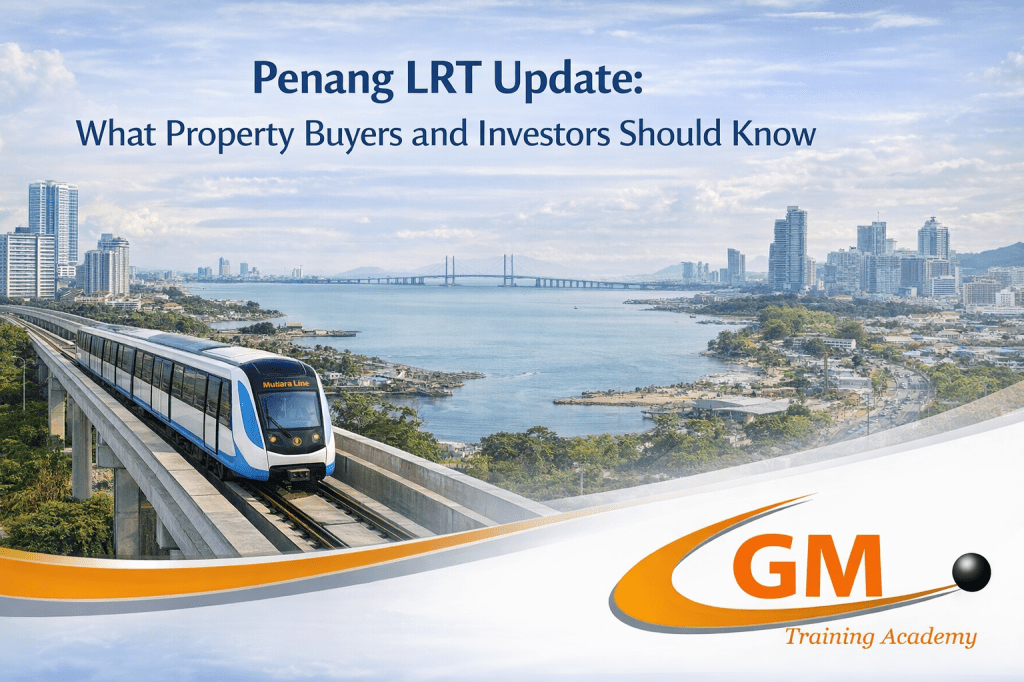
For years, the lack of rail transit has been one of the biggest infrastructure gaps in Penang. While cities like Kuala Lumpur have extensive rail networks, Penang has relied heavily on cars and buses.
That is now changing.
The Penang Light Rail Transit (LRT) project — known as the Mutiara Line — is officially underway, marking one of the largest infrastructure developments in northern Malaysia. For property buyers and investors, this project will reshape accessibility, mobility, and potentially property values across key corridors in Penang.
In this article, we explore the latest updates on the Penang LRT and what it means for the property market.
1. Overview of the Penang LRT (Mutiara Line)
The Mutiara Line will be Penang’s first urban rail system and the first LRT outside the Klang Valley. It forms a key component of the Penang Transport Master Plan (PTMP) aimed at improving connectivity across the island and mainland.
Key facts about the project:
Length: approximately 29.5 km
Stations: about 21 stations
Type: elevated light rail system
Estimated cost: about RM16–17 billion
Target completion: around 2031
The line will connect Silicon Island / Penang South Reclamation area to Penang Sentral, passing through major areas such as:
Bayan Lepas
Sungai Tiram
Gelugor
Jelutong
George Town (Komtar)
It will also link with Penang Sentral, providing connections to ETS, KTM Komuter and ferry services.
This integration is designed to create a seamless transport system between Penang Island and Seberang Perai.
2. Latest Construction Updates (2025–2026)
Recent developments show that the project has moved from planning into active implementation.
Important milestones include:
Construction has begun The first phase of works started in 2025, with contractors appointed and preliminary works such as soil investigations and site preparation underway.
Major works expanding in 2026 Construction activity is expected to intensify throughout 2026, including elevated track construction and station development.
Traffic diversions already in place Road diversions along areas such as Jalan Sultan Azlan Shah near Bayan Lepas have begun to accommodate construction works that may last up to 38 months.
Public inspection of revised rail scheme Authorities have also opened a public inspection period for revised plans, including a proposed cross-sea link to Penang Sentral, which will strengthen connectivity between the island and mainland.
3. Why the LRT Matters for the Property Market
Infrastructure has always played a major role in shaping property values.
Based on experiences in Kuala Lumpur, rail transit typically creates three types of property impact.
1️⃣ Transit-Oriented Development (TOD)
Properties located near LRT stations tend to see increased demand due to convenience and connectivity.
Areas expected to benefit include:
Bayan Lepas
Sungai Nibong
Gelugor
Jelutong
Komtar / George Town
These areas could evolve into future TOD zones, attracting both residential and commercial developments.
2️⃣ Improved Accessibility
Currently, travelling from Bayan Lepas to George Town during peak hours can take more than an hour.
With the LRT:
Travel time could be significantly reduced
Workers in the Bayan Lepas industrial zone gain easier access to the city
Tourism and business mobility improve
Better connectivity often leads to stronger rental demand.
3️⃣ Long-Term Economic Growth
The LRT is not just a transport project. It is also a strategic economic infrastructure designed to support:
Silicon Island development
the Bayan Lepas industrial hub
tourism in George Town
cross-strait connectivity with mainland Penang
Large infrastructure projects tend to stimulate surrounding investments and commercial activity.
4. A Strategic Perspective for Property Buyers
However, buying property purely because it is near an LRT station is not enough.
From an investment perspective, buyers should still analyse:
Rental demand around the station
Employment nodes nearby
Supply of new developments
Holding power during construction years
The Penang LRT is expected to complete around 2031, meaning property investors must adopt a long-term view rather than short-term speculation.
Final Thoughts
The Penang LRT has been discussed for more than a decade. Now that construction has begun, the project is moving from concept to reality.
For Penang, the LRT represents more than just a transport system — it is a structural shift in how the city grows and how people move.
For property buyers and investors, the key question is no longer whether the LRT will happen.
The real question is:
Are you positioning your property decisions ahead of this infrastructure transformation?
As someone who has spent nearly three decades in banking, mortgage advisory and property strategy, one question I get repeatedly from investors and homebuyers is:
“Why did my bank increase (or educe) my interest rate when I didn’t change anything?”
The answer almost always traces back to one key number — the Overnight Policy Rate (OPR).
Let’s break down how OPR is derived, who decides it, and how it directly affects your housing loan, business financing, and even fixed deposits.
What Is OPR?
Bank Negara Malaysia (BNM) uses the Overnight Policy Rate (OPR) as its main monetary policy tool.
The OPR is the interest rate at which banks lend money to one another overnight. It serves as the benchmark rate that influences all other interest rates in the country.
Think of it as the “master switch” of Malaysia’s financial system.
How Is OPR Derived?
OPR is not randomly adjusted. It is decided by BNM’s Monetary Policy Committee (MPC) based on several key economic indicators:
1️⃣ Inflation (Price Stability)
If inflation is rising too quickly, BNM may increase OPR to slow down spending and borrowing. If inflation is low or the economy is weak, BNM may reduce OPR to stimulate growth.
2️⃣ Economic Growth (GDP)
Strong economic growth may lead to higher OPR to prevent overheating. Weak GDP growth may lead to lower OPR to encourage borrowing and investment.
3️⃣ Employment & Consumer Spending
High unemployment? Lower OPR to boost activity. Strong consumer demand? Possibly tighten policy.
4️⃣ Global Economic Conditions
US Federal Reserve rates, global trade trends, currency strength, and geopolitical risks all influence Malaysia’s monetary decisions.
5️⃣ Financial System Stability
BNM ensures banks remain liquid and stable. OPR adjustments help manage systemic risk.
In simple terms:
OPR balances growth and inflation.
How OPR Affects Banks’ Interest Rates
When OPR changes, banks adjust their benchmark rates such as:
BR (Base Rate)
SBR (Standardised Base Rate)
Most housing loans today are priced as:
SBR + Spread (e.g., SBR + 1.5%)
When OPR increases:
SBR increases
Monthly instalments increase
Loan affordability reduces
When OPR decreases:
SBR decreases
Monthly instalments reduce
Borrowing becomes cheaper
Example: How It Impacts a Housing Loan
Let’s say:
Loan: RM500,000
Tenure: 35 years
Rate: SBR 3.00% + 1.50% = 4.50%
If OPR increases by 0.25%:
SBR may rise to 3.25%
New rate becomes 4.75%
Monthly instalment increases
Even a 0.25% increase can mean thousands of ringgit extra over the loan tenure.
This is why property investors must monitor OPR closely.
Impact on Different Groups
🏠 Homeowners
Higher OPR = higher instalments (if on floating rate).
🏢 Property Investors
Rental yield may be squeezed if instalments rise but rental cannot increase proportionally.
💼 Businesses
Cost of financing increases, affecting expansion decisions.
💰 Savers
Good news — Fixed deposit rates usually improve when OPR rises.
Why OPR Matters in Property Strategy
As a developer consultant and property strategist, I always advise clients:
Don’t only calculate today’s instalment. Stress-test at +1% or +2%.
Markets move in cycles. OPR will not stay low forever.
Smart investors:
Lock in good spreads during low-rate environments
Structure debt efficiently
Maintain cash flow buffers
Final Thoughts
OPR is not just a technical banking term.
It is the heartbeat of the financial system, influencing property prices, loan affordability, rental yields, and overall market sentiment.
Understanding how it works allows you to:
Make better borrowing decisions
Time property acquisitions strategically
Structure financing intelligently
If you are planning your next property move, always ask:
“What is the interest rate cycle telling me?”
Because in property investing, Timing and financing strategy often matter more than price.