Prime Minister and Finance Minister Datuk Seri Anwar Ibrahim has unveiled the Malaysian Budget 2025, highlighting significant measures to boost housing and development. Key initiatives focus on making homeownership more affordable and improving community living standards.
First-Time Home Buyers Support
The Housing Credit Guarantee Scheme (SJKP) will now provide guarantees on loans up to RM500,000 for first-time home buyers purchasing properties on wakaf land. So far, the scheme has approved RM12.8 billion in loans, benefiting more than 57,000 first-time buyers.
Housing Tax Relief
To encourage homeownership, first-time buyers of homes priced up to RM500,000 can claim tax relief of up to RM7,000. For homes priced between RM500,000 and RM750,000, buyers can claim up to RM5,000 in tax relief. These benefits can be claimed for three consecutive years for sale and purchase agreements signed between January 1, 2025, and December 31, 2027.
Affordable Housing Initiatives
A budget of RM900 million has been allocated for 48 People’s Residency Programs (PRR) and 14 Rumah Mesra Rakyat (RMR) projects, including new PRR developments in Port Dickson and Seberang Perai Tengah. By the end of 2025, 30 PRR projects will be completed, providing homes for nearly 17,500 people.
Additionally, up to RM90,000 in financial aid will be available for building new homes for residents, including those in the hardcore poor housing programme (PPRT), fishermen, and Chinese new villages. The government has also raised the maximum financial assistance for home repairs to RM20,000. UDA Holdings Bhd will receive RM200 million to develop affordable housing on wakaf land, and the Public Sector Home Financing Board (LPPSA) will assist civil servants in buying homes on such land.
Maintenance and Facilities Upgrades
RM200 million has been set aside for maintaining low- and medium-cost public strata housing, with funds going toward replacing old elevators. Another RM100 million will be used to upgrade 48 Madani Public Parks, enhancing recreational areas across the country.
To further improve communities, RM84 million will be allocated to upgrade basic infrastructure and social facilities in Chinese New Villages, while the Housing and Local Government Ministry will focus on meeting the needs of Indian settlements.
These comprehensive initiatives aim to ease the path to homeownership and improve living conditions for Malaysians across various communities.
Penang’s LRT Project Set to Begin with Groundbreaking Ceremony in December: A Game-Changer for the Property Market
Penang’s long-anticipated Light Rail Transit (LRT) project is poised to transform the state’s transport and real estate landscape, with the groundbreaking ceremony scheduled for December. The first station will be constructed at Lebuh Macallum, marking the initial phase of the 29km Mutiara Line.
Transport Minister Anthony Loke has confirmed the project’s commencement, which aims to enhance connectivity between Penang Island and the mainland, reduce traffic congestion, and promote sustainable transport. The Mutiara Line will start at Penang Sentral on the mainland and cross the Penang Channel, with stations along key areas including Komtar, Gelugor, Sungai Dua, and the Penang International Airport, ending at Silicon Island, which will serve as the LRT’s depot.
Impact on Penang’s Property Market
Once completed, this LRT project will not just reshape Penang’s transport system but also revolutionize its property market. Historically, infrastructure improvements like LRT systems have had a profound effect on property values, especially in urbanized areas. This is already evident in cities like Kuala Lumpur and Singapore, where properties along transit lines have seen significant appreciation.
Imagine if you own a property today along the LRT line—how much do you think it will appreciate in the coming years? Properties located near LRT stations are expected to see a considerable rise in demand as they become more attractive to homebuyers, investors, and businesses seeking convenient access to transportation hubs.
Factors Driving Property Appreciation:
Increased Accessibility: The LRT will dramatically improve the convenience of commuting, making areas along the route highly sought after by both residents and businesses. This increased accessibility will naturally boost property values in these locations.
Attracting Investors and Buyers: Real estate near public transportation systems often attracts both local and foreign investors. Buyers are typically willing to pay a premium for properties near LRT stations, given the convenience and potential for future capital appreciation.
Economic Growth and Urban Development: The LRT will likely spur the development of commercial and retail hubs along its route, bringing new job opportunities and services to surrounding areas. These factors will contribute to property appreciation, as areas with new economic activity tend to see a surge in demand for housing and commercial space.
Lifestyle Appeal: Living close to an LRT line will be a selling point for both homeowners and tenants, reducing reliance on cars and making commuting more efficient. This appeal will be especially strong among young professionals and families, who prioritize convenience and connectivity.
How Much Could Property Values Increase?
The appreciation potential could be substantial. Based on other cities with developed transit networks, properties located near LRT stations can experience value increases ranging from 15% to as much as 50% over time, depending on location and proximity to key stops. In some areas, even land prices could surge as developers seek to build new projects capitalizing on improved infrastructure.
For instance, properties around Penang’s commercial and business hubs like Komtar, Gelugor, and the Penang International Airport are likely to see the highest appreciation. As accessibility improves, other areas along the LRT line, such as Sungai Pinang and Bukit Jambul, could also witness significant increases in property values.
Long-Term Outlook for Property Investors
For those who already own property near the planned LRT route, the future looks bright. The project promises to uplift not only property prices but also rental yields, as demand for housing and commercial space near transport links will grow. For prospective buyers, now could be the ideal time to invest before prices start to reflect the full impact of the LRT’s completion.
In summary, Penang’s LRT is not just a transport initiative—it’s a catalyst for real estate growth. As the project progresses, the property market is expected to see a ripple effect, creating opportunities for both current homeowners and future investors. The coming years could see Penang’s property landscape transformed, with areas along the LRT line becoming prime real estate hotspots.
Five New Taxes Could Be Introduced in Malaysia’s Budget 2024 on 18th October: Key Highlights and Concerns
As Budget 2024 approaches, there are talks that the government may introduce five new taxes designed to address various social, environmental, and economic issues. If implemented, these taxes could bring significant changes to consumer behavior, corporate practices, and wealth distribution. Here are the five proposed taxes:
1. Unhealthy Food Tax
In a bid to tackle Malaysia’s rising obesity and health-related problems, the government plans to impose a tax on foods high in fat, sugar, and calories. This includes fast food, snacks, and baked goods—products often linked to unhealthy lifestyles.
According to the 2023 National Health and Morbidity Survey, 54.4% of Malaysians are considered overweight, raising alarms about the long-term burden on the healthcare system. The goal of this tax is to discourage the consumption of unhealthy foods and encourage better dietary choices. Funds collected could potentially be channeled into public health campaigns and nutritional education programs.
2. Carbon Pricing Tax
To align with Malaysia’s long-term environmental goals, including achieving net-zero carbon emissions by 2050, the government may introduce a carbon pricing tax. This tax would target industries and businesses that emit large quantities of greenhouse gases, encouraging them to reduce their carbon footprint.
The tax could be implemented through mechanisms like a carbon tax or an Emission Trading System (ETS). By placing a financial cost on carbon emissions, businesses would have incentives to adopt greener technologies and practices. This would help Malaysia transition toward a more sustainable and environmentally friendly economy.
3. Inheritance Tax
A proposed inheritance tax could be aimed at preventing the accumulation of unproductive wealth within a small segment of the population. This tax would target wealth passed down through generations without significantly contributing to the broader economy.
The objective is to promote wealth equality by taxing large inheritances. The revenue could be used to fund public services or social programs aimed at reducing the wealth gap. However, this tax could be controversial, especially among families who view property and assets as a legacy for future generations.
* Updated 14/10/2024
Anthony Loke States Inheritance Tax Won’t Be Included in Budget 2025. “Government policies only become official if they are presented in parliament, and so far, there has been no discussion regarding inheritance tax.”
4. High-Value Goods Tax (HVGT)
The High-Value Goods Tax is designed to target high-income earners by imposing taxes on luxury goods and services. Items such as high-end vehicles, expensive jewelry, designer products, and other luxury items would be subject to this tax.
The goal is to redistribute wealth by generating revenue from luxury consumption and using it to support social programs or economic development. This could also serve to narrow the wealth gap by ensuring that affluent individuals contribute more to public finances.
5. Artificial Intelligence (AI) Tax
In recognition of the growing role of technology and innovation in economic development, the government may introduce an AI tax. This tax would primarily target companies developing and deploying artificial intelligence technologies, aiming to ensure that the tech industry contributes to the country’s growth.
Revenue from the AI tax could support research and development in high-tech industries, positioning Malaysia as a leader in the global AI market. This tax could create a financial framework for innovation, fostering the next generation of technological advancements.
Property Sector Concerns: The Inheritance Tax
While the above taxes aim to address a wide range of issues, the proposed inheritance tax raises specific concerns, particularly in the property market. Many property buyers and investors see real estate as a legacy—something to pass on to their children and future generations. If an inheritance tax is imposed, beneficiaries would be subject to taxation when they inherit property. This could complicate the process of transferring wealth and assets across generations, especially if the property needs to be sold to pay off the tax.
Is It Fair to Property Buyers?
From a property investor’s point of view, this tax could be perceived as unfair. Many people buy real estate not only as an investment but as a way to secure their family’s financial future. They plan to pass down property to their heirs, building a generational legacy. If this tax is implemented, beneficiaries might face an additional financial burden when inheriting property, potentially reducing the long-term value of real estate investments.
Moreover, some might argue that such a tax could discourage property investment altogether, as the future tax implications would make it less appealing to hold on to real estate for the long term.
Will It Affect Future Generations?
Yes, an inheritance tax would undeniably affect future generations. It could reduce the wealth that families can pass down, especially if property values increase significantly. Heirs may have to sell the property to cover the tax liability, which could diminish the intention of leaving behind a lasting legacy. This could be especially difficult for middle-income families who have worked hard to acquire property as a form of security for their descendants.
A Personal Perspective
This is just my point of view, and I understand that others may not agree. In my opinion, an inheritance tax could have unintended consequences, particularly for those in the property market who want to ensure their investments benefit future generations. While wealth equality is important, there needs to be a balance, so the tax does not disproportionately impact those who have saved or invested in property with long-term goals in mind.
What are your thoughts on this? Do you believe such a tax is necessary, or would it be too burdensome on property buyers and their families?
Check out the latest article on how Budget 2025 impacts the property sector
Managing property tenants effectively is crucial for maintaining the value of your property, ensuring a steady income stream, and minimising stress. Whether you’re a seasoned landlord or new to property management, understanding how to navigate tenant relationships and responsibilities can make a significant difference. What I am going to share here are the things that benefited me as a person whom do just a handful of residential property rental and sublet room rental in Peninsular Malaysia. Hence, there is no right or wrong it’s just my personal experience. Here are 10 key things to consider for effective tenant management:
1. Thorough Screening Process
Before you even consider signing a tenancy agreement, it’s essential to conduct a comprehensive screening of potential tenants. This process should include background checks, credit reports, and verification of employment and rental history. A detailed application form (if high demand) can provide insights into a tenant’s reliability and ability to pay rent on time. By carefully vetting applicants, you can avoid many common issues such as late payments or property damage yet this only happen if your property is under high demand. If you want to skip all the above steps, you may also choose to talk to the prospect existing or ex-landlord for reference. You might wonder, how do I get their landlord contact number? Well, just ask the prospect to call their landlord using their hand phone straight away then verify with the person on the other end whether the prospect is a good tenant. What if the prospect refuse to call? I would rather skip for next prospect. If prospect said this is their first renting then I will have to opt for other way for reference by their company or family member.
2. Clear and Comprehensive Tenancy Agreements
A well-drafted tenancy agreement is fundamental in setting expectations and protecting both parties. Ensure that your tenancy agreement covers all critical aspects such as rent amount, due dates, security deposits, maintenance responsibilities, and rules regarding pets or subletting. It’s important to make the tenancy clear and detailed to avoid misunderstandings. Both you and your tenant should fully understand and agree to the terms before signing. You may choose to engage a lawyer to draft the tenancy agreement for both of you with a professional fee or you may choose to use any tenancy agreement template from online or offline platform by editing the details to cater for your tenancy needs. In Malaysia, if you secure your tenant through a property agent or a real estate negotiator they will probably offer to prepare the tenancy agreement as part of their service with additional charges on top of their agent fee.
3. Regular Property Inspections
Regular inspections help you stay on top of the property’s condition and address maintenance issues before they escalate. Schedule routine visual inspections, ideally every 6-12 months, and document the property’s condition through photos or detailed notes if possible. This not only helps in maintaining the property but also serves as a reminder to tenants to take good care of the space. For me, I prefer to visit my tenant during festive season with a “Thank You” gift or hamper while taking the chance to enter their house and of course excuse myself to enter their bathroom for quick observation. There is a saying “How you do anything is how you do everything.” if the tenant keeps the bathroom tidy clean very likely they take good care of the house and vice versa. Please remember all the visit must inform the tenant upfront as stipulated in the tenancy agreement even if it’s just a “Festive Season Visit”.
4. Responsive Maintenance and Repairs
Timely maintenance and repair responses are crucial for tenant satisfaction. Make it a priority to address repair requests quickly and professionally. Implement a system for tenants to report issues, and ensure you follow up promptly. Maintaining a good rapport with reliable contractors can also streamline the repair process. Effective maintenance not only keeps your property in good shape but also fosters a positive relationship with your tenants. I always tell my tenant to call me if there is any urgent or serious matter happen to the property or inside the property. For small matters like faulty light bulb I will ask them to buy a new bulb and replace it then deduct the amount from next month rental. I do have my regular handyman, plumber and electrician contact just in case I need their service to fix my tenant issue.
5. Clear Communication Channels
Open and clear communication is the cornerstone of successful tenant management. Establish preferred communication channels and ensure that tenants know how to reach you for urgent issues or routine inquiries. Whether you use email, phone calls, or a property management app, being accessible and responsive helps build trust and resolve issues efficiently. I request my tenant to WhatsApp me regarding rental payment or any issue related to their house. I also tell them to call me directly if it’s urgent and serious matter. Similarly, I told my tenant to reply my WhatsApp and answer my call when I contact them especially when they fail to pay rent upon due date. I made it clear that I will visit them at the property if I cannot reach them through phone call.
6. Consistent Rent Collection Procedures
Having a structured rent collection process helps prevent payment issues. Decide on a payment method that works for both you and your tenants, such as online payments or cash deposit through cash deposit machine, try to avoid cash collection as its time wasting and involve risk. Clearly outline the rent due dates, late fees (if any), and the procedure for handling missed payments in the tenancy agreement. Enforcing these policies consistently ensures fairness and avoids confusion. I will send WhatsApp message including my bank account details one week before rental due date to remind my tenant of paying their rent on time. Then I will send another friendly reminder message on the due date morning to remind tenant once again. If tenant fail to make payment by 8pm on the due date, I will call them directly. If they don’t answer my call then I will make another call at 11pm. After 12am midnight if they still haven’t bank in or return my call, then I will give them a 30 mis-calls combo. Normally tenant will reply the next day morning stating their reason for delay and made payment instantly. If tenant requesting for extension of time for them to pay rental then I will grant them no more than one week. I will lodge police report without hesitation if my tenant chooses to ignore my call and drag their rental payment after the one-week extension.
7. Tenant Rights and Responsibilities
Both landlords and tenants have specific rights and responsibilities, which can vary depending on local laws. Familiarize yourself with landlord-tenant laws in your area and ensure that you comply with all legal requirements. It’s equally important to communicate these rights and responsibilities to your tenants. Educated tenants are less likely to make mistakes or violate lease terms unintentionally. I will request my tenant to go through the tenancy agreement before signing and brief the tenant on the rights and responsibilities of both tenant and landlord. On top of that I make sure the tenant understands that tenant rights stipulated in the tenancy agreement only apply when tenant pay rental on time. Please do not argue on tenant’s right with me if they fail to pay rental. I make it clear to them that if they can’t afford to pay rent then the only way to resolve the issue is to return the house and move somewhere else in a peaceful manner.
8. Effective Conflict Resolution
Conflicts are almost inevitable in property management, whether they are related to maintenance issues, noise complaints, or disputes between tenants. Develop strategies for resolving conflicts amicably and professionally. Address problems promptly and listen to both sides before making a decision. Maintaining a fair and balanced approach can help resolve issues without escalating tensions. For conflict between myself as a landlord with my house tenant, I will resolve our conflict follow the tenancy agreement. If for sublet room rental, I told all room tenant to abide to the house rules and resolve any dispute among themselves. If the matter still cannot resolve then I will tell them either one or both of them have to leave so that their disputes does not affect my other tenants.
9. Professional and Friendly Attitude
Your attitude as a landlord can significantly impact the tenant relationship. Strive to be professional yet approachable. Being friendly and respectful creates a positive environment, while maintaining professionalism ensures that you are taken seriously. Building a good rapport with tenants can make managing the property smoother and more enjoyable for both parties. I can be friendly to my tenant as long as they made rental payment on time. If my tenant ignores my call while delaying their rental payment then I will let them see the unfriendly side of me. I will speak firmly to them demanding for my rental payment before it escalate to police report stage.
10. Stay Organized and Document Everything
Organisation is key to effective property management. Keep detailed records of all transactions, communication, and property-related documents. This includes tenancy agreements, maintenance requests, and inspection records if any. Having a well-organized system helps in managing multiple properties and provides a reference in case of disputes. Use property management software or apps to streamline record-keeping and make information easily accessible. Keep your record up to date, remember to renew tenancy upon expiry. It is important to change the utility name (i.e.: TNB and water bills) to your tenant’s name after signing the tenancy agreement to avoid the risk of tenant unsettle huge bills. Otherwise, you will have to monitor the utilities bill every month to ensure tenant settle their utilities bills without fail.
Conclusion
Managing property tenants involves a mix of thorough planning, clear communication, and responsive actions. By focusing on these ten key areas, I believe you can foster a positive and professional relationship with your tenants, maintain the value of your property, and ensure a smooth management process. Whether you’re dealing with applications, repairs, or disputes, a proactive and organised approach can lead to a more successful and less stressful tenant management experience.
We’re excited to share that we’ve just wrapped up Episode 3 of our Property Talk series, featuring the insightful CY Goh. In this episode, CY Goh delved into the crucial topic of achieving financial freedom through strategic planning and disciplined execution.
CY Goh shared a wealth of knowledge, drawing from his personal journey and the strategies that have fueled his success. After years of attending numerous courses and learning from top industry experts, Goh embarked on his property investment journey. Today, he proudly shares the techniques and insights that have helped him attain financial independence.
For those interested in learning more, we invite you to watch the recorded video of this episode. You might find that one of Goh’s strategies resonates with you and fits your financial goals.
However, please remember that the strategies shared by CY Goh are based on his personal experiences and perspectives. They may not be suitable for everyone, and we encourage viewers to exercise their own discretion and consider their unique circumstances before applying any of the advice.
Enjoy the video, and may it inspire your own journey towards financial freedom!
Many people are enthusiastic about making money from property investment. After all, who wouldn’t want a reliable safety net for the future? Property can indeed offer financial security, but this is only true if you plan properly and do your due diligence before buying. While it may sound lucrative, without the correct approach, it can quickly turn into a financial disaster.
I recall an incident that starkly highlights this point. After one of my seminars organized by a property developer, a couple in their 30s approached me. They shared a heartbreaking story: they had declared bankruptcy and had a 6-year-old child to care for. Their downfall began when they followed advice from a so-called property expert and started purchasing properties beyond their financial means. The rental income from these properties was either too low or non-existent, and they couldn’t find tenants. To make matters worse, the so-called expert was nowhere to be found, leaving the couple to face the harsh realities alone.
What lesson can we draw from this? The pursuit of wealth through property investment can sometimes turn into a nightmare, even if you believe such misfortune won’t happen to you.
Let’s rewind a bit. Had this couple engaged in proper financial planning, their situation might have been very different. A crucial aspect of financial planning is understanding your monthly income against your expenses. Personally, I wouldn’t consider purchasing a property unless I had at least 12 months of installment payments saved in advance, especially if I had to take a loan from the bank. There is much more to financial planning, but diving into the details would be lengthy. The key takeaway is this: invest within your capacity. Don’t let greed drive your decisions, as it might be too late to turn back once you’re down that road.
The desire to become a successful property millionaire is understandable, but it’s essential to think carefully before making such a bold step.
I hope this article opens your eyes to the realities of property investment.
If you need expert advice on your property investment journey, please email us at info@miichaelyeoh.com.
In every country, additional fees are typically involved when purchasing property as a foreigner. Malaysia is no exception, and these fees vary from state to state. Let’s focus on Penang.
The fees involved depend on whether you’re purchasing secondary property on the island or the mainland. Here’s a breakdown of the fees applicable:
Property Type
Location
Strata (Min)
Landed (Min)
Island
RM 1,000,000
RM 3,000,000
Mainland
RM 500.000
RM 1,000,000
State Consent
State Consent (Individual)
RM 10,000 (Residential)
RM 20,000 (Commercial)
State Consent (Company)
RM 20,000 (Residential)
RM40,000 (Commercial)
State Levy
RM 1 mil to RM1.5 mil
1.5% of purchase price
RM 1.5 mil above
3.0% of purchase price
Please be aware that the figures provided are accurate as of the time of writing and may be subject to change in the future.
Investing in property can be lucrative, but it requires careful planning and consideration. Based on my experience in the industry, I’ve seen many success stories as well as horror tales of financial loss and even bankruptcy. To avoid pitfalls, you must prepare thoroughly. Here are seven critical factors to consider before investing in property:
1. Objective
Define Your Goals: Have a clear investment objective. Determine whether you’re looking for short-term gains or long-term investments.
Rental Strategy: Decide how you plan to rent out the property. Is it for long-term tenants or short-term rentals like Airbnb?
Return on Investment (ROI): Set a target ROI that aligns with your risk tolerance. Remember, higher risk typically comes with higher returns. Personally, I prefer calculated risks with an average return.
2. Financial Planning
Affordability: Assess your financial situation meticulously. Don’t overextend yourself by buying properties beyond your affordability level.
Savings: My rule of thumb is to have at least 12 months of bank installments saved before purchasing a property. This cushion helps avoid financial stress.
Budgeting: Carefully calculate your income and expenses to ensure you can manage the investment without compromising your financial stability.
3. Bank Loan Eligibility
Pre-Approval: Understand how much the bank is willing to lend before committing to a purchase. Getting pre-approved for a loan can prevent future disappointments.
Creditworthiness: Ensure your financial records and credit score are in good shape to qualify for better loan terms. Banks favor prudent borrowers.
4. Demographics
Population Density: Choose locations with a high population density to ensure demand for your property.
Target Audience: Consider who your potential renters or buyers will be. A property in a well-populated area is more likely to attract tenants and buyers.
5. Infrastructure
Accessibility: Ensure the property has good access to roads, public transport, and essential services. Lack of infrastructure can make it difficult to rent or sell the property later.
Local Development Plans: Check with the local council for any planned infrastructure developments that could enhance the property’s value.
6. Pulling Demand
Market Demand: Avoid properties in areas with little to no demand. Research the local market and industries to understand who will be your customers.
Economic Activity: Proximity to thriving industries or business hubs can increase rental and resale value.
7. Future Prospects
Growth Potential: Investigate the area’s future growth prospects. Look for upcoming developments, planned amenities, and general economic outlook.
Long-Term Viability: Ensure the location has the potential for long-term growth, making it easier to rent or sell the property in the future.
Investing in property is not just about buying; it’s about making informed decisions based on thorough research and strategic planning. By considering these seven factors, you can mitigate risks and increase your chances of a successful investment.
Many individuals aspire to become property millionaires. They immerse themselves in books, seminars, and courses, each with their own pace – some favoring quick success, while others opt for a slower, steadier approach. What’s your preference?
But caution is warranted. Sadly, many who aspire to property wealth end up with a different outcome – becoming “property millionhairs” instead. Take Jerry, for example (not his real name). Despite a net income of RM5K, he impulsively purchased five properties at once, enticed by promises of a RM200k cashback per unit. With five units, he envisioned instant wealth. However, blinded by the prospect of millionaire status, he overlooked critical details, such as the absence of the cashback clause in the contract.
To realize his dream, Jerry enlisted his girlfriend’s help to secure mortgage approval, as his income alone wasn’t sufficient. The terms seemed promising – the cashback would be disbursed upon the bank’s final payment release, just a few months away. Jerry was ecstatic, anticipating wealth raining down on him.
When the cashback arrived, Jerry felt like royalty. His eyes gleamed with newfound riches, and he indulged in extravagant purchases – a RM300k car, luxury watches, jewelry, and more. He also spent a substantial sum renovating his properties for potential tenants.
Yet, eight months later, reality set in. Jerry’s million was dwindling rapidly, with vacant units generating no income to offset his hefty RM12k monthly mortgage payments. Facing financial ruin, he discovered his properties were valued 40% below their purchase price, rendering them unsellable without further financial strain.
Do you want to emulate Jerry’s fate? Consider these warnings:
Packages like Jerry’s often involve properties with poor marketability.
Jerry’s scheme of securing multiple loans or called compression method with a single income is fraudulent and can lead to legal consequences.
Jerry may have salvaged some funds, but others haven’t been as fortunate. I’ve encountered individuals on the brink of bankruptcy, struggling to provide for their families, a heartbreaking reality.
Banks are now more vigilant, scrutinizing loan applications meticulously to prevent such misfortunes. Yet, at the heart of it lies human greed, fueled by promises of grandeur.
For me, prudence reigns supreme. I advocate for careful planning, eschewing shortcuts for a methodical approach. If I can’t cover at least 12 months of mortgage payments, I refrain from purchasing, no matter how enticing the property. Financial responsibility dictates my decisions. To everyone out there, heed this advice: stay within your means. When deals seem too good to be true, exercise caution. Protect your financial well-being, for our lives are invaluable.
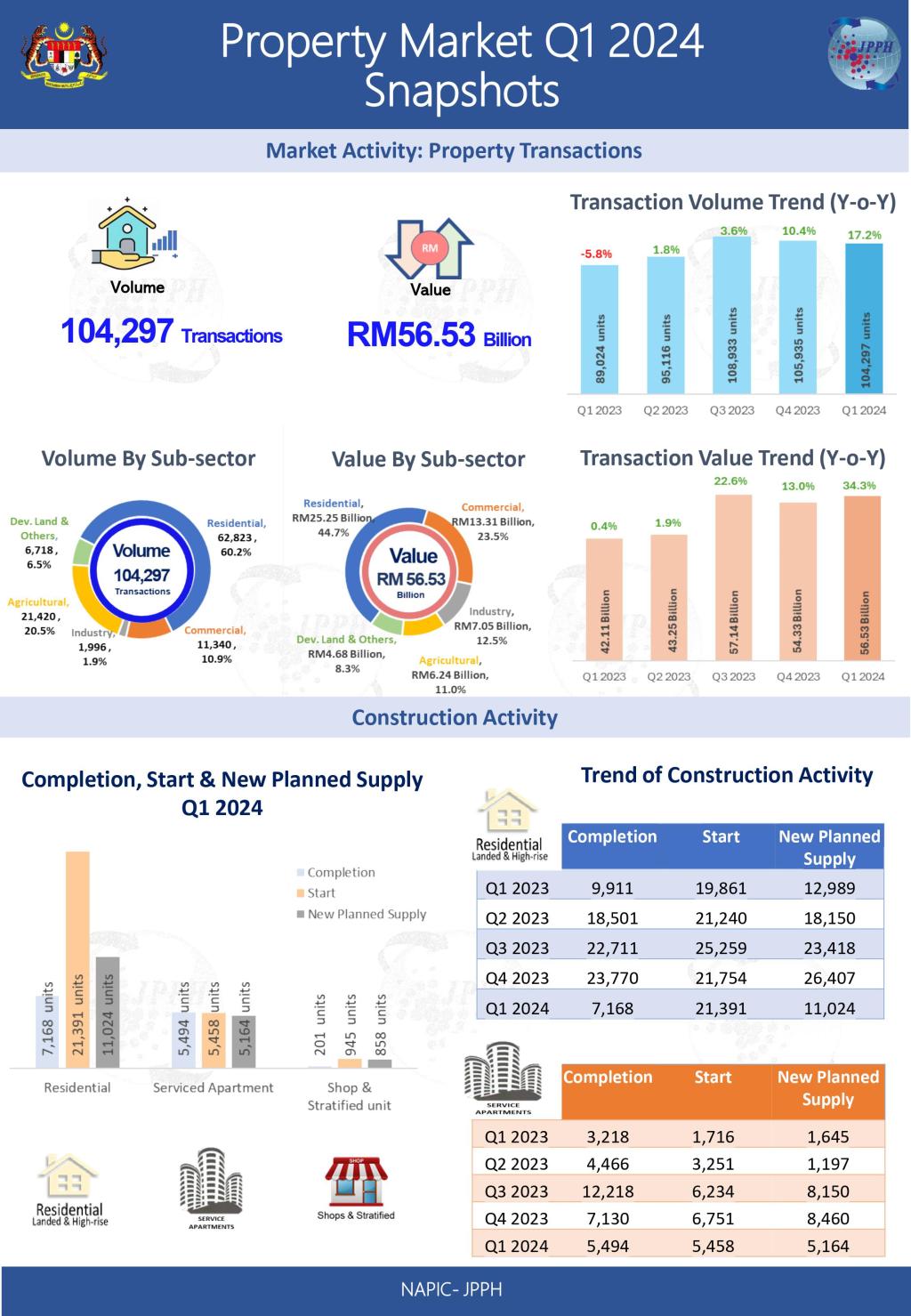
Malaysia’s real estate market continues to thrive, with 104,297 transactions valued at RM56.53 billion recorded in the first quarter of 2024 (1Q24). This marks a 34.3% increase from the same period in 2023, which saw 89,024 transactions worth RM42.11 billion.
“The government aims to ensure that economic planning, which integrates catalytic projects with inclusive development, will sustain long-term growth in the real estate market,” Amir Hamzah remarked in a statement today.
Valuation and Property Services Department director-general Abdul Razak Yusak attributed the strong performance to significant increases in transactions across all subsectors, particularly commercial real estate (up 51.5%) and agricultural land (up 64.2%).
“Government initiatives, such as extending the stamp duty exemption for first home purchases up to RM500,000 until December 2025, have been pivotal in boosting the real estate market,” he added.
In terms of subsector growth, commercial real estate led with a 33.4% increase, followed by residential at 16.6%, agricultural at 13.7%, and development land at 10.7%.
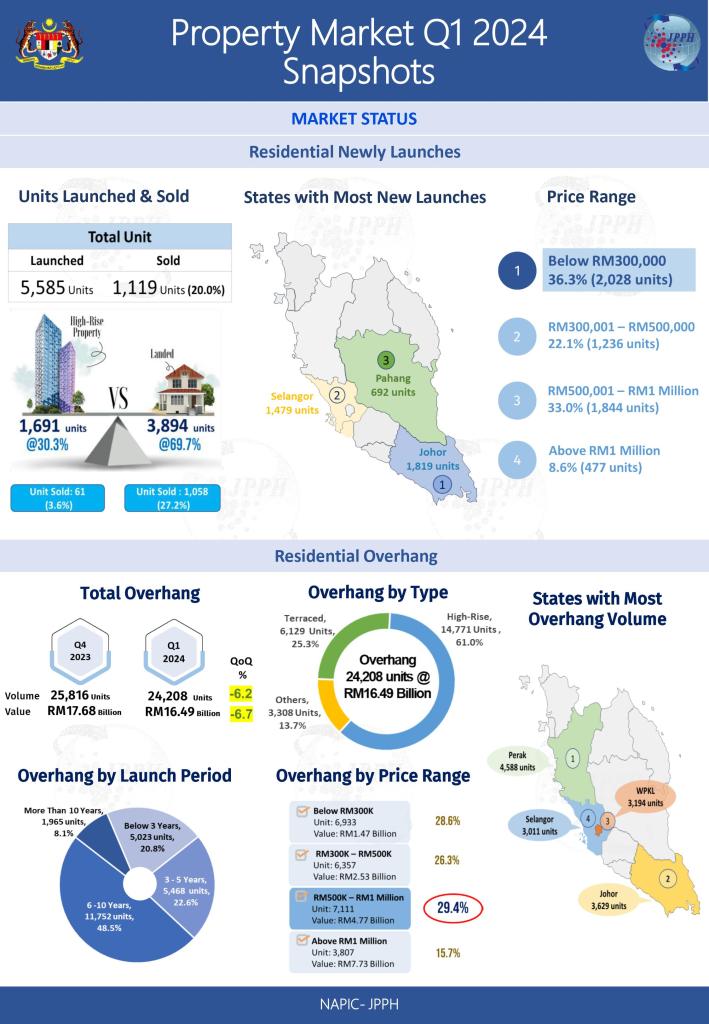
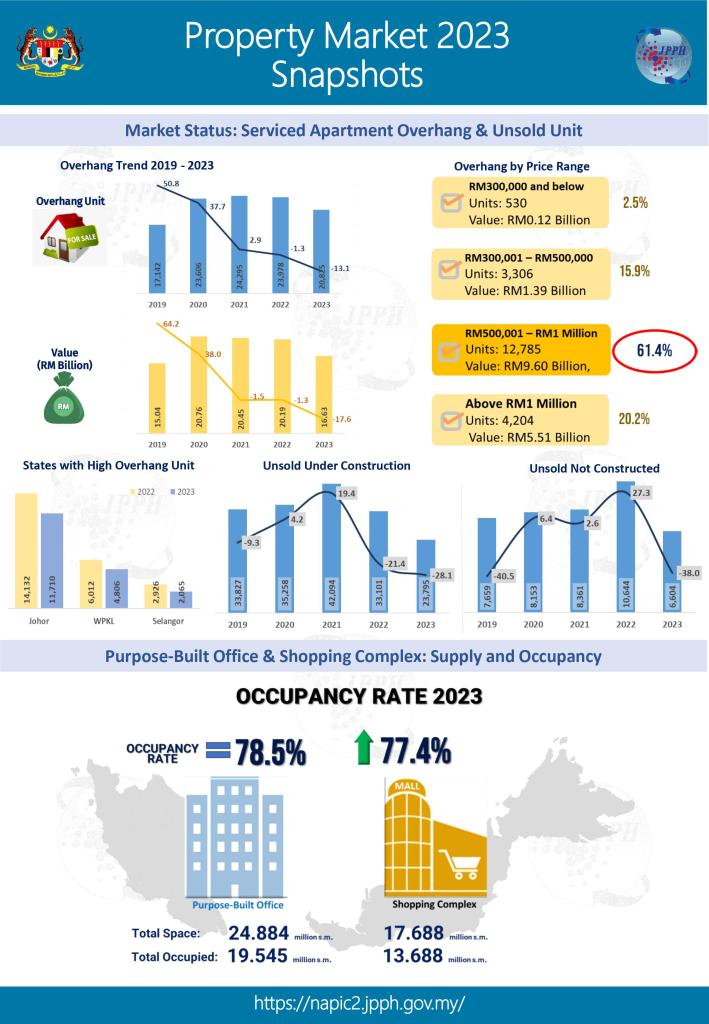
Additionally, the number of unsold completed residential properties (overhang) decreased to 24,208 units valued at RM16.49 billion, compared to 25,816 units valued at RM17.68 billion in the fourth quarter of 2023 (4Q23).
“Preliminary data for the Malaysian House Price Index (MHPI) in 1Q24 showed a slight increase to 216.9 points (RM467,997 per unit), reflecting an annual growth rate of 0.5%. Most states experienced moderate growth between 0.5% and 4.6%, except for Kuala Lumpur, Penang, Perak, Melaka, and Sarawak,” Abdul Razak noted.
In 2023, Malaysia’s property market surged, boasting more than 399,000 transactions totaling nearly RM200 billion, marking a notable 2.5% uptick in transactions and a substantial 9.9% increase in overall value compared to the previous year.
Good news, there is a promising decline in unsold residential properties, dropping to 26,000 units valued at RM17.7 billion from 28,000 units worth RM18.41 billion in 2022.
Further buoying this optimism, the Valuation and Property Management Department (JPPH) reported a palpable uptrend in property transactions across various subsectors. Residential transactions saw a notable 7.1% increase, while commercial, industrial, agricultural, and development land and other subsectors experienced growth rates of 17.5%, 13.1%, 4.6%, and 13.8%, respectively, compared to 2022.
Moreover, JPPH noted a significant uptick in new residential launches, up by 4.4% to 56,526 units in 2023 compared to 54,118 units in 2022. Impressively, these launches exhibited improved sales performance, with a surge to 40.4% from 36% in the previous year.
Meanwhile, the Malaysia House Price Index (MHPI) registered at 216.5 points (equating to RM467,144 per unit) in 2023, indicating moderate annual growth of 3.2%. This stable growth trajectory underscores the resilience and attractiveness of Malaysia’s property market amidst evolving economic dynamics.
Here are the Property Market 2023 snapshot by JPPH