Have you ever considered the impact of public transportation on the property market? Your guess is likely similar to mine—it tends to drive property prices up. Some people believe they should wait to purchase property until a project is complete, but that usually means paying higher prices. My advice is to buy when the project is in the planning stage, as prices are generally lower.
The latest development in Penang is the Mutiara Line light rail transit (LRT) project, which is on track despite a few amendments to the original plan. The adjustment to the LRT route is to extend the line from Penang Island to Penang Sentral via an elevated track above the sea, which is good news for residents on the mainland and property investors alike.
According to the latest report from MRT Corp, the route will begin at Penang Sentral on the mainland and head to the first proposed station on Penang Island at Macallum. From Macallum, the route will pass through Komtar, Jalan Gurdwara, Solok Sungai Pinang, Sungai Pinang, Jelutong Timur, and continue to Silicon Island.
Penang LRT Line (Unofficial)
The above is the detailed proposal and locations of LRT stations in Penang. There are a total of 22 stations along the line. Imagine what will happen to property prices going forward along the line and nearby the stations?
GEORGE TOWN, Jan 9 2025
GEORGE TOWN, Jan 9— This year marks the final edition of the iconic Pesta Pulau Pinang at Tapak Pesta Sungai Nibong, as plans are underway to relocate the event to a new venue next year.
The decision to move is driven by the incorporation of part of the festival site into the Mutiara Light Rail Transit (LRT) Line project. The 2025 edition is expected to be the last held at this historic location.
Despite the change in venue, the festival’s significance as a vibrant celebration for Penangites will remain unchanged, symbolizing both the state’s progress and its rich cultural traditions.
Without a doubt, your mortgage represents one of the most significant financial commitments you’ll undertake. Over its lifespan, the interest paid to the bank alone can skyrocket into tens of thousands. Consider this: by adhering to a 30-year home loan term, you may ultimately shell out twice the original loan amount in total.
Did you know that within the first five years of a 30-year loan, you’re likely to reduce only about 7% of the principal? Even by the 20th year, you might still be grappling with less than half. It’s high time to reclaim control over your loan and expedite its repayment to save substantial sums in interest.
Gone are the days of rigid loan structures prevalent from the 1960s to the 1990s. Today, borrowers have access to a plethora of tools and flexible bank policies, enabling them to slash down loan tenures.
The sooner you bid farewell to your home loan, the sooner you’ll inch closer to retirement and debt-free living. While myriad methods exist to accelerate repayment, not all may be a perfect fit for your situation. It’s imperative to conduct thorough research and select the strategies best aligned with your needs.
Here are some actionable ways to expedite home loan repayment:
Making Extra Payments: Witness the magic unfold by utilizing a mortgage calculator to see how even modest additional monthly payments can drastically reduce interest and hasten home loan repayment. Remember, every dollar directed towards the principal shrinks the interest burden and speeds up loan clearance
Refinance: Take advantage of prevailing lower interest rates by refinancing your loan. Use a mortgage calculator to gauge potential interest savings, but don’t forget to factor in associated costs like penalties and legal fees.
Negotiate Interest Rate Adjustments: Keep a keen eye on interest rate fluctuations and consider negotiating with your bank for a reduction. Maintaining current installment amounts despite rate reductions can substantially reduce repayment years
Utilize Flexi Mortgages: Explore flexible mortgage options like the Flexi Mortgage or Money Merge Account, where daily interest calculations and account consolidation accelerate principal reduction, thus shortening loan tenure.
Interest Rate Adjustments: Strategize responses to fluctuating interest rates by either increasing monthly installments to maintain repayment duration or maintaining installments to reduce repayment years.
EPF Withdrawals: Tap into your EPF Account II to swiftly reduce principal and expedite loan repayment. This can even be arranged on a monthly basis for added convenience. In Malaysia it is called EPF or Employee Provident Fund. Its a retirement saving account.
Continuous Monitoring and Adjustment: Regularly monitor your loan progress and financial situation, adjusting strategies as needed to optimize repayment efficiency.
Bi-Weekly Payments: Divide your monthly installment into bi-weekly payments, effectively making 13 monthly payments annually. This simple adjustment can shave off at least four years from a typical 30-year loan term, although availability may vary by region. Please take note that not every country has this package.
By diligently implementing these strategies, you can significantly alleviate the burden of your home loan and pave the way towards financial freedom.
After all the searching, surveying and checking, you have finally found your perfect home. Now comes the hardest part. The property is not yours to call home yet. Unless you buy it in cash, like most homebuyers, you would need to rely on a bank loan to turn your dream into reality.
Applying for a home loan can be quite nerve-wracking especially for first-time home buyer. What’s more, it can be very frustrating if the application is unsuccessful. If your loan is rejected, it’s not the end of the world, but it is human nature to put the blame on someone else. In a way, pointing the finger may also help you understand why your application was rejected, and what you can do differently in your next attempt. We have made a list of the top 3 contenders for the blame game:
Plenty of people blame Bank Negara Malaysia (BNM) for the many loan rejections in Malaysia. Are they the culprit, though? Well, BNM is the one making all the loan policies in Malaysia and most people may feel that the ever-tightening policies are making it more difficult to borrow from banks.
However, we need to look at this from another point perspective. If BNM did not have all these policies in place, we will most likely face a subprime mortgage crisis, as what occurred in the USA in 2008. How did this crisis come about? This happens when banks get greedy and start lending to anyone, even to borrowers who have a history of low credit scores and problems with debt. In time, these high-risk borrowers will default on their loan repayment and this will have a ripple effect and evolve into a national issue.
The Solution: Keep tabs on Bank Negara Malaysia’s latest borrowing regulations
With the country’s current slow but fluctuating economic growth, it’s beneficial to keep yourself updated with the latest Bank Negara Malaysia (BNM) borrowing regulations and not depend on word of mouth from friends or relatives.
Prior to that, homeowners were allowed to get their homes refinanced for up to 90% of their value with a maximum repayment tenure of 35 years and were able to use the cashed-out portion for investments. But in the 2014 revision, BNM capped the tenure of personal loans at 10 years.
So why does this matter? Well, take this example: your existing home loan with Bank A is RM400,000 and perhaps because of lower interest rates, you want to refinance your home for RM550,000 at Bank B. The additional RM150,000 would be classified as a personal loan and the 10-year repayment tenure would kick in.
This means that the DSR of the cashed-out portion would be calculated using the 10-year tenure, resulting in a much higher DSR and thereby affecting your overall credit score and potentially leading to your loan application getting rejected.
Besides that, BNM recently shared that many banks were using unfair T&Cs in housing loan contracts. BNM has assured that it will be releasing a set of standard T&Cs soon to keep Financial Service Providers in check – where they must act in good faith by ensuring the fairness of contract terms, provide clear and concise product information as well as offer appropriate advice/recommendation based on the needs and financial circumstances of loan applicants.
As a savvy consumer, you would want to equip yourself with these standards once it is out and study your rights as a financial consumer before approaching a bank for a home loan.
Therefore, we must remember that under BNM, we have a prudent and balanced lending policy. We need it to protect our country. Best to think again before pushing the blame onto BNM.
If we do not blame BNM, can we blame the banks instead? After all, they are the ones who approve or reject the loans. Let’s try this – put yourself in the bank’s shoes. Say you are the lender, and your friend the borrower, wants to borrow RM50,000 from you. You know that your friend earns RM5,000 a month. Each month, most of his money goes into paying off his debts. The big question here is, will you lend the money to him? The risk of not getting your money back is very high. Logically, most people would think twice or not even consider lending their friend that sum of money. A bank thinks the same way – they are not a charity, but a profit-driven organization who are accountable to their shareholders.
Some banks have their own internal policies in lending on top of the existing BNM policies – such as having their own scoring system. As different banks have different lending policies you need to know which bank is the most suitable one for you by conducting your own research and comparison. But do keep in mind that even before they look at your documents, they will first check your credit rating. If your rating is low, it’s not hard to see why your application may be rejected immediately. Do you still think we should be blaming the banks?
But do keep in mind that even before they look at your documents, they will first check your credit rating. If your rating is low, it’s not hard to see why your application may be rejected immediately.
The Solution: Determine the best bank DSR (which will match your DSR)
To reduce the chances of getting your home loan application rejected, you should first calculate your Debt to Service ratio (DSR), which is the calculation of your debt against your monthly income.
DSR = (Total commitment ÷ Nett Income) x 100
One of the most common reasons why banks would reject a home loan application is if the applicant’s DSR is above the bank’s maximum allowable DSR. This can get tricky as every bank will have its own respective guidelines for the maximum allowable DSR that they are willing to accept.
It could be affected by various factors such as income, age, qualifications and even your net worth. The most ideal DSR range would be between 50%-60% as it would hit below the maximum allowable DSR of many banks and thus the likelihood of loan approval would increase.
If your DSR is the reason why your loan application was rejected, don’t worry! You can start improving your DSR by either reducing your current debts or by consolidating your unsecured loans and credit card bills. Check out LoanCare, which calculates and uses your DSR to help you compare home loan products across at least 10 banks in Malaysia.
3. The borrowers
How about if we blame ourselves, the borrowers? Plenty of people are laden with debts from credit cards, personal loans, luxury cars and such. Would it be fair to ask the banks to lend them more money? The risk of non-repayment is very high.
The Solution: Determine your CCRIS report pitfalls
If your home loan is denied, the first thing you want to do is to check your CCRIS report. However, these days it’s rare to find anyone who isn’t aware that they must first check their credit score via The Central Credit Reference Information System (CCRIS). This system reflects your past 12 months of credit activities and shows the bank whether you are a good or bad paymaster.
However, the buck does not stop at having a great credit score. There are other factors which might skew your report. For instance, there is always the question, “If my loan is declined, when can I apply again?”
Did you know that all of your loan rejections are also reflected in your CCRIS? This can prove to be fatal for those that cast a wide net by submitting loan applications to multiple banks. Banks would usually be aware of any prior rejections via their CCRIS record, and thus, applicants would have to wait between 3-6 months before attempting to apply for another loan.
As such, it’s wise to improve your credit score before your next attempt. If you have multiple credit cards and loans attached to your name, making timely payments could help show that you are able to manage your commitments and are a good paymaster.
Besides that, zero obligations are not necessarily a good thing either. Keep in mind that banks would also be reluctant to approve your loan application if your CCRIS report is blank or ‘clean’ – where there are no credit cards/loan/overdraft facilities under your name. Better to have at least one active credit facility with timely payments to prove to the bank that you are able to take on and handle debt obligations responsibly.
The Next Step: Prepare at least 6 months of documentation
After fixing your credit score, the next thing you want to do to prove to the bank that you will be a good paymaster is to prepare at least 6 months’ worth of documentation. Regardless of whether you are a salaried employee or a freelancer, keeping meticulous records of all your financial documents is especially beneficial as the bank requires proof of financial capability.
In order to make your life much easier when it is time to submit your loan application, it’s advisable to keep on hand a record of the latest 6 months’ documentation of the following:
(a) EA Form/Form BE/Form B: Always file and pay your income taxes within the prescribed dateline.
(b) Salary slip/proof of income: Banks will require a continuous monthly record of your proof of income whether it’s salary slips or business banking statements. As such, make sure that your records are well organised with every month accounted for.
(c) EPF statements: This will not be a problem if you are a salaried employee as both you and your employer are required by law to make monthly contributions to your EPF. However, if you are a freelancer, consider making voluntary monthly contributions as a way to boost your credit portfolio.
(d) Bank account statements: Having either a current account or a separate saving account with a steady and consistent balance is another method that can help bolster your image as a responsible and credible borrower.
Starting an Airbnb business can be a profitable venture if approached strategically. Airbnb offers an alternative, often more affordable, option for accommodation compared to traditional hotels. Before diving in, consider the following tips to ensure your success in the Airbnb business:
1. Location Matters
The location of your Airbnb property plays a significant role in its success. Here are some factors to consider:
Accessibility/Convenience: Choose a location that is easy to access, with good transport links.
Proximity to Attractions: Being near popular tourist spots, business districts, airports, and transport hubs can make your property more attractive.
Amenities Nearby: Guests often appreciate being close to restaurants, shopping centers, and convenience stores.
Neighborhood Safety: A safe, welcoming neighborhood can encourage repeat visits.
While prime locations are desirable, properties in less popular areas can still thrive if they offer unique features or experiences.
2. Regulations and Legalities
Understanding the laws and regulations surrounding short-term rentals in your area is essential:
Local Laws: Research the local rules regarding Airbnb rentals. In some places, regulations are strict or outright ban short-term rentals.
Property Type: Commercial properties may be more accommodating for Airbnb purposes. Check with property management if you’re allowed to operate an Airbnb.
Compliance: Follow local rules to avoid legal issues and ensure the long-term success of your business.
Staying informed about changes in local regulations is crucial for operating an Airbnb business legally.
3. Know Your Target Market
Identifying your target market will help guide your decisions:
Types of Guests: Determine whether you want to cater to tourists, business travelers, families, or other specific groups.
Property Setup: Tailor your property and its amenities to the needs and preferences of your target market.
Understanding your guests’ needs will help you design a property that appeals to them, improving your chances of bookings and positive reviews.
Sign Up for Homestay Pro online Masterclass by Miichael Yeoh
4. Amenities and Services
Providing desirable amenities can enhance your property’s appeal:
Basic Amenities: Offer essentials such as Wi-Fi, toiletries, and kitchen supplies.
Added Comfort: Consider including features like a swimming pool, gym, or recreation areas.
Pricing: Properties with more amenities can typically command higher rental rates, but be mindful of pricing relative to nearby options.
Balancing price and amenities can make your property more attractive to potential guests, leading to more bookings.
By keeping these tips in mind and staying attentive to trends and feedback, you can increase your chances of building a successful Airbnb business.
Financial planning is the cornerstone of a secure and prosperous future. It involves setting realistic goals, creating a roadmap to achieve them, and making informed decisions about your money. Whether you’re just starting your career or nearing retirement, having a solid financial plan in place is essential for building wealth, managing risks, and achieving financial independence. In this article, we’ll explore the key components of financial planning and provide actionable tips to help you navigate your financial journey with confidence.
1. Assess Your Current Financial Situation: The first step in financial planning is to assess your current financial situation. Take stock of your income, expenses, assets, and liabilities. Create a detailed budget to track your spending habits and identify areas where you can save money. Calculate your net worth by subtracting your liabilities from your assets. This snapshot of your finances will help you understand where you stand and identify areas for improvement.
2.Set SMART Financial Goals: Once you have a clear understanding of your financial situation, it’s time to set SMART (Specific, Measurable, Achievable, Relevant, Time-bound) financial goals. Whether it’s buying a home, saving for your children’s education, or planning for retirement, clearly define your goals and prioritize them based on their importance and urgency. Break down each goal into smaller, manageable milestones to track your progress along the way.
3.Create a Budget and Stick to It: A budget is a powerful tool that helps you allocate your income towards your financial goals while ensuring that you live within your means. Start by listing your fixed expenses such as rent/mortgage, utilities, and loan payments, then allocate a portion of your income towards savings and investments. Be mindful of discretionary spending and look for opportunities to cut unnecessary expenses. Regularly review and adjust your budget as your financial situation changes.
4. Build an Emergency Fund: Life is unpredictable, and unexpected expenses can derail your financial plans if you’re not prepared. That’s why it’s crucial to build an emergency fund to cover unforeseen expenses such as medical emergencies, car repairs, or job loss. Aim to save at least three to six months’ worth of living expenses in a liquid, accessible account like a savings account or money market fund. Having an emergency fund provides peace of mind and financial security during challenging times.
5. Manage Debt Wisely: Debt can be a significant obstacle to achieving your financial goals if not managed wisely. Prioritize paying off high-interest debt such as credit cards and personal loans to minimize interest payments and improve your financial health. Consider consolidating debt or negotiating lower interest rates to accelerate your debt repayment journey. Avoid taking on new debt unless absolutely necessary and use credit responsibly to build a positive credit history.
6. Invest for the Future: Investing is a powerful wealth-building tool that allows your money to grow over time through the power of compounding. Determine your risk tolerance and investment objectives, then develop a diversified investment portfolio tailored to your goals and timeline. Consider investing in a mix of stocks, bonds, mutual funds, and other asset classes to spread risk and maximize returns. Regularly review and rebalance your portfolio to ensure it remains aligned with your objectives.
7. Plan for Retirement: Retirement may seem far off, but it’s never too early to start planning for your golden years. Take advantage of employer-sponsored retirement plans such as 401(k)s or IRAs to save for retirement tax-efficiently. Contribute enough to qualify for employer matching contributions and increase your contributions over time as your income grows. Consider working with a financial advisor to develop a personalized retirement plan and explore options such as annuities or pension plans to supplement your retirement income.
8. Protect Yourself and Your Loved Ones: Insurance is an essential component of financial planning that provides protection against unforeseen events such as illness, disability, or death. Review your insurance coverage regularly to ensure it adequately protects you and your loved ones. Consider policies such as health insurance, life insurance, disability insurance, and long-term care insurance based on your needs and circumstances. Don’t overlook estate planning, including drafting a will and establishing powers of attorney to protect your assets and ensure your wishes are carried out.
Financial planning is a lifelong journey that requires diligence, discipline, and adaptability. By following these key principles and incorporating them into your financial strategy, you can take control of your finances, build wealth, and achieve your long-term goals. Remember that financial planning is not a one-time event but a continuous process that evolves with your life circumstances. Stay proactive, stay informed, and stay committed to securing your financial future.
What exactly is a reverse mortgage, and could it be introduced in Malaysia? This financial product, which has been in use in the West for quite some time, allows senior citizens who own property to leverage it for a loan without the burden of monthly repayments. Instead of the borrower making payments to the bank, the bank pays the borrower based on a percentage of the property’s value, typically around 50 to 60%. Repayment is due upon the borrower’s passing, property sale, or refinancing.
How does the bank pay me?
Homeowners can choose one of three ways to obtain their borrowing from the bank: a fixed monthly payment with a predetermined number of months/years of payout, a lump sum payment upfront, or a combination of both.
Who owns the house?
Just like any mortgage taken from the bank, you are still the owner of the house. You mortgage the property to take out a loan. The agreement will terminate when the borrower passes away, sells the house, or refinances with another bank.
How much does it cost?
Here are some of the costs that you will need to pay: legal fees, valuation fees, mortgage insurance, and monthly maintenance fees. Depending on the bank you apply to, some will advance the costs and put them into the loan.
Pros and Cons of Reverse Mortgage: In any mortgage borrowing, there are advantages and disadvantages. Borrowers are advised to choose wisely when applying.
Pros:
You do not need to pay monthly installments.
Funds can help with living expenses such as medical bills and debt repayment.
The fund can help homeowners enjoy their retirement.
With the fund, homeowners will be able to maintain their current lifestyle.
Cons:
The closing costs, such as legal fees and insurance, can be steep.
The property will be mortgaged with the bank.
Will Reverse Mortgage come to Malaysia?
Banks need a healthy mortgage portfolio, and reverse mortgage could provide them with a new avenue to expand their products. Currently, in Malaysia, it is under Cagamas (Mortgage Corporation of Malaysia) and is called Skim Saraan Bercagar (SSB) and SSB Islamic (SSB-i).
Here are the criteria for borrowers:
a) Malaysian
b) 55 years old and above
c) Owner or joint owners of a residential property
d) For a joint loan, the joint borrower can be a partner, parent, sibling, or child, subject to age limit
Do take note of the property criteria:
a) Residential property in Malaysia held in Borrower’s or joint borrowers’ name(s).
b) For a joint Skim Saraan Bercagar Loan, joint ownership of property is required.
c) Property must be owner-occupied and be the primary place of residence.
d) Freehold property or leasehold property with remaining lease tenure not less than 90 years
e) Free from encumbrances such as mortgage and other financial liabilities.
For more detailed information on SSB and SSB-i, interested individuals can visit https://ssb.cagamas.com.my/. It’s essential to thoroughly understand the terms and conditions before applying for a reverse mortgage.
Securing a mortgage nowadays presents more challenges compared to two decades ago. During my tenure in the banking industry, a loan could easily be approved with just a photocopy of an identity card and salary vouchers. However, in today’s landscape, a more comprehensive set of documents and detailed borrower reports are required. We must acknowledge that we now live in a world of enhanced technology.
Twenty years ago, when borrowers approached us for loans, we primarily checked their CTOS records for bankruptcy. If they passed this check, I would submit the loan for approval. However, today, the CTOS system has evolved, incorporating many other borrower details. It’s astonishing that, in most cases, the system possesses more information about individuals than they do themselves.
Today, I’ll discuss the CTOS report. Another platform providing similar reports is called CCRIS, which we’ll cover in upcoming articles.
In simple terms, your CTOS report serves as your financial health assessment, aiding loan providers in evaluating your eligibility for borrowing.
Whether you like it or not, when you apply for a loan, banks will scrutinize your financial health. Instead of leaving this research solely to the banks, why not check your CTOS report yourself beforehand? This way, you’ll be better prepared when submitting a loan application and won’t be caught off guard.
There are two types of CTOS reports: a free version and a paid one.
The free report offers basic information, while the paid report, costing RM27.00, provides more comprehensive and useful details for borrowers. For our discussion, we’ll focus on the full report.
What’s included in the report?
Personal Information
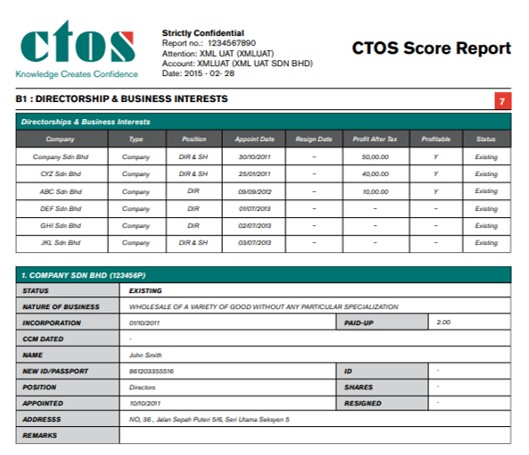
Directorship & Business Interest
Litigation & Bankruptcy
Trade References
CTOS Score
CCRIS Record
Dishonoured Cheques
For today’s discussion, we’ll delve into sections 2, 3, 5, and 6.
Directorship & Business Interest
This section lists any companies associated with the individual. Banks use this information to determine the number of companies an individual is involved with. Sometimes, individuals may disclose only one company, but upon checking, banks may find out about several undisclosed companies. If banks require unbiased information on these companies, they can conduct a CTOS search on them. As mentioned earlier, banks often know more about individuals than individuals do about themselves.
CTOS Score
What is it, and how does it work? These are common questions you may have.
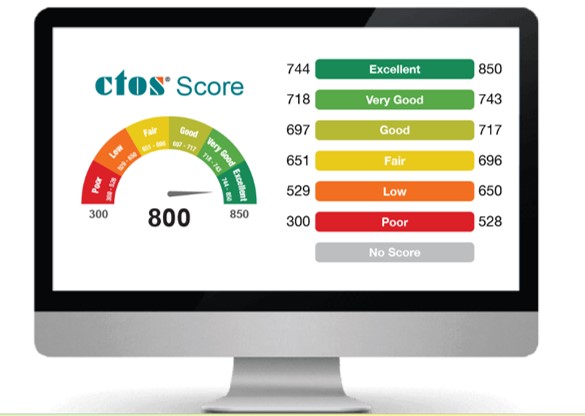
The CTOS score determines your creditworthiness for the loan you’re applying for, indicating the likelihood of defaulting on repayments. Scores range from 300 to 850. If a borrower falls below the “fair” range, loan approval becomes more challenging. Banks become concerned about the higher risk associated with granting such loans. If borrowers discover that their score is below “fair,” it’s prudent to reassess their financial situation.
You might wonder what factors influence the score. They include:
a) Payment History (45%)
b) Amount Owed (20%)
c) Length of Credit History (7%)
d) Credit Mix (14%)
e) New Credit (14%)
CCRIS Record
The Central Credit Reference Information System (CCRIS) is established by Bank Negara Malaysia’s Credit Bureau, offering standardized credit reports on prospective borrowers.
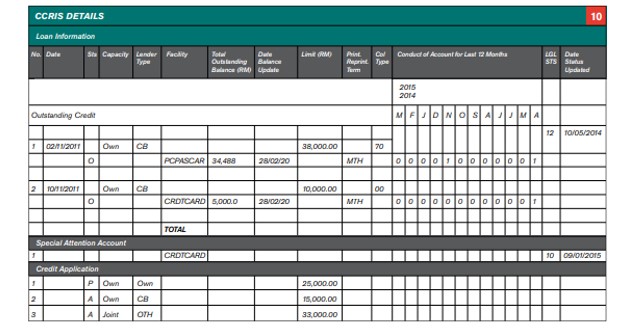
CCRIS acts as a centralized database, providing insights into your financial status. Monthly updates from relevant institutions furnish essential data such as banks, insurance providers, and government agencies. This process enables financial institutions to evaluate borrowers’ creditworthiness effectively by referencing their financial history records.
This section offers a detailed breakdown of each facility, including:
Status of the facility
Capacity
Lender Type
Facility Type
Total Outstanding Balance
Limit/Monthly Repayment
Repayment Term
Collateral Type
Conduct of Account
Legal Status
Special Attention Account
Credit Application Details
If the conduct of the account consistently shows a number higher than zero, say 3, it indicates the borrower is in a three-month default. Banks use this information to assess the likelihood of future defaults.
That’s a detailed overview of CTOS. I hope you find it helpful. Stay tuned for my next write-up, and don’t forget to subscribe.