10–16 October 2026
LOOK BEYOND THE PRICE
Five stories. Three Malaysian developments. Two international markets. One objective: helping buyers and investors make better-informed property decisions.
🇲🇾 MALAYSIA PROPERTY MARKET
STORY 1 — Why Are Malaysian Property Developers Becoming More Cautious?
What Happened?
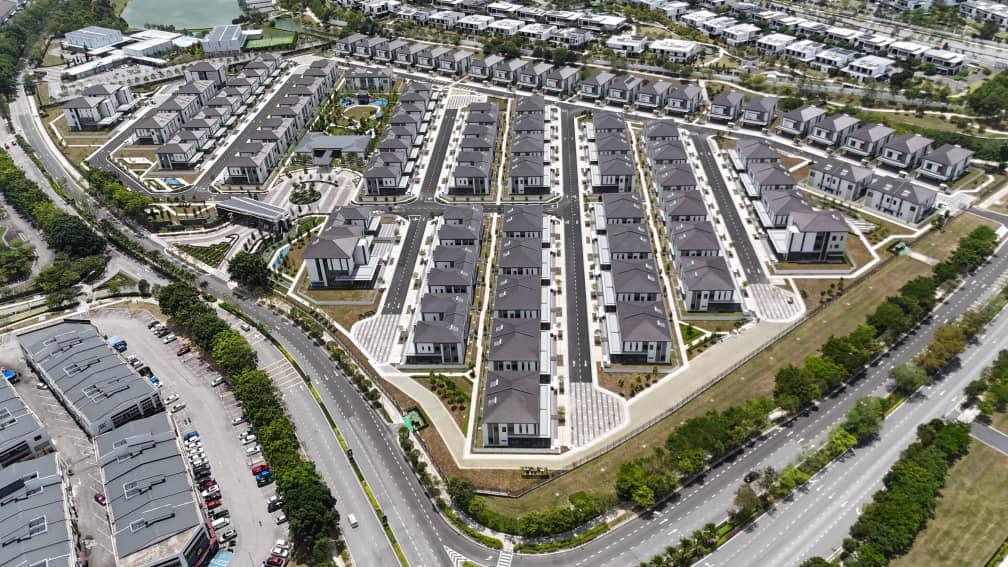
A property industry survey reported by The Edge Malaysia on 15 October revealed that 63% of surveyed developers had no plans to launch residential projects in the second half of 2026.
The survey by the Real Estate and Housing Developers’ Association Malaysia (REHDA) covered 181 respondents in Peninsular Malaysia.
Key findings included:
- 114 of 181 respondents had no plans for residential launches in the second half of 2026.
- The remaining respondents planned to launch 18,696 units.
- 77% of respondents reported financing difficulties during the first half of 2026.
- 59% of respondents with relevant data reported unsold completed residential units as at 30 June 2026.
- Among respondents who reported unsold completed units, 32% said some of their stock had remained unsold for more than three years.
Developers cited market conditions, approval delays and existing unsold inventory as reasons for their cautious approach. The Edge Malaysia
Source: The Edge Malaysia — REHDA property industry survey, 15 October 2026
Why It Matters
This is an important signal for Malaysia’s property market.
A high number of new launches does not automatically mean a healthy market. What matters is whether homes are priced appropriately, buyers can obtain financing and completed units find genuine occupants.
The financing figures are particularly noteworthy. Demand for housing may exist, but prospective buyers still need to qualify for loans and manage their financial commitments.
Developers must also balance construction costs against what their target customers can realistically afford.
Miichael’s Review
I see this as a reminder that property development must follow real demand, not simply market excitement.
When developers become more cautious, buyers should look beyond promotional campaigns and ask some practical questions:
- How many comparable properties are already available?
- Are existing developments attracting genuine buyers?
- Are asking prices supported by recent transactions?
- Can the intended buyers realistically obtain financing?
- Is the development designed for actual occupants or mainly for investors hoping to resell?
The survey also suggests that different property categories are performing differently. Buyers should therefore avoid treating the entire Malaysian market as one uniform market.
My view: A more selective market can reward careful research. Buyers need to distinguish between a property that is attractively marketed and one that is genuinely well positioned.
STORY 2 — Malaysia Reports 1,726 Revived Housing Projects: What Does This Mean for Buyers?
What Happened?
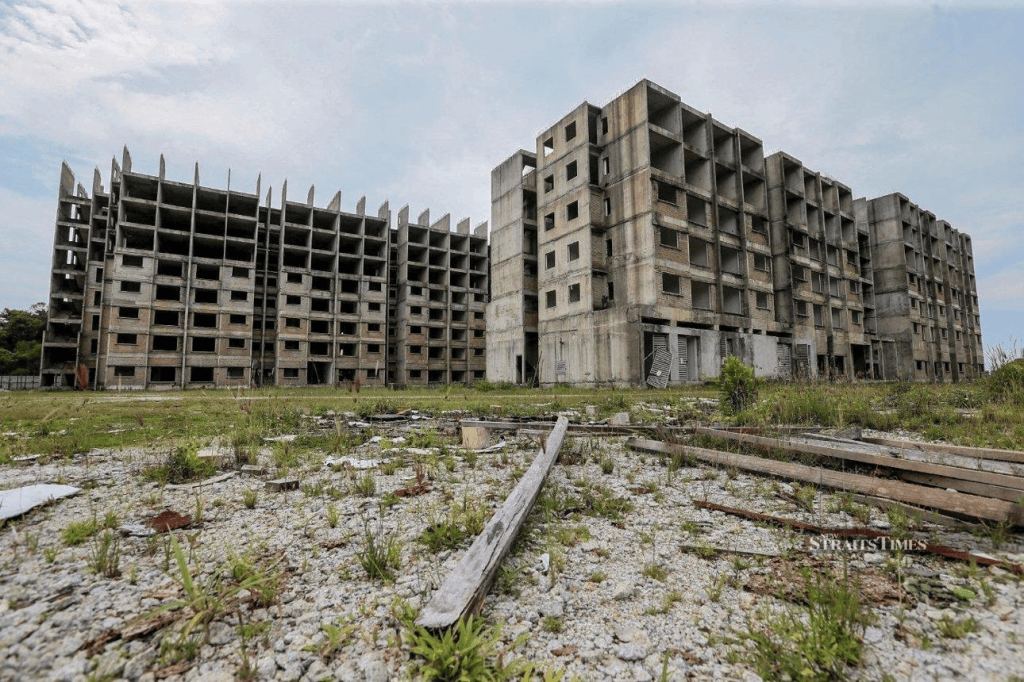
On 14 October, EdgeProp Malaysia reported on the Housing and Local Government Ministry’s update that 1,726 sick or abandoned private housing projects had been revived since 2023.
The projects involved approximately:
- 199,643 housing units
- RM158 billion in gross development value
- 1,542 sick projects completed with Certificates of Completion and Compliance
- 147 projects restored to smooth status
- 37 abandoned projects resolved through physical completion or arrangements benefiting buyers
The ministry also reported that, as at 31 August 2026, Kuala Lumpur still had seven projects classified as abandoned and another 12 classified as sick.
The government has set a target of eliminating sick and abandoned housing projects by 2030. EdgeProp
Source: EdgeProp Malaysia — Housing project rehabilitation update, 14 October 2026
Why It Matters
A stalled housing project can create serious financial and emotional difficulties for buyers.
They may have paid deposits and progressive payments, committed to housing loans and continued paying rent while waiting for their homes.
The reported rehabilitation figures are encouraging, but one distinction matters: a project being revived does not necessarily mean every unit has been completed and handed over.
The different outcomes must be examined individually.
For prospective buyers, this is also a reminder to assess the delivery record of a developer and the actual status of a project before committing.
Miichael’s Review
I welcome efforts to protect homebuyers and resolve problematic developments.
However, I would assess a project’s progress using evidence rather than announcements alone.
Before buying into an ongoing development, I would want to understand:
- The developer’s financial and delivery track record.
- The project’s construction progress.
- Whether the required approvals and legal arrangements are in place.
- Whether there are known disputes or rehabilitation issues.
- The expected completion date and the evidence supporting it.
For buyers already affected by a stalled project, the available rehabilitation route and legal position are particularly important.
My view: The real measure of success is not simply how many projects have been declared revived. It is how many affected buyers ultimately receive the homes or appropriate resolutions they were promised.
STORY 3 — IOI Properties Advances Its Proposed RM7.66 Billion REIT Listing
What Happened?
IOI Properties Group Berhad advanced its proposed Malaysian real estate investment trust (REIT) listing after signing an underwriting agreement with six financial institutions.
According to EdgeProp Malaysia on 12 October:
- The proposed REIT has nine initial assets.
- The portfolio was valued at approximately RM7.66 billion as at 31 May 2026.
- The proposed offering could involve up to 2.2 billion units.
- The underwriting agreement covers 165 million offer units, subject to the offering’s allocation provisions.
- The prospectus was targeted for the fourth quarter of 2026, with listing targeted by year-end.
The initial portfolio includes IOI City Mall, six hotels and two office properties.
These are proposed listing arrangements; the announcement did not mean the IPO had already been completed. EdgeProp
Source: EdgeProp Malaysia — IOI Properties advances proposed REIT IPO, 12 October 2026
Why It Matters
A REIT provides a way for investors to gain exposure to income-generating property through a listed investment vehicle rather than purchasing an entire property themselves.
For the property sector, a listing can provide another route for capital management and potentially broaden investor participation.
However, a large property portfolio does not automatically make a REIT an attractive investment.
Investors still need to examine rental income, occupancy, financing costs, debt levels, asset valuations and the proposed distribution policy.
Miichael’s Review
This is worth watching because it connects property ownership with capital markets.
For individual investors, a REIT may offer a different way to participate in commercial property, hotels and retail assets without directly managing a building.
But the decision should be based on the investment’s fundamentals.
I would look carefully at:
- The quality and location of the underlying assets.
- The sustainability of rental income.
- Financing costs and gearing.
- The proposed distribution yield and how it is calculated.
- Whether the offering valuation is reasonable relative to comparable investments.
My view: The important question is not merely how much the portfolio is worth. It is whether its assets can generate sustainable income at a valuation that makes sense for investors.
🌏 INTERNATIONAL PROPERTY WATCH
🇦🇪 STORY 4 — Dubai Buyers Shift Towards Completed Homes as the Market Becomes More Selective

What Happened?
A third-quarter 2026 residential market report from betterhomes, reported by Khaleej Times on 15 October, showed a shift towards completed homes in Dubai.
Key findings included:
- Sales of ready residential properties rose 16% quarter-on-quarter.
- Secondary-market transactions reached 10,055, with a total value of Dh27.1 billion.
- Secondary-market transactions accounted for 29% of total residential sales, up from 24% in the second quarter.
- Overall residential sales totalled 34,615 transactions during the quarter, broadly unchanged from the previous quarter.
- Median apartment prices declined 2.4% between June and September, while villa and townhouse prices fell 2.3%.
Despite the quarterly price declines, prices remained higher than a year earlier. Rental enquiries also rose sharply, although median rents eased in several market segments. Khaleej Times
Source: Khaleej Times — Dubai ready-home sales jump 16%, 15 October 2026
Why It Matters
The figures suggest that buyers are becoming more selective about the type of property they purchase.
Completed homes offer advantages that off-plan properties cannot immediately provide: buyers can inspect the actual unit, assess the surrounding community and potentially receive rental income sooner.
However, the reported shift does not mean off-plan properties have become universally unattractive. Different buyers have different financial circumstances, objectives and risk tolerances.
The decline in quarterly prices also highlights the importance of comparing actual transactions rather than relying exclusively on advertised prices.
Miichael’s Review
This is an interesting development for property investors.
A completed property may provide greater visibility into its condition, rental demand and surrounding environment. An off-plan property may offer different advantages, but it also requires buyers to assess delivery risk and future market conditions.
I would compare both options using the same criteria:
- Total acquisition cost.
- Expected rental income.
- Maintenance and other holding expenses.
- Financing commitments.
- Comparable transaction prices.
- Exit options if market conditions change.
My view: A completed property is not automatically a better investment, just as an off-plan property is not automatically a better bargain. The right choice depends on the numbers, the risks and the buyer’s objectives.
🇨🇦 STORY 5 — Canadian Home Sales Fall Again as Mortgage Rates Weigh on Buyers
What Happened?
On 16 October, Reuters reported that Canadian home sales declined again in September as higher mortgage rates and expectations of a possible interest-rate increase weighed on market activity.
According to the Canadian Real Estate Association (CREA):
- National home sales fell 2.3% month-on-month in September, following a 0.7% decline in August.
- Sales were down 7.7% year-on-year on an unadjusted basis.
- The Home Price Index declined 0.4% month-on-month and 3.4% year-on-year.
- New property listings fell 1.8% from August.
- The seasonally adjusted sales-to-new-listings ratio slipped to 48.8%, below its long-term average of 54.7%.
At the time of the report, financial markets were pricing in the possibility of a 25-basis-point Bank of Canada rate increase in December. This was a market expectation, not a confirmed policy decision. Reuters
Source: Reuters — Canadian home sales fall in September as mortgage rates increase, 16 October 2026
Why It Matters
The Canadian market demonstrates how financing conditions can affect property transactions.
Even when prospective buyers want to purchase homes, higher mortgage costs can reduce borrowing capacity or make buyers more cautious about committing.
A slower market may give some buyers more time to negotiate. However, it does not automatically mean that every property is attractively priced.
Local conditions also matter: national figures can conceal significant differences between cities, neighbourhoods and property types.
Miichael’s Review
For me, the main lesson is the relationship between financing and affordability.
When interest rates rise, a buyer may qualify for a smaller loan or face a higher monthly repayment. That can change which properties are financially sensible.
Before committing, I would ask:
- Can I afford the repayments if borrowing costs increase?
- Does the property remain affordable after taxes, insurance and maintenance?
- Is the asking price supported by recent comparable transactions?
- Can I sustain ownership if resale takes longer than expected?
- Am I buying because the property suits my needs, or because I expect prices to rise?
My view: A property purchase should be financially sustainable even when market conditions become less favourable. Buyers who understand their financing limits are better placed to make measured decisions.
WORTH WATCHING
Here are five developments I would monitor over the coming weeks.
| Area | What to watch | Why it matters |
|---|---|---|
| Malaysia | Developer launch plans and sales performance | Shows whether supply is responding to genuine demand. |
| Malaysia | Rehabilitation of sick and abandoned housing projects | Buyers need evidence of actual progress and resolution. |
| Malaysia | IOI Properties’ proposed REIT prospectus | Provides details for evaluating the portfolio, pricing and distribution policy. |
| UAE | Completed-home prices, rents and transaction activity | Helps investors assess whether market conditions support their objectives. |
| Canada | Mortgage rates, sales activity and home-price trends | Provides an indication of how financing conditions affect affordability and demand. |
MY TAKEAWAY THIS WEEK
This week’s property news reinforces a principle that applies across markets:
Property decisions should be based on fundamentals, not headlines.
In Malaysia, developers are becoming more cautious, housing-project rehabilitation remains important, and a proposed REIT listing offers another way to participate in property investment.
In Dubai, buyers are showing greater interest in completed homes, while prices and rents are becoming more competitive in some segments.
In Canada, higher borrowing costs are weighing on transactions.
These markets have different conditions, but the underlying questions are similar.
- Is the property priced reasonably?
- Is there genuine demand?
- Can the buyer afford to own it comfortably?
- Does the investment generate sustainable income?
- Are the risks manageable if the market changes?
A property can look attractive on paper but still be unsuitable for a particular buyer.
Look beyond the price. Understand the fundamentals before making the decision.
Miichael Yeoh
PROPERTY STRATEGIST
miichaelyeoh.com