The recent announcement by Housing and Local Government Minister Nga Kor Ming regarding the blacklisting of 109 housing developers is a significant step toward enhancing transparency and protecting homebuyers in Malaysia. By making this list publicly accessible on the ministry’s website, potential buyers can now verify the credibility of developers before making purchasing decisions.
This initiative is part of broader efforts to address issues related to abandoned projects and fraudulent practices in the housing sector. The proposed amendments to the Housing Development (Control and Licensing) Act 1966 aim to impose stricter penalties on errant developers, including potential travel bans and substantial fines.
While these measures demonstrate the government’s commitment to safeguarding homebuyers, it’s crucial for individuals to conduct thorough due diligence. Beyond consulting the blacklist, prospective buyers should assess developers’ track records, financial stability, and past project completions. Engaging with real estate professionals and seeking legal advice can further ensure informed decisions.
In summary, the public disclosure of blacklisted developers is a commendable move toward greater accountability in Malaysia’s housing industry. However, a collaborative approach involving stringent enforcement, legislative reforms, and proactive consumer awareness is essential to foster a trustworthy and resilient housing market.
As of January 2025, Bank Negara Malaysia (BNM) has maintained the Overnight Policy Rate (OPR) at 3.00%, a position held since May 2023.
Understanding the Overnight Policy Rate (OPR)
The OPR is the benchmark interest rate at which banks lend to one another overnight. Set by BNM, it serves as a primary monetary policy tool to regulate liquidity, control inflation, and sustain economic growth.
Implications of an OPR Increase
When BNM raises the OPR, it signals an intent to tighten monetary policy. The effects of such an increase include:
Higher Borrowing Costs: Banks typically respond to an OPR hike by raising their base rates, leading to increased interest rates on loans and mortgages. This results in higher monthly repayments for borrowers.
Enhanced Savings Returns: Conversely, depositors may benefit from higher interest earnings on savings and fixed deposits, encouraging increased savings.
Controlled Inflation: Elevated borrowing costs can dampen consumer spending and business investments, helping to moderate demand-pull inflation.
Currency Appreciation: Higher interest rates can attract foreign investment, potentially strengthening the Malaysian ringgit.
Impact on Property Market: Increased interest rates may lead to higher mortgage costs, potentially cooling property demand and affecting market dynamics.
Recent Economic Context
In the third quarter of 2024, Malaysia’s economic growth slowed to 5.3% from 5.9% in the previous quarter, influenced by reduced oil and gas production. Despite this, robust household spending and increased investments provided support.
BNM’s Monetary Policy Stance
BNM has maintained the OPR at 3.00% since May 2023, citing positive economic growth and steady inflation. Economists anticipate that the central bank will keep the OPR unchanged until at least 2026, aligning with current economic assessments.
Interest Rate Impact Example
Let’s look at an example of how interest rates affect property loans. Assume you’re borrowing RM500,000 for 30 years:
Current Interest Rate (4.5%): Monthly repayment is approximately RM2,533.43.
If OPR Increases by 25 Basis Points (4.75%): Monthly repayment rises to around RM2,608.82.
Impact: This increase of RM75.39 per month adds up to RM27,140.40 over the loan’s term.
This illustrates why understanding interest rates and their potential changes is crucial for planning your finances.
Conclusion
An increase in Malaysia’s OPR has multifaceted effects, influencing borrowing costs, savings returns, inflation, currency value, and the property market. Understanding these dynamics is crucial for individuals and businesses to make informed financial decisions in response to monetary policy changes.
We’re excited to share that we’ve just wrapped up Episode 3 of our Property Talk series, featuring the insightful CY Goh. In this episode, CY Goh delved into the crucial topic of achieving financial freedom through strategic planning and disciplined execution.
CY Goh shared a wealth of knowledge, drawing from his personal journey and the strategies that have fueled his success. After years of attending numerous courses and learning from top industry experts, Goh embarked on his property investment journey. Today, he proudly shares the techniques and insights that have helped him attain financial independence.
For those interested in learning more, we invite you to watch the recorded video of this episode. You might find that one of Goh’s strategies resonates with you and fits your financial goals.
However, please remember that the strategies shared by CY Goh are based on his personal experiences and perspectives. They may not be suitable for everyone, and we encourage viewers to exercise their own discretion and consider their unique circumstances before applying any of the advice.
Enjoy the video, and may it inspire your own journey towards financial freedom!
Investing in property can be lucrative, but it requires careful planning and consideration. Based on my experience in the industry, I’ve seen many success stories as well as horror tales of financial loss and even bankruptcy. To avoid pitfalls, you must prepare thoroughly. Here are seven critical factors to consider before investing in property:
1. Objective
Define Your Goals: Have a clear investment objective. Determine whether you’re looking for short-term gains or long-term investments.
Rental Strategy: Decide how you plan to rent out the property. Is it for long-term tenants or short-term rentals like Airbnb?
Return on Investment (ROI): Set a target ROI that aligns with your risk tolerance. Remember, higher risk typically comes with higher returns. Personally, I prefer calculated risks with an average return.
2. Financial Planning
Affordability: Assess your financial situation meticulously. Don’t overextend yourself by buying properties beyond your affordability level.
Savings: My rule of thumb is to have at least 12 months of bank installments saved before purchasing a property. This cushion helps avoid financial stress.
Budgeting: Carefully calculate your income and expenses to ensure you can manage the investment without compromising your financial stability.
3. Bank Loan Eligibility
Pre-Approval: Understand how much the bank is willing to lend before committing to a purchase. Getting pre-approved for a loan can prevent future disappointments.
Creditworthiness: Ensure your financial records and credit score are in good shape to qualify for better loan terms. Banks favor prudent borrowers.
4. Demographics
Population Density: Choose locations with a high population density to ensure demand for your property.
Target Audience: Consider who your potential renters or buyers will be. A property in a well-populated area is more likely to attract tenants and buyers.
5. Infrastructure
Accessibility: Ensure the property has good access to roads, public transport, and essential services. Lack of infrastructure can make it difficult to rent or sell the property later.
Local Development Plans: Check with the local council for any planned infrastructure developments that could enhance the property’s value.
6. Pulling Demand
Market Demand: Avoid properties in areas with little to no demand. Research the local market and industries to understand who will be your customers.
Economic Activity: Proximity to thriving industries or business hubs can increase rental and resale value.
7. Future Prospects
Growth Potential: Investigate the area’s future growth prospects. Look for upcoming developments, planned amenities, and general economic outlook.
Long-Term Viability: Ensure the location has the potential for long-term growth, making it easier to rent or sell the property in the future.
Investing in property is not just about buying; it’s about making informed decisions based on thorough research and strategic planning. By considering these seven factors, you can mitigate risks and increase your chances of a successful investment.
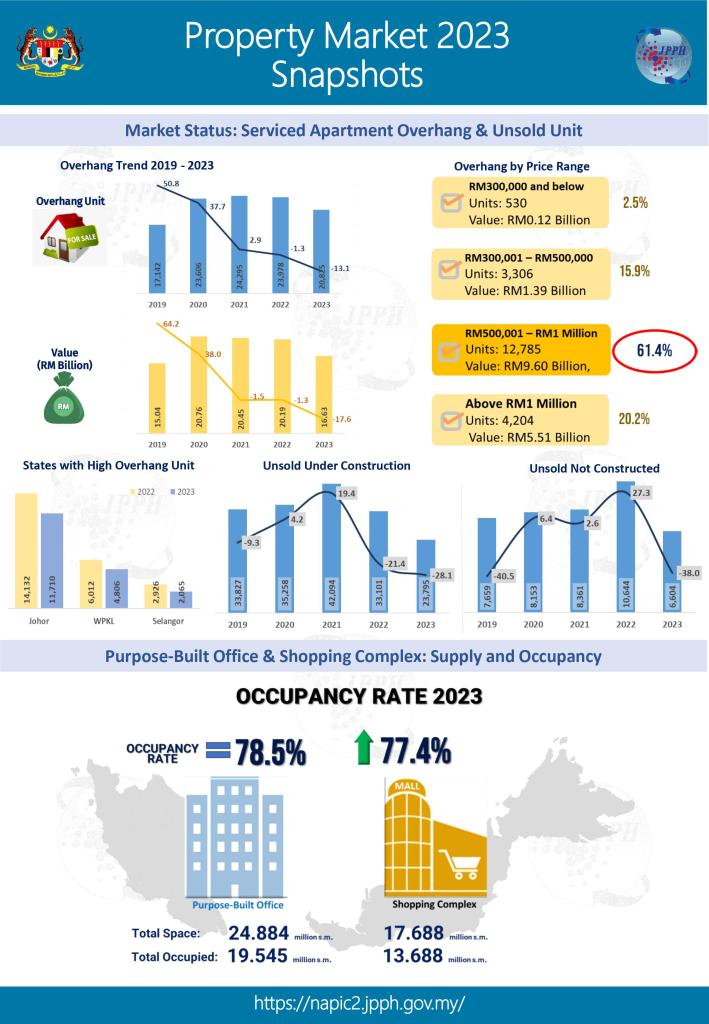
In 2023, Malaysia’s property market surged, boasting more than 399,000 transactions totaling nearly RM200 billion, marking a notable 2.5% uptick in transactions and a substantial 9.9% increase in overall value compared to the previous year.
Good news, there is a promising decline in unsold residential properties, dropping to 26,000 units valued at RM17.7 billion from 28,000 units worth RM18.41 billion in 2022.
Further buoying this optimism, the Valuation and Property Management Department (JPPH) reported a palpable uptrend in property transactions across various subsectors. Residential transactions saw a notable 7.1% increase, while commercial, industrial, agricultural, and development land and other subsectors experienced growth rates of 17.5%, 13.1%, 4.6%, and 13.8%, respectively, compared to 2022.
Moreover, JPPH noted a significant uptick in new residential launches, up by 4.4% to 56,526 units in 2023 compared to 54,118 units in 2022. Impressively, these launches exhibited improved sales performance, with a surge to 40.4% from 36% in the previous year.
Meanwhile, the Malaysia House Price Index (MHPI) registered at 216.5 points (equating to RM467,144 per unit) in 2023, indicating moderate annual growth of 3.2%. This stable growth trajectory underscores the resilience and attractiveness of Malaysia’s property market amidst evolving economic dynamics.
Here are the Property Market 2023 snapshot by JPPH
Without a doubt, your mortgage represents one of the most significant financial commitments you’ll undertake. Over its lifespan, the interest paid to the bank alone can skyrocket into tens of thousands. Consider this: by adhering to a 30-year home loan term, you may ultimately shell out twice the original loan amount in total.
Did you know that within the first five years of a 30-year loan, you’re likely to reduce only about 7% of the principal? Even by the 20th year, you might still be grappling with less than half. It’s high time to reclaim control over your loan and expedite its repayment to save substantial sums in interest.
Gone are the days of rigid loan structures prevalent from the 1960s to the 1990s. Today, borrowers have access to a plethora of tools and flexible bank policies, enabling them to slash down loan tenures.
The sooner you bid farewell to your home loan, the sooner you’ll inch closer to retirement and debt-free living. While myriad methods exist to accelerate repayment, not all may be a perfect fit for your situation. It’s imperative to conduct thorough research and select the strategies best aligned with your needs.
Here are some actionable ways to expedite home loan repayment:
Making Extra Payments: Witness the magic unfold by utilizing a mortgage calculator to see how even modest additional monthly payments can drastically reduce interest and hasten home loan repayment. Remember, every dollar directed towards the principal shrinks the interest burden and speeds up loan clearance
Refinance: Take advantage of prevailing lower interest rates by refinancing your loan. Use a mortgage calculator to gauge potential interest savings, but don’t forget to factor in associated costs like penalties and legal fees.
Negotiate Interest Rate Adjustments: Keep a keen eye on interest rate fluctuations and consider negotiating with your bank for a reduction. Maintaining current installment amounts despite rate reductions can substantially reduce repayment years
Utilize Flexi Mortgages: Explore flexible mortgage options like the Flexi Mortgage or Money Merge Account, where daily interest calculations and account consolidation accelerate principal reduction, thus shortening loan tenure.
Interest Rate Adjustments: Strategize responses to fluctuating interest rates by either increasing monthly installments to maintain repayment duration or maintaining installments to reduce repayment years.
EPF Withdrawals: Tap into your EPF Account II to swiftly reduce principal and expedite loan repayment. This can even be arranged on a monthly basis for added convenience. In Malaysia it is called EPF or Employee Provident Fund. Its a retirement saving account.
Continuous Monitoring and Adjustment: Regularly monitor your loan progress and financial situation, adjusting strategies as needed to optimize repayment efficiency.
Bi-Weekly Payments: Divide your monthly installment into bi-weekly payments, effectively making 13 monthly payments annually. This simple adjustment can shave off at least four years from a typical 30-year loan term, although availability may vary by region. Please take note that not every country has this package.
By diligently implementing these strategies, you can significantly alleviate the burden of your home loan and pave the way towards financial freedom.
Securing a mortgage nowadays presents more challenges compared to two decades ago. During my tenure in the banking industry, a loan could easily be approved with just a photocopy of an identity card and salary vouchers. However, in today’s landscape, a more comprehensive set of documents and detailed borrower reports are required. We must acknowledge that we now live in a world of enhanced technology.
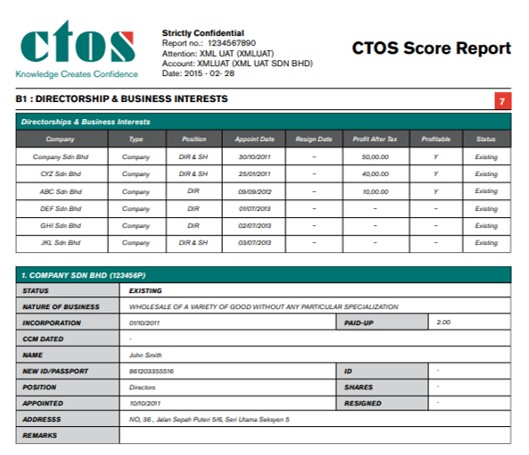
Twenty years ago, when borrowers approached us for loans, we primarily checked their CTOS records for bankruptcy. If they passed this check, I would submit the loan for approval. However, today, the CTOS system has evolved, incorporating many other borrower details. It’s astonishing that, in most cases, the system possesses more information about individuals than they do themselves.
Today, I’ll discuss the CTOS report. Another platform providing similar reports is called CCRIS, which we’ll cover in upcoming articles.
In simple terms, your CTOS report serves as your financial health assessment, aiding loan providers in evaluating your eligibility for borrowing.
Whether you like it or not, when you apply for a loan, banks will scrutinize your financial health. Instead of leaving this research solely to the banks, why not check your CTOS report yourself beforehand? This way, you’ll be better prepared when submitting a loan application and won’t be caught off guard.
There are two types of CTOS reports: a free version and a paid one.
The free report offers basic information, while the paid report, costing RM27.00, provides more comprehensive and useful details for borrowers. For our discussion, we’ll focus on the full report.
What’s included in the report?
Personal Information
Directorship & Business Interest
Litigation & Bankruptcy
Trade References
CTOS Score
CCRIS Record
Dishonoured Cheques
For today’s discussion, we’ll delve into sections 2, 3, 5, and 6.
Directorship & Business Interest
This section lists any companies associated with the individual. Banks use this information to determine the number of companies an individual is involved with. Sometimes, individuals may disclose only one company, but upon checking, banks may find out about several undisclosed companies. If banks require unbiased information on these companies, they can conduct a CTOS search on them. As mentioned earlier, banks often know more about individuals than individuals do about themselves.
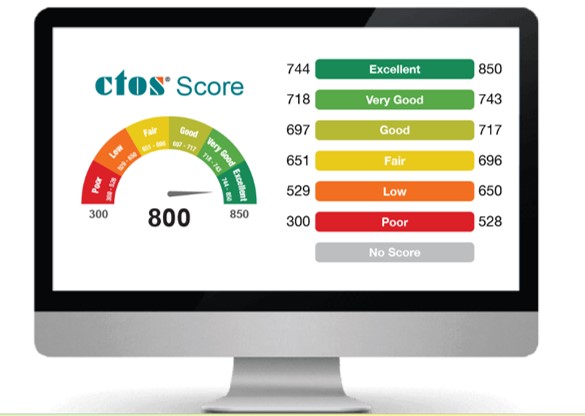
CTOS Score
What is it, and how does it work? These are common questions you may have.
The CTOS score determines your creditworthiness for the loan you’re applying for, indicating the likelihood of defaulting on repayments. Scores range from 300 to 850. If a borrower falls below the “fair” range, loan approval becomes more challenging. Banks become concerned about the higher risk associated with granting such loans. If borrowers discover that their score is below “fair,” it’s prudent to reassess their financial situation.
You might wonder what factors influence the score. They include:
a) Payment History (45%)
b) Amount Owed (20%)
c) Length of Credit History (7%)
d) Credit Mix (14%)
e) New Credit (14%)
CCRIS Record
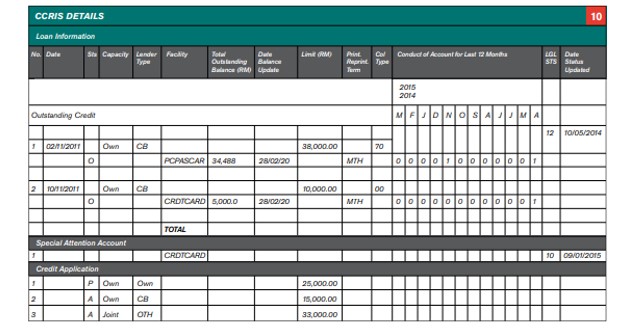
The Central Credit Reference Information System (CCRIS) is established by Bank Negara Malaysia’s Credit Bureau, offering standardized credit reports on prospective borrowers.
CCRIS acts as a centralized database, providing insights into your financial status. Monthly updates from relevant institutions furnish essential data such as banks, insurance providers, and government agencies. This process enables financial institutions to evaluate borrowers’ creditworthiness effectively by referencing their financial history records.
This section offers a detailed breakdown of each facility, including:
Status of the facility
Capacity
Lender Type
Facility Type
Total Outstanding Balance
Limit/Monthly Repayment
Repayment Term
Collateral Type
Conduct of Account
Legal Status
Special Attention Account
Credit Application Details
If the conduct of the account consistently shows a number higher than zero, say 3, it indicates the borrower is in a three-month default. Banks use this information to assess the likelihood of future defaults.
That’s a detailed overview of CTOS. I hope you find it helpful. Stay tuned for my next write-up, and don’t forget to subscribe.
Prior to diving into the mortgage application process, it’s essential to heed this advice, which could potentially spare you valuable time and considerable financial resources. Delve into these 10 commandments before embarking on your property journey to equip yourself with the knowledge necessary for a successful and cost-effective experience.
Thou Shall not cheat the bank
If you are thinking of buying many properties with just 1 income and well above your eligible limits, please think again. Now the banks do check the CCRIS again before releasing the loan. The have the right to reduce the loan limit as stated in the letter of offer you signed.
2. Thou Shall notfake documents
Some people have difficulties getting their loan approval. Thus, they resorted to doing fake documents. There are even companies specialized in this area to do it on behalf of the borrower. Let me tell you, banks are not stupid. They always double check before approving any loans. Currently, the check are getting tighter. Once caught, it will be a police case.
3. Thou Shall not be greedy
The word GREED seems very familiar to everyone. Now instead of buying 1 property within your capacity, you instead buy 5. You have been thought how to achieve a lifetime goal of financial freedom at a very short time. If you are lucky you can be an instant millionaire but if you are not, you end to be an instant millionhair.
4. Thou Shall not be guarantor
Do you know that been a guarantor for someone else loan can be lead to loan rejection. Many years back, I have this case where a couple were planning to buy a house because they are getting married 6 months later. They told me that all installments are promptly paid and they do not have any problem with the banks. Their loan was actually rejected by the bank because the lady stand as a guarantor for the brother’s loan. The brother’s car was repossessed by the bank. Her property loan is affected also.
5. Thou Shall not incur debts
The more debt you have the more difficult to get loan approval. Debts such as personal loans, car loans and etc are calculated in Debt Service Ratio (DSR) and will be part of approval. High personal DSR can either cost you your loan rejection or a very low margin of finance approval. The smart way is to minimize your debts or to repay all debts.
6. Thou Shall not use credit card
Do you know that credit card is the main culprit for loan rejection? Out of 10 loan rejected 65% are from credit card usage. Credit card function like a free money. Use now pay later. As in the term and conditions,
your only required to pay 5% of the usage every month. Many people also resort to buying things in credit via credit card. All these will be calculated as your debts. The banks will take 5% of the outstanding amount as calculation. If the credit card usage is more than 70% of the approve limit, you are deemed as a high risk person even though you paid the minimum 5% monthly. Your loan approval will be affected.
7. Thou Shall pay all yourloan promptly
As a bank, they will reject a loan if they were to find out that you have not paid your existing loan promptly. They can see from your CCRIS record. The bank will be worried as they are going to lend you some more but you have already showed to them you are not a good paymaster. They will assume that in future they will have the same problem. They rather not lend to you.
8. Thou Shall only buy whatyou can afford
Many people especially youngsters because of peer pressure buy property that they cannot afford to pay. The person can only afford RM300,000 property but end up buying RM600,000. The installment will be double. As the bank have their strict calculations on approval, the loans might be rejected or the margin slash. We cannot blame the bank for this as they are not charity organization.
9. Thou Shall not change job
You might think that what changing job have to do with loan approval. Please do not take this lightly. To the bank you are new to the company although you’re already working for years in your previous company. As you are new, your job is not secured and you might be terminated in 3 or 6 months period. So, the right way to do it is to apply the loan while you are at the existing company. After approval you move on to another company will not affect your loan.
10. Thou Shall do at leastone facility
Why you may asked? Isn’t no debts at all easier to get approval? You are wrong. To the banks, if you do not have any facility at all you are too cleaned. They do not know who you are. Your CCRIS is too clean. Yeah, I agree getting a loan nowadays are very troublesome. Well very simple to overcome this. Apply for a credit card, make sure you use it (every month fully paid is ok) then the banks will grant you the loan.