Is the Property Market Slowing Down… Or Are Buyers Becoming More Picky?
Lately, many people have been asking:
“Is the property market slowing down?”
Some projects are taking longer to sell. Some launches are seeing slower take-up. Buyers seem to be hesitating more before committing.
At first glance, it may appear that the market is becoming weak.
But when we look deeper into the numbers and buyer behaviour, the story may actually be different.
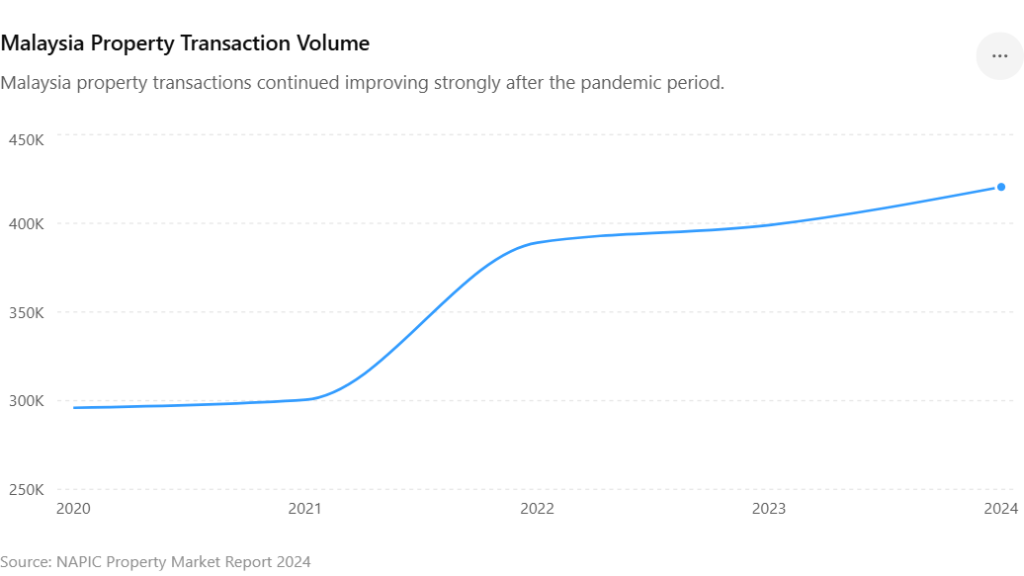
According to the National Property Information Centre (NAPIC), Malaysia recorded more than 420,000 property transactions in 2024 — one of the strongest performances in the past decade.
This tells us something important: The market still has buyers.
However, today’s buyers are no longer buying property the same way they did years ago.
Buyers today are becoming more informed, more cautious, and more selective before making decisions.
In the past, some buyers purchased based on emotions, marketing hype, showroom designs, rebates, or fear of missing out (FOMO).
Today, buyers are asking more questions:
Is the pricing reasonable?
Is there real demand in the area?
Can the property generate rental income?
Is the developer reliable?
Is there oversupply nearby?
Will the property still hold value in the future?
In short — buyers today are becoming more picky.
And honestly, that is not necessarily a bad thing.
A property purchase is one of the biggest financial commitments for most people. Buyers today are thinking carefully about:
Monthly instalments
Interest rates
Maintenance fees
Cash flow commitments
Rental demand
Future resale value
Lifestyle suitability
Long-term financial stability
This explains why some projects continue to perform well while others struggle with slower take-up.
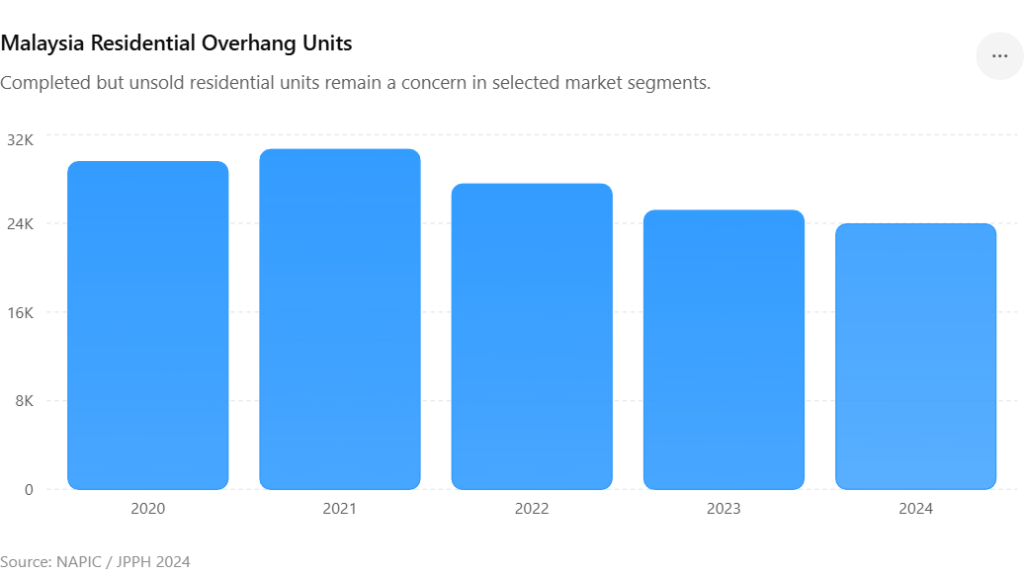
In fact, NAPIC data also shows that Malaysia continues to face residential overhang issues in certain market segments. This means completed units remain unsold due to factors such as pricing mismatch, oversupply, poor accessibility, weak product positioning, or changing buyer preferences.
This does not mean there are no buyers in the market. It simply means buyers are becoming more selective about where they place their money.
Before buying any property project, buyers should spend time understanding:
The actual market demand
Existing and future supply in the area
Nearby competing developments
Developer track record and credibility
Connectivity and infrastructure plans
Market pricing compared to surrounding projects
Rental and resale potential
Their own financial holding power
Whether the property truly fits their long-term goals
Many people still buy emotionally. But smart buyers buy strategically.
A beautiful showroom alone should never be the reason to purchase a property.
One thing I always encourage buyers to do before committing is to attend property seminars, educational talks, and market-sharing sessions.
Why?
Because knowledge reduces expensive mistakes.
A good seminar can help buyers:
Understand current market trends
Learn from real case studies
Compare projects more objectively
Understand buyer psychology and market cycles
Avoid common investment mistakes
Gain confidence before making a large commitment
In today’s market, education is becoming one of the most important tools for property buyers.
The market may not necessarily be weak. It may simply be that buyers today are smarter, more informed, and more selective than before.
And personally, I believe that is a healthy direction for the property market.
From the Desk of,
Miichael Yeoh
Property Strategist
Disclaimer: This reflects the author’s personal views based on market experience and current observations. It is not financial advice. Smart investors do their own research before making any move.
After all the searching, surveying and checking, you have finally found your perfect home. Now comes the hardest part. The property is not yours to call home yet. Unless you buy it in cash, like most homebuyers, you would need to rely on a bank loan to turn your dream into reality.
Applying for a home loan can be quite nerve-wracking especially for first-time home buyer. What’s more, it can be very frustrating if the application is unsuccessful. If your loan is rejected, it’s not the end of the world, but it is human nature to put the blame on someone else. In a way, pointing the finger may also help you understand why your application was rejected, and what you can do differently in your next attempt. We have made a list of the top 3 contenders for the blame game:
Plenty of people blame Bank Negara Malaysia (BNM) for the many loan rejections in Malaysia. Are they the culprit, though? Well, BNM is the one making all the loan policies in Malaysia and most people may feel that the ever-tightening policies are making it more difficult to borrow from banks.
However, we need to look at this from another point perspective. If BNM did not have all these policies in place, we will most likely face a subprime mortgage crisis, as what occurred in the USA in 2008. How did this crisis come about? This happens when banks get greedy and start lending to anyone, even to borrowers who have a history of low credit scores and problems with debt. In time, these high-risk borrowers will default on their loan repayment and this will have a ripple effect and evolve into a national issue.
The Solution: Keep tabs on Bank Negara Malaysia’s latest borrowing regulations
With the country’s current slow but fluctuating economic growth, it’s beneficial to keep yourself updated with the latest Bank Negara Malaysia (BNM) borrowing regulations and not depend on word of mouth from friends or relatives.
Prior to that, homeowners were allowed to get their homes refinanced for up to 90% of their value with a maximum repayment tenure of 35 years and were able to use the cashed-out portion for investments. But in the 2014 revision, BNM capped the tenure of personal loans at 10 years.
So why does this matter? Well, take this example: your existing home loan with Bank A is RM400,000 and perhaps because of lower interest rates, you want to refinance your home for RM550,000 at Bank B. The additional RM150,000 would be classified as a personal loan and the 10-year repayment tenure would kick in.
This means that the DSR of the cashed-out portion would be calculated using the 10-year tenure, resulting in a much higher DSR and thereby affecting your overall credit score and potentially leading to your loan application getting rejected.
Besides that, BNM recently shared that many banks were using unfair T&Cs in housing loan contracts. BNM has assured that it will be releasing a set of standard T&Cs soon to keep Financial Service Providers in check – where they must act in good faith by ensuring the fairness of contract terms, provide clear and concise product information as well as offer appropriate advice/recommendation based on the needs and financial circumstances of loan applicants.
As a savvy consumer, you would want to equip yourself with these standards once it is out and study your rights as a financial consumer before approaching a bank for a home loan.
Therefore, we must remember that under BNM, we have a prudent and balanced lending policy. We need it to protect our country. Best to think again before pushing the blame onto BNM.
If we do not blame BNM, can we blame the banks instead? After all, they are the ones who approve or reject the loans. Let’s try this – put yourself in the bank’s shoes. Say you are the lender, and your friend the borrower, wants to borrow RM50,000 from you. You know that your friend earns RM5,000 a month. Each month, most of his money goes into paying off his debts. The big question here is, will you lend the money to him? The risk of not getting your money back is very high. Logically, most people would think twice or not even consider lending their friend that sum of money. A bank thinks the same way – they are not a charity, but a profit-driven organization who are accountable to their shareholders.
Some banks have their own internal policies in lending on top of the existing BNM policies – such as having their own scoring system. As different banks have different lending policies you need to know which bank is the most suitable one for you by conducting your own research and comparison. But do keep in mind that even before they look at your documents, they will first check your credit rating. If your rating is low, it’s not hard to see why your application may be rejected immediately. Do you still think we should be blaming the banks?
But do keep in mind that even before they look at your documents, they will first check your credit rating. If your rating is low, it’s not hard to see why your application may be rejected immediately.
The Solution: Determine the best bank DSR (which will match your DSR)
To reduce the chances of getting your home loan application rejected, you should first calculate your Debt to Service ratio (DSR), which is the calculation of your debt against your monthly income.
DSR = (Total commitment ÷ Nett Income) x 100
One of the most common reasons why banks would reject a home loan application is if the applicant’s DSR is above the bank’s maximum allowable DSR. This can get tricky as every bank will have its own respective guidelines for the maximum allowable DSR that they are willing to accept.
It could be affected by various factors such as income, age, qualifications and even your net worth. The most ideal DSR range would be between 50%-60% as it would hit below the maximum allowable DSR of many banks and thus the likelihood of loan approval would increase.
If your DSR is the reason why your loan application was rejected, don’t worry! You can start improving your DSR by either reducing your current debts or by consolidating your unsecured loans and credit card bills. Check out LoanCare, which calculates and uses your DSR to help you compare home loan products across at least 10 banks in Malaysia.
3. The borrowers
How about if we blame ourselves, the borrowers? Plenty of people are laden with debts from credit cards, personal loans, luxury cars and such. Would it be fair to ask the banks to lend them more money? The risk of non-repayment is very high.
The Solution: Determine your CCRIS report pitfalls
If your home loan is denied, the first thing you want to do is to check your CCRIS report. However, these days it’s rare to find anyone who isn’t aware that they must first check their credit score via The Central Credit Reference Information System (CCRIS). This system reflects your past 12 months of credit activities and shows the bank whether you are a good or bad paymaster.
However, the buck does not stop at having a great credit score. There are other factors which might skew your report. For instance, there is always the question, “If my loan is declined, when can I apply again?”
Did you know that all of your loan rejections are also reflected in your CCRIS? This can prove to be fatal for those that cast a wide net by submitting loan applications to multiple banks. Banks would usually be aware of any prior rejections via their CCRIS record, and thus, applicants would have to wait between 3-6 months before attempting to apply for another loan.
As such, it’s wise to improve your credit score before your next attempt. If you have multiple credit cards and loans attached to your name, making timely payments could help show that you are able to manage your commitments and are a good paymaster.
Besides that, zero obligations are not necessarily a good thing either. Keep in mind that banks would also be reluctant to approve your loan application if your CCRIS report is blank or ‘clean’ – where there are no credit cards/loan/overdraft facilities under your name. Better to have at least one active credit facility with timely payments to prove to the bank that you are able to take on and handle debt obligations responsibly.
The Next Step: Prepare at least 6 months of documentation
After fixing your credit score, the next thing you want to do to prove to the bank that you will be a good paymaster is to prepare at least 6 months’ worth of documentation. Regardless of whether you are a salaried employee or a freelancer, keeping meticulous records of all your financial documents is especially beneficial as the bank requires proof of financial capability.
In order to make your life much easier when it is time to submit your loan application, it’s advisable to keep on hand a record of the latest 6 months’ documentation of the following:
(a) EA Form/Form BE/Form B: Always file and pay your income taxes within the prescribed dateline.
(b) Salary slip/proof of income: Banks will require a continuous monthly record of your proof of income whether it’s salary slips or business banking statements. As such, make sure that your records are well organised with every month accounted for.
(c) EPF statements: This will not be a problem if you are a salaried employee as both you and your employer are required by law to make monthly contributions to your EPF. However, if you are a freelancer, consider making voluntary monthly contributions as a way to boost your credit portfolio.
(d) Bank account statements: Having either a current account or a separate saving account with a steady and consistent balance is another method that can help bolster your image as a responsible and credible borrower.