26 September – 2 October 2026
Malaysia + International Property Insights
This week’s market is interesting for one reason: the headlines are not telling one single story.
Malaysia has pockets of resilience in retail and construction, but residential developers are still dealing with affordability and unsold stock. Overseas, Australia is going through a much sharper housing correction, while Singapore continues to reposition mature assets through redevelopment.
For buyers and investors, the lesson is simple: look beneath the headline number.
🇲🇾 1. KIP REIT Completes RM435 Million Setapak Central Mall Acquisition
What Happened
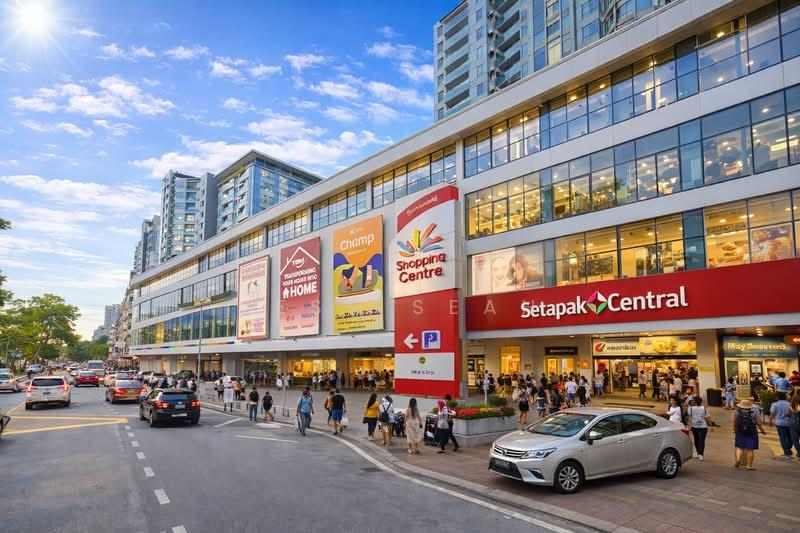
KIP REIT completed its RM435 million acquisition of Setapak Central Mall on 30 September.
The three-storey mall has approximately 514,777 sq ft of net lettable area and 1,090 parking bays. Occupancy had previously been reported at 99.89%.
The acquisition brings KIP REIT’s portfolio to 20 properties, with the enlarged portfolio previously assessed at around RM2.1 billion. EdgeProp
Why It Matters
This isn’t simply about buying another shopping mall.
A mature, highly occupied retail asset can provide something very different from a new development:
existing tenants + existing footfall + existing income.
For investors, that distinction matters.
The question isn’t simply whether a property is “good”.
It is:
How predictable is the income after I buy it?
Miichael’s Review
I like looking at transactions like this because they demonstrate another side of property investment.
A developer creates value through development.
A REIT investor is often looking for income-producing assets with established operations.
For individual investors, the same principle applies.
Before getting excited about a property because of future appreciation, ask:
What is producing the income today?
Source: EdgeProp — KIP REIT completes RM435m Setapak Central acquisition

🇲🇾 2. Gamuda Posts Record Profit — But Property Earnings Fall
What Happened
Gamuda reported record FY2026 net profit of RM1.05 billion, up 5%.
But there is an interesting contrast underneath the headline.
While the group’s overall performance was supported by stronger construction earnings, property sales fell 22% to RM3.2 billion, while property division net profit declined 18% to RM310.76 million. EdgeProp
Why It Matters
This is a useful reminder that a diversified property-related group can perform well overall even when its property division is under pressure.
It also reinforces an important market principle:
Construction demand and residential property demand are not necessarily moving together.
Miichael’s Review
For me, the interesting part isn’t simply that Gamuda made a record profit.
It is the divergence between construction and property.
When analysing a developer, I would not stop at the group’s headline earnings.
I’d want to know:
- How much comes from property?
- What is the sales pipeline?
- How much unsold inventory exists?
- Where are the projects located?
- What is the margin?
- And how quickly can sales be converted into cash?
A strong company does not automatically mean every property project is equally attractive.
Source: EdgeProp — Gamuda posts record FY2026 profit
🇲🇾 3. Government Calls for More “White Knights” to Rescue Abandoned Projects
What Happened
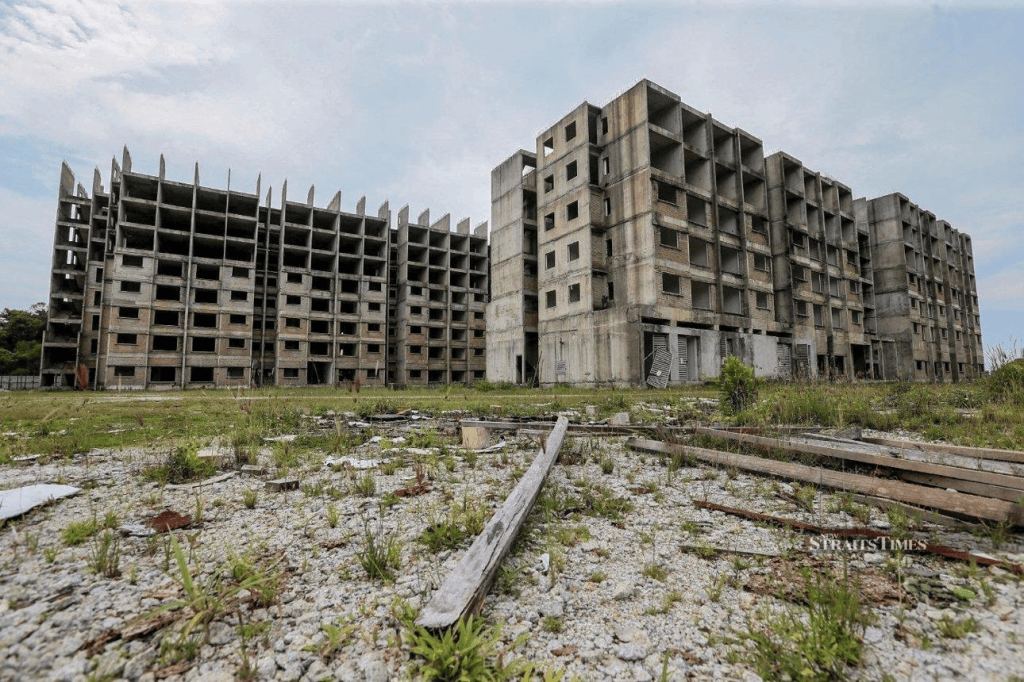
Malaysia’s Housing and Local Government Ministry has called on established developers to step in as “white knights” to revive stalled and abandoned housing developments.
According to the report, the ministry’s task force has helped revive 1,647 distressed projects worth RM153 billion, affecting almost 200,000 homebuyers.
The government is also pursuing legal reforms involving developer accountability, strata management and residential tenancy. The Star
Why It Matters
For a buyer, buying property isn’t simply about:
location + price + size.
There is another question that often gets overlooked:
Who is behind the project — and what happens if things go wrong?
A delayed or abandoned project can create years of financial and emotional stress for buyers.
Miichael’s Review
This is one area where I think buyer education is particularly important.
Before buying a new development, buyers should investigate the developer’s track record, project delivery history, financial structure, development partners and surrounding ecosystem.
We often spend hours comparing unit sizes and discounts.
But sometimes the most important due diligence happens before we even choose the unit.
Source: The Star — Malaysia needs more white knights
🌏 4. Australia: Housing Prices Fall for a Sixth Straight Month
What Happened
Australia’s housing market continued to weaken in September.
Cotality’s national Home Value Index fell 1.1% in September, the sixth consecutive monthly decline.
Values are now 5.2% below the March 2026 peak.
Sydney fell 1.4% in September and is nearly 9% below its February peak, while Melbourne fell 0.7%.
Transaction activity has also weakened, with sales over the latest three-month period down around 19% year-on-year, according to Reuters. Reuters
The Reserve Bank of Australia has also raised its cash rate to 4.6%, a 15-year high, adding further pressure to borrowing capacity. Investing.com
Why It Matters
Australia provides an excellent real-world example of the relationship between:
interest rates → borrowing capacity → buyer demand → transactions → prices.
And importantly, the impact is not identical across every city.
Miichael’s Review
For Malaysian buyers and investors looking overseas, this is a market worth watching carefully.
A falling market doesn’t automatically mean:
“Everything is cheap.”
It means the risk-reward equation is changing.
For anyone considering an overseas property purchase, I’d be asking:
Has the price fallen because the market is correcting — or because the fundamentals have deteriorated?
Those are two very different things.
Source: Reuters — Australian home prices fall for sixth straight month; Cotality — September Home Value Index
🌏 5. Singapore: Valley Point to Become a New Mixed-Use Development
What Happened
Frasers Property and Mitsubishi Estate announced plans to redevelop Valley Point and Frasers Suites Singapore along River Valley Road.
The planned mixed-use development will include:
- 407 luxury residential units and sky villas
- 184 serviced-residence units
- dining
- retail
- lifestyle components
The project is planned for launch in 2027, with completion targeted for 2031. The existing properties are expected to cease operations in March 2027. The Business Times
Why It Matters
This is a classic example of urban land optimisation.
Instead of simply maintaining an ageing asset, the owners are looking at the highest and best use of a prime site.
The redevelopment also combines residential, serviced residences, retail and lifestyle components rather than relying on one single use.
Miichael’s Review
This is something developers everywhere can learn from.
A property isn’t necessarily valuable because of what it is today.
Sometimes its greatest value comes from what it could become.
But that requires looking beyond the building itself:
land value + location + planning potential + demand + surrounding ecosystem.
For buyers, this also highlights why understanding a property’s future development context can be just as important as studying the existing building.
Source: The Business Times — Frasers Property and Mitsubishi Estate redevelopment; Frasers Property — official announcement
👀 WORTH WATCHING
Malaysia
1. Residential affordability
The combination of unsold stock, financing constraints and developer margins remains an important issue.
2. Retail investment
The KIP REIT acquisition shows that mature, income-producing retail assets remain relevant when occupancy and cash flow are strong.
3. Distressed projects
The government’s push for more private-sector participation could change the landscape for abandoned and stalled developments.
🌏 International
4. Australia
Watch whether the correction continues into 2027 and whether lower transaction volumes eventually create broader economic effects.
5. Singapore
Watch how redevelopment and land optimisation reshape mature neighbourhoods.
💡 MY TAKEAWAY
This week’s five stories are actually connected by one common theme:
Property value is about more than price.
A shopping mall’s value can come from income and occupancy.
A developer’s value can come from the quality of its pipeline and balance sheet.
A residential project’s value includes delivery risk.
A housing market’s direction is influenced by financing and affordability.
And an older property can sometimes create greater value through redevelopment.
So when someone asks me:
“Is this property a good buy?”
I don’t think the first question should be:
“How much is it?”
I’d rather start with:
Who is buying it?
Why are they buying it?
What creates the demand?
What could go wrong?
And what happens if the market doesn’t behave as expected?
That is where proper property due diligence begins.
From the desk of
Miichael Yeoh
Property Strategist