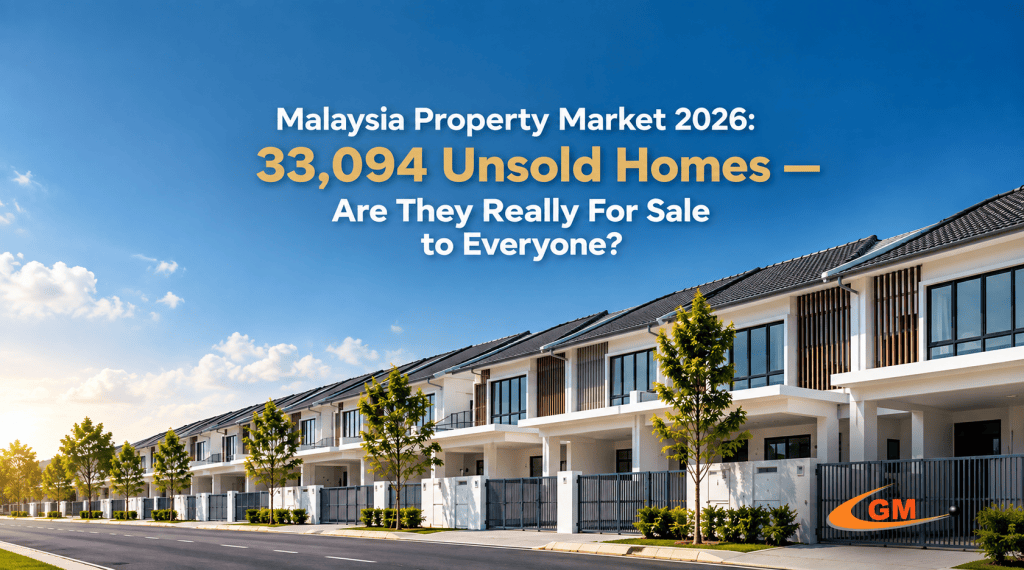
33,094
That is the number currently attracting attention in Malaysia’s property market.
As at the first half of 2026, 33,094 completed residential units worth RM17.78 billion remained unsold.
The figure is up from 30,471 units in the previous period.
Naturally, the immediate question is:
Why aren’t Malaysians buying these homes?
The usual answers come quickly.
Homes are too expensive.
Buyers cannot afford them.
Banks are rejecting loans.
Developers are building too much.
All of these factors may play a role.
But I think we need to ask a more fundamental question:
What does “unsold” actually mean?
Because an unsold property is not necessarily a property that is simply sitting on the open market waiting for any Malaysian to buy it.
And that distinction matters.
The Unsold Property Paradox
Let’s start with something that may surprise many people.
Malaysia’s property market is still active.
In the first half of 2026, the country recorded 187,320 property transactions worth RM105.12 billion.
Residential property accounted for 110,998 transactions, representing 59.3% of total transactions and RM47.11 billion in transaction value.
So this isn’t a story about Malaysians suddenly refusing to buy property.
There are buyers.
There are transactions.
There is demand.
Yet at the same time, tens of thousands of completed homes remain unsold.
That is the paradox.
People are buying property — but some completed properties are still not finding buyers.
This tells us that the problem is more complicated than simply:
“Malaysians cannot afford houses.”
Not Every Unsold Unit Has the Same Problem
This is where I believe we need to look at the property market differently.
An “unsold” unit could be unsold for very different reasons.
1. The buyer doesn’t want it.
The location may not be attractive.
The layout may not fit the target market.
The facilities may not justify the price.
The surrounding environment may not match what buyers want.
2. The buyer wants it — but cannot get financing.
This is a very real issue.
The latest REHDA Property Industry Survey found that 59% of surveyed developers reported unsold completed residential units.
Among the factors highlighted were end-financing rejection, property prices and unreleased Bumiputera units.
The survey covered 181 REHDA members in Peninsular Malaysia.
A buyer can therefore say:
“I want this property.”
But the bank may effectively say:
“You cannot finance it.”
Those are two completely different problems.

3. Some units are not immediately available to the entire market
This is another part of the conversation that deserves more attention.
Some residential developments contain Bumiputera quota units.
Where those units remain unsold, developers may need to go through the relevant state process before they can be released to the wider market.
The rules are not identical across Malaysia.
In Penang, for example, the state has a formal Bumiputera quota release process, including requirements relating to the physical progress of the development and evidence of marketing efforts to Bumiputera purchasers.
So an important distinction needs to be made:
A unit can be recorded as “unsold” without necessarily being immediately available to every buyer in the market.
And depending on the state and applicable scheme, releasing such units can also involve specific conditions or financial contributions.
This matters because we should be careful not to treat every unit in the RM17.78 billion figure as if it represents exactly the same market problem.
4. The product may simply be wrong for today’s buyer
This is probably one of the most overlooked questions in property development.
A project may have been conceived several years ago.
The developer may have studied:
- population growth,
- household formation,
- income levels,
- infrastructure,
- competition,
- buyer profiles,
- pricing,
- and future demand.
Then the project goes through planning, approvals, construction and completion.
By the time the keys are ready…
The market may have changed.
Buyers’ expectations change.
Household sizes change.
Working patterns change.
Transport patterns change.
Financing conditions change.
Lifestyle preferences change.
And competing developments enter the market.
A product that looked attractive when the development was planned may not necessarily be equally attractive when it is completed.
And this is where “affordable” becomes an interesting word
The government has reported that properties priced RM300,000 and below accounted for 51.6% of residential transactions in H1 2026.
At the same time, the government has acknowledged that completed unsold residential stock is not confined to high-end properties. It is also significant in affordable and mid-priced segments.
So perhaps we need to distinguish between:
Affordable by price
and
Affordable and desirable to the target buyer.
They are not necessarily the same thing.
A RM300,000 property may be affordable on paper.
But if it is two hours from the buyer’s workplace…
If public transport is poor…
If the layout doesn’t suit the family…
If the maintenance costs are too high…
If financing is difficult…
If the buyer doesn’t see future resale demand…
Then the buyer may still decide:
“This isn’t for me.”
And that isn’t necessarily an affordability problem.
It may be a product-market fit problem.
This is where the PDS perspective comes in

For years, much of the property industry has operated around a relatively simple sequence:
Build → Market → Sell
But perhaps we need to rethink the sequence.
The PDS philosophy starts with a different question:
Discover the buyer before you build for the buyer.
Who exactly is the intended buyer?
What problem are they trying to solve?
Where do they want to live?
What can they realistically afford?
Can they obtain financing?
What type of property fits their lifestyle?
What compromises are they willing to make?
What alternatives are available?
What would make them choose this property over another?
And perhaps most importantly:
What evidence would give them confidence to make the decision?
From “Selling Property” to “Helping Buyers Decide”
This is a subtle but important shift.
A traditional sales approach may ask:
How do we sell this unit?
A PDS approach asks:
Why should this buyer choose this unit — and is it actually the right choice for them?
That changes the conversation.
Instead of starting with the brochure, we start with the buyer.
Instead of starting with the promotion, we start with the problem.
Instead of asking:
“How much discount do we need to give?”
we should also be asking:
“Why isn’t the buyer convinced at the current value proposition?”
Sometimes the answer may be price.
Sometimes financing.
Sometimes location.
Sometimes product design.
Sometimes timing.
Sometimes competition.
Sometimes eligibility.
And sometimes the property simply isn’t solving a sufficiently important problem for the intended buyer.
The Developer’s Question Should Change Too
Perhaps developers should not only ask:
“How many units can we sell?”
They should ask:
“How many units does this market actually need — and what type?”
That means looking beyond headline demand.
It means understanding:
Demand
→ Who needs the property?
Ability
→ Who can actually afford it?
Eligibility
→ Who can legally or practically purchase it?
Financing
→ Who can obtain the required loan?
Location
→ Who wants to live there?
Product
→ What configuration do they want?
Value
→ Does the property justify the price?
Confidence
→ What information does the buyer need before deciding?
This is a much more complete view of property demand.
The Real Property Overhang May Be an Alignment Problem
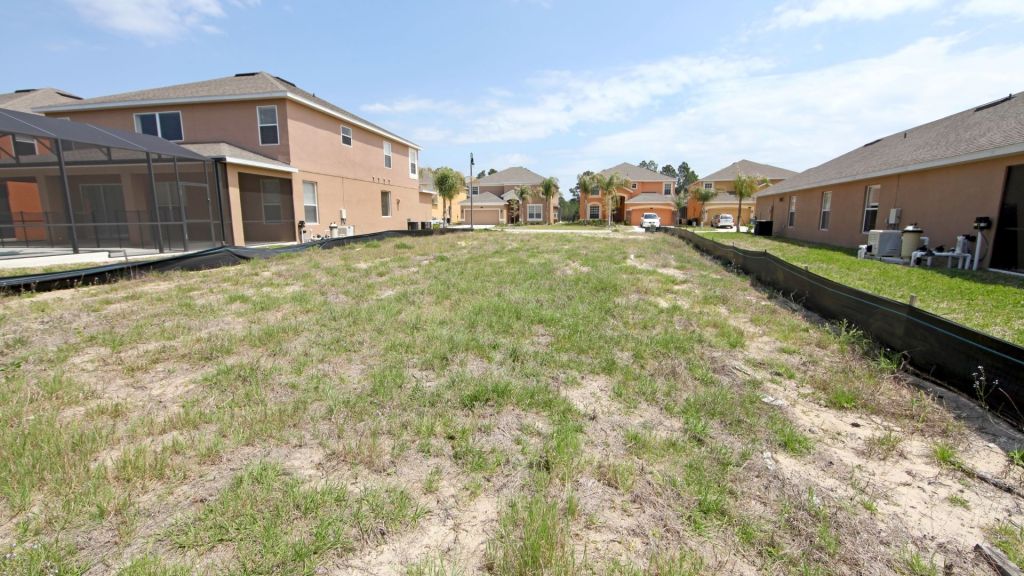
Perhaps Malaysia doesn’t simply have a shortage of buyers.
Perhaps we have a shortage of alignment.
Alignment between:
What developers build
and
what buyers actually want.
Between:
Price
and
purchasing power.
Between:
Location
and
daily life.
Between:
Product
and
lifestyle.
Between:
Eligibility
and
the available buyer pool.
Between:
financing
and
the buyer’s financial profile.
And ultimately:
what is being offered
and
what the buyer is prepared to decide on.
So, What Should We Do About the 33,094?
I don’t think the answer is simply:
“Make property cheaper.”
Nor is it simply:
“Give buyers more incentives.”
And it certainly isn’t enough to say:
“Malaysians aren’t buying.”
We need to understand why each segment of unsold stock remains unsold.
Because the solution to a financing problem is different from the solution to a location problem.
The solution to a Bumiputera quota-release issue is different from the solution to a product-market mismatch.
And the solution to an overpriced property is different from the solution to a property that is fairly priced but poorly positioned.
One number can hide many different problems.
That is why we need to go beyond the headline.
The PDS Way
At the Property Discovery System, we believe property decisions should begin with discovery, not selling.
For buyers:
Discover the market.
Understand the property.
Test the numbers.
Assess the risks.
Compare the alternatives.
Then decide.
For developers:
Discover the demand.
Understand the buyer.
Design the right product.
Position it correctly.
Build trust.
Then sell.
Because the objective shouldn’t simply be to sell more properties.
It should be to create better alignment between property supply and real buyer demand.
The question we should really be asking
The headline today is:
33,094 completed homes remain unsold.
But perhaps the more important question is:
Why are these particular homes still unsold?
Until we answer that question at the unit, project, location, price, financing and buyer level, we risk treating very different problems as if they were the same problem.
And if we keep treating the symptoms instead of understanding the buyer…
We may simply build another 33,094 homes to replace them.
Property is not just about selling a product.
It is about helping people make better decisions.
Discover Better. Decide Smarter.
That is the PDS way.
Sources &
- National Property Information Centre (NAPIC), Property Market Report H1 2026. NAPIC — H1 2026 Property Market Report
- Ministry of Finance Malaysia, launch remarks on the H1 2026 Property Market Report.
- REHDA Property Industry Survey 1H2026, reported by EdgeProp.
- Penang State Housing Board, Guidelines for Application for Release of Bumiputera Quota.