Tag: realtor

  • New Launch vs Subsale: Which Property Should You Buy?

    New Launch vs Subsale: Which Property Should You Buy?

    Written by: Miichael Yeoh

    A new property feels safer. An existing property feels more predictable.

    But neither statement is necessarily true.

    A new launch may offer attractive incentives, modern facilities and a fresh building. A subsale property may allow you to inspect the actual unit, understand the surrounding neighbourhood and investigate existing rental demand.

    So, which should you buy?

    The answer depends on what you’re paying, what you’re getting, what risks you’re taking and what you expect the property to deliver.

    Let’s look beyond the showroom and examine the decision properly.
    1. The Malaysian Property Market Is Giving Buyers a Reason to Be Selective

    Malaysia’s property market remained active in the first half of 2026.

    The first-half property market report recorded 187,320 property transactions worth RM105.12 billion. At the same time, 33,094 completed residential units remained unsold, valued at approximately RM17.78 billion.

    Developers also launched 27,832 residential units during H1 2026, with reported sales performance of 16.6%.

    These figures don’t mean new launches are bad or that subsale properties are automatically better.

    They tell us something more useful.

    Buyers should not assume that a new launch is a good purchase simply because a developer has launched it, or that an existing property is good value simply because someone is reselling it.

    Every property needs to be evaluated on its own merits.

    And that brings us to the first important difference.

    2. New Launch vs Subsale: What Are You Actually Buying?

    Let’s start with the basic distinction.

    A new-launch property is generally purchased directly from a developer, often before construction is completed.

    A subsale property is an existing property purchased from its current owner.

    That difference affects much more than the age of the building.

    Property Condition

    New launch: The property may still be under construction, so the finished quality cannot yet be fully assessed.

    Subsale: You can inspect the actual unit and building before making your decision.

    Pricing

    New launch: The price is set by the developer, with incentives or rebates subject to the terms offered.

    Subsale: The price may be negotiable, depending on the seller and comparable market transactions.

    Rental Income

    New launch: Rental income generally begins only after completion, handover and preparation for tenants.

    Subsale: Rental income may begin sooner if the property is ready and suitable for tenants.

    Construction Risk

    New launch: An uncompleted project carries delivery and construction-related risks.

    Subsale: A completed property avoids the risk of waiting for construction completion, although other risks remain.

    Defects and Renovation

    New launch: You may need to furnish the unit and address defects identified at handover.

    Subsale: You may need to repair existing defects, renovate or replace ageing fittings.

    Facilities and Management

    New launch: The long-term quality of building management has yet to be demonstrated.

    Subsale: You can assess the existing facilities, maintenance and management standards.

    Rental Demand

    New launch: Future rental demand must be estimated using market evidence and competing supply.

    Subsale: Existing rental listings and tenancy evidence may help you assess demand, although future conditions can change.

    Main Uncertainty

    New launch: Completion, final quality, future supply and market conditions.

    Subsale: Hidden defects, maintenance costs, building condition and future resale demand.

    Neither option wins every category.

    The mistake is choosing based on the benefits of one option while ignoring its disadvantages.

    3. Is a New Launch Cheaper Than a Subsale?

    This is where many buyers need to slow down.

    Imagine two condominiums in a similar location.

    Property A: New launch

    • Developer’s selling price: RM600,000
    • Advertised rebate: 8%
    • Indicative price after the rebate: RM552,000

    Property B: Subsale

    • Seller’s asking price: RM530,000
    • Negotiated purchase price: RM515,000

    At first glance, the subsale property appears cheaper.

    But are we comparing the same thing?

    What is the actual transaction price of comparable units?

    Does the new launch include furnishing, parking or other items that would otherwise cost extra?

    Does the subsale unit require RM30,000 in renovation?

    Are the maintenance fees comparable?

    Are both properties equally attractive to future tenants?

    What are the legal, financing and other acquisition costs applicable to each transaction?

    Until you answer these questions, you don’t know which property offers better value.

    Look Beyond the Advertised Price

    Developer incentives can reduce the buyer’s effective cost, but their value depends on the actual terms and what is included.

    Similarly, a subsale seller’s asking price may not reflect the final negotiated price.

    Compare the complete acquisition cost rather than relying on the headline figure.

    And remember:

    A lower purchase price does not automatically mean a better investment.

    4. The Hidden Difference: When Can the Property Start Working for You?

    For investors, this may be one of the most important differences.

    Suppose you purchase a new-launch condominium that will take several years to complete.

    During that period, you may have construction-stage financing payments, depending on the loan structure. You also have to wait until the property is completed, handed over and ready before rental income can begin.

    Now consider a completed subsale condominium.

    If the unit is in good condition and the rental market is established, you may be able to rent it out after completing the purchase and preparing the unit.

    The difference is time.

    Let’s Use a Simple Illustration

    Assume the subsale property can generate RM2,000 per month in rent once it is ready and occupied.

    If the new launch takes three years to complete, the theoretical gross rental income forgone over those 36 months is:

    RM2,000 × 36 months = RM72,000.

    That is a significant amount.

    But don’t misunderstand the calculation.

    RM72,000 is not a guaranteed loss or a complete comparison of the two investments. It is an illustration of potential gross rental income over that period, assuming the subsale could have been rented continuously.

    Actual results would depend on vacancy, expenses, financing, tenant demand and the timing of rental readiness.

    The new launch might also appreciate during construction. The subsale might need substantial renovation or suffer from weak tenant demand.

    The lesson is not that subsale always wins. It’s that time has a financial value, and investors should calculate it.

    5. Can You Trust the Rental Demand for a New Launch?

    This is a question I would ask before purchasing either type of investment property.

    A developer might describe a project as ideal for young professionals, expatriates or students.

    That may be a reasonable target market.

    But a target market is not proof of rental demand.

    Before buying, investigate:

    • Who actually works or studies nearby?
    • What rents are comparable units achieving?
    • How many similar units are already available?
    • How long do comparable properties typically take to find tenants?
    • What facilities and transport options matter to the intended tenants?
    • How many competing developments are expected to be completed?
    • What will make your property more attractive than the alternatives?

    For a completed subsale unit, you may be able to examine existing rental listings, speak to property managers and investigate actual tenancy evidence.

    For an uncompleted new launch, you will have to make more assumptions about future conditions.

    That doesn’t make the new launch a poor investment.

    It simply means the further you are from observable evidence, the more carefully you need to test your assumptions.

    6. What About Building Quality and Defects?

    One advantage of buying a new residential property from a developer is that qualifying purchases under prescribed housing development agreements have statutory protections, including a defect liability period.

    For standard Schedule G and Schedule H agreements, the defect liability period is generally 24 months from vacant possession, subject to the applicable agreement and legal provisions.

    However, a new building is not necessarily a defect-free building.

    You still need to inspect the unit when it is handed over, document defects and follow the proper procedures for reporting them.

    A subsale property presents a different situation.

    You can inspect the actual unit before purchasing, but you may inherit problems such as:

    • Water leakage
    • Damaged flooring
    • Ageing electrical or plumbing systems
    • Poor renovation work
    • Lift or common-area maintenance issues
    • Inadequate sinking-fund reserves
    • Disputes or management problems

    Some problems are visible. Others may require professional inspection or further investigation.

    For a subsale condominium, I would want to understand the condition of both the individual unit and the overall building.

    A brand-new unit can have defects. An older unit can be well maintained. Age alone does not determine quality.

    Note: The applicable legal protections depend on the type of property, transaction and agreement. Buyers should confirm their position with a qualified property lawyer.

    7. Don’t Ignore the Building’s Management

    This is particularly important when comparing condominiums.

    A new launch may offer an impressive swimming pool, gym, landscaped garden and other facilities.

    But who will maintain them?

    Will the maintenance charges be sustainable for residents?

    Will the facilities remain attractive after several years?

    For a completed property, you have something valuable: evidence of how the building is actually being managed.

    Look at:

    • The condition of common areas
    • Lift maintenance
    • Cleanliness and security
    • Maintenance-charge collection
    • Sinking-fund position
    • Major repairs required
    • Management responsiveness
    • The overall resident experience

    A well-maintained older condominium may provide a better ownership experience than a newer building with poor management.

    Equally, an older building with serious maintenance problems may create expenses that a buyer has underestimated.

    Don’t just compare the units. Compare the buildings behind them.

    8. Which Is Better for First-Time Homebuyers?

    There is no universal answer, but the priorities are different from those of an investor.

    A first-time buyer should consider:

    Affordability: Can you comfortably manage the purchase and ongoing costs?

    Move-in timing: Do you need a home soon, or can you wait for construction to finish?

    Location: Does it work for your job, family, transport needs and daily routine?

    Condition: Are you prepared to manage renovation, repairs or defects?

    Certainty: Would you prefer to inspect an existing unit, or are you comfortable committing to a property that has not yet been completed?

    Future flexibility: If your job or family circumstances change, will the property be reasonably easy to rent out or sell?

    A new launch may suit someone who wants a new home and can wait for completion.

    A subsale may suit someone who wants to inspect the actual property and move in sooner.

    But neither option should stretch your finances to the point that a change in income becomes a crisis.

    Your first property should support your life, not make your life revolve around the mortgage.

    9. Which Is Better for Property Investors?

    For investors, I would focus less on whether the property is new or old and more on the investment case.

    Ask five questions.

    A. What Is My Total Investment?

    Include the purchase price, transaction costs, financing costs, renovation, furnishing and other relevant expenses.

    B. When Can I Realistically Earn Rental Income?

    Account for construction, completion, preparation, vacancy and tenant-finding time.

    C. What Is My Expected Net Return?

    Do not confuse gross rental yield with actual cash flow or net return. Include recurring expenses, vacancy, repairs and financing where relevant.

    D. What Competition Am I Facing?

    Consider both existing properties and future supply.

    E. How Will I Exit?

    Think about the future buyer, resale demand, likely competition and the price at which the property might realistically sell.

    A new launch could offer an attractive opportunity if the price, location, product and future demand justify the purchase.

    A subsale could be attractive if its price is supported by evidence, its condition is acceptable and its rental or owner-occupier demand is sustainable.

    Either could be a poor investment if the numbers don’t work.

    10. The PDS New Launch vs Subsale Decision Test

    Before making a decision, I would compare the two properties using the same framework.

    1. What is the true acquisition cost?

    Include the purchase price, incentives, legal costs, financing and necessary improvements.

    2. What evidence supports the price?

    Look at comparable transactions and the property’s actual features.

    3. What demand exists?

    Investigate owner-occupier demand, tenant demand and the reasons people choose the location.

    4. What are the holding costs?

    Calculate the mortgage, maintenance, repairs, insurance and other recurring expenses.

    5. What risks am I accepting?

    Consider construction, defects, renovation, vacancy, management and future supply.

    6. What is the realistic return?

    Assess net rental income, financing impact, potential capital appreciation and costs.

    7. How will I exit?

    Identify the likely future buyer, resale demand and competing properties.

    The most important point is to compare like with like.

    If the two properties are in different locations, serve different tenant markets or offer different layouts, a simple price comparison may be misleading.

    And if you’re comparing a completed property with one that won’t be ready for several years, timing needs to be part of the analysis.

    So, New Launch or Subsale?

    My answer is straightforward.

    Buy a new launch when the product, price, developer, location and future demand justify the commitment.

    Buy a subsale when the actual property, condition, market evidence and total cost make the purchase worthwhile.

    Don’t choose a new launch just because it is new.

    Don’t choose a subsale just because it appears cheaper.

    And don’t assume that developer incentives, a beautiful showroom or an existing tenant automatically make a property a good investment.

    The right decision comes from understanding what you are buying and why it should meet your needs.

    That is the difference between choosing a property and evaluating a property.

    The Final PDS Insight

    When buyers compare new launches and subsale properties, they often begin with the wrong question:

    “Which one is better?”

    I would start somewhere else.

    “Better for whom, at what price, for what purpose and over what period?”

    A property that suits a first-time homeowner may not suit a rental investor.

    A property that works for a ten-year holding period may not work for someone who needs flexibility within three years.

    And a property that looks attractive today may face very different competition tomorrow.

    There is no shortcut around the discovery process.

    There is only a better way to make the decision.

    Don’t just compare the properties. Discover the decision behind them.

    Property Discovery System™

    Discover Better. Decide Smarter.


  • Malaysia Budget 2027: What Property Buyers, Investors and Developers Need to Know

    Malaysia Budget 2027: What Property Buyers, Investors and Developers Need to Know

    By Miichael Yeoh | Property Discovery System(PDS)

    Malaysia’s Budget 2027 has introduced several measures that could influence the country’s property market, from first-home ownership and housing financing to the rehabilitation of abandoned housing projects.

    But what do these announcements actually mean for Malaysians considering a property purchase?

    A stamp duty exemption may reduce the upfront cost of buying a home. A housing loan guarantee may help certain buyers access financing. Public housing and infrastructure investments may create opportunities in selected locations.

    Yet none of these measures automatically makes a property affordable, a development attractive or an investment profitable.

    For homebuyers, investors and developers, the more important question is how these policies affect real property decisions.

    Here is my assessment of the key property-related measures in Malaysia Budget 2027 and what they could mean for the market, including Penang.

    1. First-home buyers: Stamp duty relief expands up to RM750,000

    One of the most significant property announcements in Budget 2027 is the proposed expansion of stamp duty exemptions for first-home purchases.

    According to the Budget speech delivered by Prime Minister and Finance Minister Datuk Seri Anwar Ibrahim on 9 October 2026, the proposed relief will apply to sale and purchase agreements executed from 1 January 2027 to 31 December 2030.

    The proposed structure is:

    • First homes priced up to RM500,000: Full stamp duty exemption on the instrument of transfer and housing loan agreement.
    • First homes priced above RM500,000 and up to RM750,000: Full exemption on the first RM500,000, with a 50% exemption on the remaining amount.

    The proposal is intended to reduce the upfront costs of purchasing a first home.

    Source: Prime Minister’s Office — Budget 2027 speech

    What does this mean for homebuyers?

    For eligible buyers, lower stamp duty can reduce the cash required at the point of purchase.

    The expanded price range is also relevant to buyers who have been looking at homes above RM500,000 but below RM750,000. However, the actual savings will depend on the final implementation rules, the transaction value and the applicable loan terms.

    Buyers should also distinguish between a reduction in transaction costs and an improvement in long-term affordability.

    A home that qualifies for stamp duty relief may still be financially unsuitable if the monthly instalment, maintenance charges, insurance and other commitments stretch the household budget.

    My view: Treat stamp duty relief as a financial advantage, not the main reason to buy a property.

    2. RM20 billion in housing financing guarantees for first-time buyers

    Budget 2027 also provides for up to RM20 billion in housing financing guarantees through the Housing Credit Guarantee Scheme, known as SJKP.

    The scheme is expected to assist approximately 80,000 first-time homebuyers, with particular attention to self-employed individuals and people without fixed monthly incomes.

    This is important because not every prospective buyer has a conventional salary structure.

    Business owners, freelancers and other self-employed individuals may have sufficient earning capacity but face difficulties meeting standard income-documentation requirements.

    SJKP is intended to improve access to housing financing for eligible applicants.

    Source: BERNAMA — Budget 2027 housing financing guarantees

    Does a housing guarantee mean everyone can obtain a loan?

    No. A guarantee does not automatically mean loan approval.

    Applicants must still meet the scheme’s eligibility conditions and the relevant lender’s assessment requirements. Buyers should confirm the applicable financing limits, documentation requirements and repayment obligations before committing to a purchase.

    The key consideration is not simply whether financing is available, but whether the buyer can comfortably sustain the repayments.

    My view: Better financing access is useful when it connects eligible buyers with homes they can genuinely afford. It becomes risky if buyers interpret easier access to financing as a reason to borrow beyond their means.

    3. Can Budget 2027 help revive abandoned housing projects?

    Another significant proposal is the full stamp duty exemption for qualifying transactions involving the rehabilitation of abandoned housing projects.

    The proposed relief covers loan agreements and instruments of transfer executed by contractors or developers rescuing abandoned projects, as well as by the original purchasers involved in those projects.

    The proposed effective period is 1 January 2027 to 31 December 2030.

    The measure forms part of the government’s stated ambition to achieve zero abandoned housing projects by 2030.

    Source: Prime Minister’s Office — Budget 2027 speech

    Will this solve the abandoned housing problem?

    Stamp duty relief can reduce transaction costs, but reviving an abandoned project is more complicated than reducing taxes.

    A successful rescue may depend on:

    • Whether the project is financially viable.
    • Whether a capable rescue developer can be appointed.
    • Whether land, financing and legal issues can be resolved.
    • Whether construction can be completed within a realistic timeframe.
    • Whether original purchasers can ultimately receive their homes.

    For affected buyers, the priority remains understanding the legal and financial status of the project and the conditions under which completion can proceed.

    My view: The incentive is a useful part of the solution, but actual project rehabilitation and delivery will be the real test.

    4. Nearly RM1 billion for housing programmes

    Budget 2027 provides nearly RM1 billion for programmes including Rumah Mesra Rakyat and Program Residensi Rakyat.

    Four new housing projects are identified in Kulai, Johor; Nilai, Negeri Sembilan; Paya Rumput, Melaka; and Pertang Valley, Terengganu.

    The Budget also identifies Bandar MADANI Bukit Jalil as a residential development with supporting amenities, including a vertical school.

    These initiatives reflect the continuing role of government-supported housing in addressing housing needs.

    Source: Prime Minister’s Office — Budget 2027 speech

    For buyers, however, the announcement of a housing programme is only the beginning.

    Eligibility, location, unit pricing, delivery schedules and access to public amenities all affect whether a particular development meets a household’s needs.

    Affordable housing should not be assessed by price alone. Accessibility to employment, transport, schools and essential services also matters.

    5. What could Budget 2027 mean for Penang property?

    Penang’s property market has its own economic drivers. Its manufacturing base, semiconductor ecosystem, employment opportunities, infrastructure and limited availability of certain types of land all influence property demand.

    Budget 2027 includes a RM100 million Strategic Investment Fund involving Khazanah and InvestPenang to support early-stage semiconductor and advanced manufacturing companies.

    The Budget also identifies transport-related infrastructure investment involving roads in port areas and airports, including Penang International Airport.

    These announcements could have indirect implications for property demand if they translate into business expansion, job creation and improved connectivity.

    Source: Prime Minister’s Office — Budget 2027 speech

    Which property segments could benefit?

    Industrial and logistics property

    Business expansion may create demand for suitable industrial facilities, warehouses and supporting commercial space. Actual demand will depend on investment commitments, company requirements and available supply.

    Residential property near employment centres

    If industrial investment generates additional jobs, it could support demand for housing in accessible locations. The effect will vary according to workers’ incomes, commuting patterns, rental budgets and the supply of competing homes.

    Commercial property

    Business growth may create opportunities for offices, retail services and other supporting uses. These opportunities should be assessed against occupancy, tenant demand and operating costs.

    Does this mean Penang property prices will rise?

    Not necessarily.

    Infrastructure and investment announcements are not guarantees of capital appreciation. The impact on individual developments depends on their location, purchase price, accessibility, competing supply, rental demand and the actual delivery of the announced projects.

    For buyers, the right question is not simply whether an area will benefit from economic growth. It is whether a particular property is priced reasonably relative to its likely demand and long-term usefulness.

    6. What should property investors watch?

    Budget 2027 creates several areas worth monitoring, but investors should distinguish between a policy announcement and a measurable investment opportunity.

    Follow employment and business expansion

    Industrial investment may support housing and commercial demand, but the most useful evidence will be actual investment commitments, completed facilities, employment growth and tenant activity.

    Assess rental demand rather than relying on capital appreciation

    A property near an expanding employment centre may attract tenants, but rental demand does not guarantee a satisfactory yield.

    Investors should calculate realistic rental income after vacancies, maintenance, management fees, financing costs and other expenses.

    Check competing supply

    Even a location with strong economic activity can experience weak rental performance if too many similar units compete for tenants.

    Evaluate the purchase price

    Government incentives can influence demand, but buyers still need to assess whether the asking price is supported by comparable transactions, rental evidence and the property’s fundamentals.

    My view: Investors should follow the economic effects of the Budget, not simply the headlines. A good investment still requires a sound entry price and a clear understanding of risk.

    7. What does Budget 2027 mean for property developers?

    The Budget’s housing measures may help reduce some barriers to homeownership. However, developers continue to face the practical challenges of land, construction, financing, regulatory compliance and buyer affordability.

    The Real Estate and Housing Developers’ Association Malaysia (REHDA) welcomed the proposed homeownership measures and housing financing guarantees. It also called for a review of development-related charges and highlighted construction costs and the need to address completed but unsold residential properties.

    Source: EdgeProp — REHDA’s response to Budget 2027

    For developers, three questions deserve attention.

    First, does the product match the buyer’s budget?

    A property may have attractive facilities and branding, but the target buyer must still be able to afford the purchase and ongoing ownership costs.

    Second, does the project offer a clear reason to buy?

    Location, accessibility, layout, price, surrounding amenities and realistic future demand matter more than marketing claims alone.

    Third, is the sales process helping buyers make confident decisions?

    Buyers need clear information about costs, financing, project delivery, ownership obligations and relevant risks.

    The Budget may improve some aspects of the purchasing environment, but it cannot replace sound product positioning, credible communication and responsible sales practices.

    8. Five questions every homebuyer should ask before purchasing

    Regardless of government incentives, I encourage buyers to work through five questions before making a commitment.

    1. Can I afford this property comfortably? Calculate the deposit, transaction costs, monthly instalment, maintenance and a realistic contingency reserve.
    2. Does the location fit my needs? Consider employment, transport, schools, amenities and daily travel requirements.
    3. Is the price supported by evidence? Compare similar properties, recent transactions and realistic rental values where relevant.
    4. What risks am I taking? Understand the developer’s track record, construction status, legal terms, competing supply and likely holding costs.
    5. Does this property fit my long-term plan? A home for own occupation and an investment property may require different priorities.

    These questions are especially important when an incentive makes a purchase appear more attractive. A lower upfront cost does not necessarily make a property the right choice.

    9. My takeaway: Policy support is useful, but property decisions still matter

    Malaysia Budget 2027 proposes meaningful support for first-home buyers through expanded stamp duty relief, housing financing guarantees and measures intended to facilitate the rehabilitation of abandoned projects.

    It also identifies housing programmes and investment initiatives that could influence economic activity in selected locations, including Penang.

    The eventual impact will depend on implementation, financing access, actual investment and the underlying supply and demand for property.

    For homebuyers, the opportunity is to understand the assistance available without losing sight of affordability.

    For investors, it is to identify genuine demand rather than assume every policy announcement will increase property values.

    For developers, it is to understand what buyers need and communicate the value of a project clearly and responsibly.

    At the Property Discovery System™ (PDS), our approach is straightforward: understand the market, evaluate the options, identify the risks and make decisions based on evidence.

    Because buying property should never be about following a headline alone.

    Discover Better. Decide Smarter.
    This article is for general property education and information. Budget 2027 measures described as proposed remain subject to the relevant legislation, implementation guidelines and eligibility requirements. Readers should confirm their individual circumstances with the relevant authorities and professional advisers before making financial or property decisions.

  • Malaysia Property Market 2026: 33,094 Unsold Homes — Are They Really “For Sale” to Everyone?

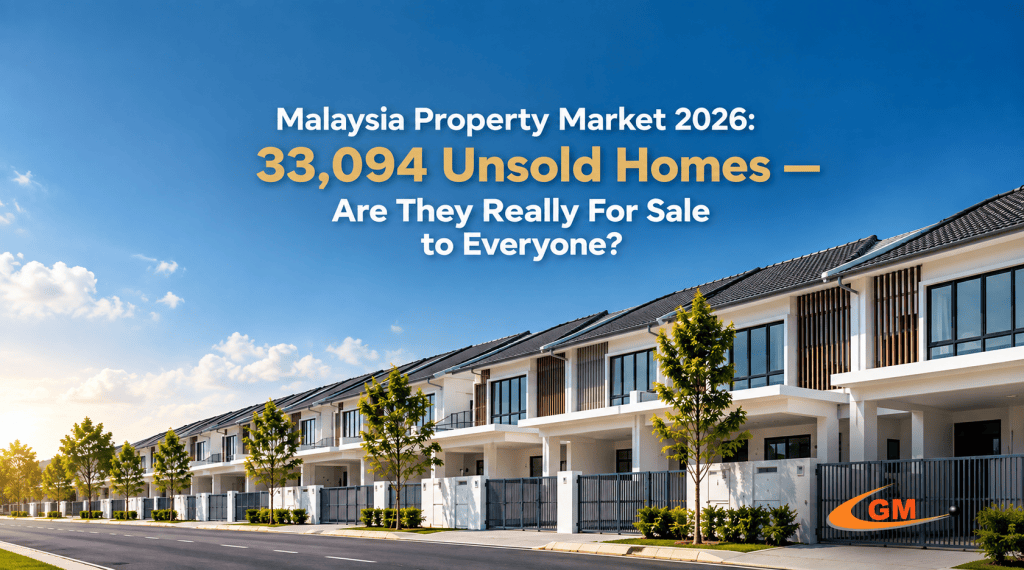
    Malaysia Property Market 2026: 33,094 Unsold Homes — Are They Really “For Sale” to Everyone?

    33,094

    That is the number currently attracting attention in Malaysia’s property market.

    As at the first half of 2026, 33,094 completed residential units worth RM17.78 billion remained unsold.

    The figure is up from 30,471 units in the previous period.

    Naturally, the immediate question is:

    Why aren’t Malaysians buying these homes?

    The usual answers come quickly.

    Homes are too expensive.

    Buyers cannot afford them.

    Banks are rejecting loans.

    Developers are building too much.

    All of these factors may play a role.

    But I think we need to ask a more fundamental question:

    What does “unsold” actually mean?

    Because an unsold property is not necessarily a property that is simply sitting on the open market waiting for any Malaysian to buy it.

    And that distinction matters.


    The Unsold Property Paradox

    Let’s start with something that may surprise many people.

    Malaysia’s property market is still active.

    In the first half of 2026, the country recorded 187,320 property transactions worth RM105.12 billion.

    Residential property accounted for 110,998 transactions, representing 59.3% of total transactions and RM47.11 billion in transaction value.

    So this isn’t a story about Malaysians suddenly refusing to buy property.

    There are buyers.

    There are transactions.

    There is demand.

    Yet at the same time, tens of thousands of completed homes remain unsold.

    That is the paradox.

    People are buying property — but some completed properties are still not finding buyers.

    This tells us that the problem is more complicated than simply:

    “Malaysians cannot afford houses.”


    Not Every Unsold Unit Has the Same Problem

    This is where I believe we need to look at the property market differently.

    An “unsold” unit could be unsold for very different reasons.

    1. The buyer doesn’t want it.

    The location may not be attractive.

    The layout may not fit the target market.

    The facilities may not justify the price.

    The surrounding environment may not match what buyers want.


    2. The buyer wants it — but cannot get financing.

    This is a very real issue.

    The latest REHDA Property Industry Survey found that 59% of surveyed developers reported unsold completed residential units.

    Among the factors highlighted were end-financing rejection, property prices and unreleased Bumiputera units.

    The survey covered 181 REHDA members in Peninsular Malaysia.

    A buyer can therefore say:

    “I want this property.”

    But the bank may effectively say:

    “You cannot finance it.”

    Those are two completely different problems.


    3. Some units are not immediately available to the entire market

    This is another part of the conversation that deserves more attention.

    Some residential developments contain Bumiputera quota units.

    Where those units remain unsold, developers may need to go through the relevant state process before they can be released to the wider market.

    The rules are not identical across Malaysia.

    In Penang, for example, the state has a formal Bumiputera quota release process, including requirements relating to the physical progress of the development and evidence of marketing efforts to Bumiputera purchasers.

    So an important distinction needs to be made:

    A unit can be recorded as “unsold” without necessarily being immediately available to every buyer in the market.

    And depending on the state and applicable scheme, releasing such units can also involve specific conditions or financial contributions.

    This matters because we should be careful not to treat every unit in the RM17.78 billion figure as if it represents exactly the same market problem.


    4. The product may simply be wrong for today’s buyer

    This is probably one of the most overlooked questions in property development.

    A project may have been conceived several years ago.

    The developer may have studied:

    • population growth,
    • household formation,
    • income levels,
    • infrastructure,
    • competition,
    • buyer profiles,
    • pricing,
    • and future demand.

    Then the project goes through planning, approvals, construction and completion.

    By the time the keys are ready…

    The market may have changed.

    Buyers’ expectations change.

    Household sizes change.

    Working patterns change.

    Transport patterns change.

    Financing conditions change.

    Lifestyle preferences change.

    And competing developments enter the market.

    A product that looked attractive when the development was planned may not necessarily be equally attractive when it is completed.


    And this is where “affordable” becomes an interesting word

    The government has reported that properties priced RM300,000 and below accounted for 51.6% of residential transactions in H1 2026.

    At the same time, the government has acknowledged that completed unsold residential stock is not confined to high-end properties. It is also significant in affordable and mid-priced segments.

    So perhaps we need to distinguish between:

    Affordable by price

    and

    Affordable and desirable to the target buyer.

    They are not necessarily the same thing.

    A RM300,000 property may be affordable on paper.

    But if it is two hours from the buyer’s workplace…

    If public transport is poor…

    If the layout doesn’t suit the family…

    If the maintenance costs are too high…

    If financing is difficult…

    If the buyer doesn’t see future resale demand…

    Then the buyer may still decide:

    “This isn’t for me.”

    And that isn’t necessarily an affordability problem.

    It may be a product-market fit problem.


    This is where the PDS perspective comes in

    For years, much of the property industry has operated around a relatively simple sequence:

    Build → Market → Sell

    But perhaps we need to rethink the sequence.

    The PDS philosophy starts with a different question:

    Discover the buyer before you build for the buyer.

    Who exactly is the intended buyer?

    What problem are they trying to solve?

    Where do they want to live?

    What can they realistically afford?

    Can they obtain financing?

    What type of property fits their lifestyle?

    What compromises are they willing to make?

    What alternatives are available?

    What would make them choose this property over another?

    And perhaps most importantly:

    What evidence would give them confidence to make the decision?


    From “Selling Property” to “Helping Buyers Decide”

    This is a subtle but important shift.

    A traditional sales approach may ask:

    How do we sell this unit?

    A PDS approach asks:

    Why should this buyer choose this unit — and is it actually the right choice for them?

    That changes the conversation.

    Instead of starting with the brochure, we start with the buyer.

    Instead of starting with the promotion, we start with the problem.

    Instead of asking:

    “How much discount do we need to give?”

    we should also be asking:

    “Why isn’t the buyer convinced at the current value proposition?”

    Sometimes the answer may be price.

    Sometimes financing.

    Sometimes location.

    Sometimes product design.

    Sometimes timing.

    Sometimes competition.

    Sometimes eligibility.

    And sometimes the property simply isn’t solving a sufficiently important problem for the intended buyer.


    The Developer’s Question Should Change Too

    Perhaps developers should not only ask:

    “How many units can we sell?”

    They should ask:

    “How many units does this market actually need — and what type?”

    That means looking beyond headline demand.

    It means understanding:

    Demand

    → Who needs the property?

    Ability

    → Who can actually afford it?

    Eligibility

    → Who can legally or practically purchase it?

    Financing

    → Who can obtain the required loan?

    Location

    → Who wants to live there?

    Product

    → What configuration do they want?

    Value

    → Does the property justify the price?

    Confidence

    → What information does the buyer need before deciding?

    This is a much more complete view of property demand.


    The Real Property Overhang May Be an Alignment Problem

    Perhaps Malaysia doesn’t simply have a shortage of buyers.

    Perhaps we have a shortage of alignment.

    Alignment between:

    What developers build

    and

    what buyers actually want.

    Between:

    Price

    and

    purchasing power.

    Between:

    Location

    and

    daily life.

    Between:

    Product

    and

    lifestyle.

    Between:

    Eligibility

    and

    the available buyer pool.

    Between:

    financing

    and

    the buyer’s financial profile.

    And ultimately:

    what is being offered

    and

    what the buyer is prepared to decide on.


    So, What Should We Do About the 33,094?

    I don’t think the answer is simply:

    “Make property cheaper.”

    Nor is it simply:

    “Give buyers more incentives.”

    And it certainly isn’t enough to say:

    “Malaysians aren’t buying.”

    We need to understand why each segment of unsold stock remains unsold.

    Because the solution to a financing problem is different from the solution to a location problem.

    The solution to a Bumiputera quota-release issue is different from the solution to a product-market mismatch.

    And the solution to an overpriced property is different from the solution to a property that is fairly priced but poorly positioned.

    One number can hide many different problems.

    That is why we need to go beyond the headline.


    The PDS Way

    At the Property Discovery System, we believe property decisions should begin with discovery, not selling.

    For buyers:

    Discover the market.
    Understand the property.
    Test the numbers.
    Assess the risks.
    Compare the alternatives.
    Then decide.

    For developers:

    Discover the demand.
    Understand the buyer.
    Design the right product.
    Position it correctly.
    Build trust.
    Then sell.

    Because the objective shouldn’t simply be to sell more properties.

    It should be to create better alignment between property supply and real buyer demand.


    The question we should really be asking

    The headline today is:

    33,094 completed homes remain unsold.

    But perhaps the more important question is:

    Why are these particular homes still unsold?

    Until we answer that question at the unit, project, location, price, financing and buyer level, we risk treating very different problems as if they were the same problem.

    And if we keep treating the symptoms instead of understanding the buyer…

    We may simply build another 33,094 homes to replace them.

    Property is not just about selling a product.

    It is about helping people make better decisions.

    Discover Better. Decide Smarter.

    That is the PDS way.


    Sources &

    • National Property Information Centre (NAPIC), Property Market Report H1 2026. NAPIC — H1 2026 Property Market Report
    • Ministry of Finance Malaysia, launch remarks on the H1 2026 Property Market Report.
    • REHDA Property Industry Survey 1H2026, reported by EdgeProp.
    • Penang State Housing Board, Guidelines for Application for Release of Bumiputera Quota.

  • WEEKLY PROPERTY ROUNDUP

    WEEKLY PROPERTY ROUNDUP

    Week in Review | 19–25 September 2026

    Malaysia • Regional Property • Global Insights

    The property market is not one market. Different assets, locations and economic forces are moving in very different directions.


    🇲🇾 1. Almost 60% of Developers Report Unsold Completed Homes

    https://images.openai.com/static-rsc-4/uJ1sXQYW8YNgLMcTGhfcD4h9AlGny1gVvYl0-3Z_UUWwYtxe0L-njDRK6hbq_nQHxshYIf8luumPsz7hwaFkeeFnY-h9INrh1M3Wsc166NXJCu6itg6Pu3naU9MIZA6kT81KGWzDrYNL-2laiMsgo-gFVvv0qAxul-Ei9rdVdXRqEG6ZpH0OrMh_BYhREWGV?purpose=fullsize

    What Happened

    A new REHDA Property Industry Survey found that 59% of 181 developers surveyed had unsold completed residential units as at 30 June 2026.

    The three main reasons cited were rejected end-financing applications, property prices and unreleased Bumiputera units.

    During the survey period, 54 respondents launched 15,834 units and sold 5,260 units, giving a take-up rate of 33.2%, only slightly higher than 32.2% previously.

    REHDA also highlighted rising construction costs, financing constraints and regulatory/compliance costs as pressures on housing affordability. An average 13% increase in construction costs was reported between March and June.

    Why It Matters

    This is an important distinction:

    A home can be “affordable” on paper but still unaffordable to the buyer.

    If financing is rejected, margins are lower or credit requirements become more difficult, the advertised selling price isn’t the whole affordability equation.

    For developers, unsold completed stock also ties up capital.

    Miichael’s Review

    This is exactly why I believe buyers should look beyond the headline price.

    Before deciding whether a property is affordable, ask:

    Can I actually obtain the financing?
    What is my monthly commitment?
    What happens if interest rates or my income situation changes?

    For developers, the lesson is equally important:

    Product pricing must match real purchasing power — not just construction cost plus desired margin.

    Source: EdgeProp — REHDA survey on unsold homes and EdgeProp — REHDA on housing costs


    🇲🇾 2. Johor: Paragon Globe Plans RM1.69 Billion Industrial Park

    What Happened

    Paragon Globe is pursuing additional land in Sedenak, Johor, for a proposed industrial park with an estimated gross development value of RM1.69 billion.

    The project sits within the Kulai-Sedenak zone of the Johor-Singapore Special Economic Zone (JS-SEZ) and is planned to include industrial factories, commercial components and worker accommodation.

    The group is also taking a more strategic approach to land development, looking at anchor occupiers and the ecosystems that can form around them, rather than simply developing land in isolation.

    Why It Matters

    This is bigger than another industrial-property announcement.

    The interesting part is the “anchor occupier” strategy.

    A major manufacturer can create demand for:

    • suppliers
    • logistics
    • warehouses
    • worker accommodation
    • retail
    • supporting services

    That can turn an industrial site into an economic ecosystem.

    Miichael’s Review

    This is the kind of development strategy I find interesting.

    The best land doesn’t necessarily have the highest GDV.

    Sometimes the real question is:

    “What economic activity will this land create around itself?”

    That is a much more powerful way to assess long-term land value.

    Source: The Star — Paragon Globe eyes RM1.69bil industrial park; EdgeProp — Paragon Globe landbank strategy


    🇲🇾 3. Klang: Maybulk Moves Into Industrial Property

    What Happened

    Maybulk has proposed acquiring an 8,346 sq m freehold industrial property in Bandar Bukit Raja, Klang, for RM35.5 million.

    The property includes an industrial building, warehouse and office facilities.

    Importantly, Maybulk said the move is part of a strategy to diversify its revenue streams and reduce reliance on its existing shipping and storage businesses.

    The acquisition would also immediately provide rental income once completed.

    Why It Matters

    This is a smaller transaction than the headline billion-ringgit deals — but strategically, it is very interesting.

    We’re seeing a company from outside traditional property development use industrial real estate as an income-producing asset.

    That reflects the growing attractiveness of industrial property as an investment class.

    Miichael’s Review

    I always find these transactions worth watching because they show how corporate investors think about property differently from individual buyers.

    For a corporate investor, property can be:

    An operating asset + rental income + capital preservation + diversification.

    That is very different from buying a property simply because “the area is going up.”

    Source: The Star — Maybulk proposes RM35.5mil Klang industrial acquisition


    🌏 4. Australia: The Housing Slowdown Is Hitting More Than Property Agents

    https://images.openai.com/static-rsc-4/Brs6pRtz5kYYyfE4NHjlwNYzDeZsQhdHN8Ay_xpJgbljRtmXqHfXrQ0ZJ7iHrrLLQKWOe0izOsryIQPmdtGfKgsZshly6_Y3bJOYhnrsCRXXrUXpoyniGMpBU6UiTg5U1rpeUgc7Zw_F7zL8TwPXur-FNtdpsHx7XF08Uo8dO-6FZFqw6SGoo2PIJCj64MzF?purpose=fullsize

    What Happened

    Australia’s housing slowdown is now affecting a much wider economic ecosystem.

    Reuters reported that Australian home sales volumes have fallen sharply, with turnover 15% below a year earlier in July/August and 10.5% below the five-year average.

    Reuters estimates that the reduction in housing activity could remove around A$2.8 billion to A$5.6 billion of annual spending from businesses connected to property transactions — including removalists, conveyancers, furniture retailers, tradespeople and renovation businesses.

    The important point is that prices themselves have not collapsed: Reuters reported prices were less than 4% below the March peak and still above year-ago levels. The bigger issue is fewer transactions.

    Why It Matters

    This is a fascinating distinction:

    Property prices can remain relatively resilient while the property economy slows dramatically.

    If fewer people buy and sell, many businesses around the property ecosystem suffer.

    Miichael’s Review

    This is a useful lesson for Malaysia too.

    When we analyse a property market, we shouldn’t look only at:

    “Are prices rising?”

    We should also watch:

    transaction volume, financing, turnover, inventory and buyer confidence.

    A market can look healthy from a price chart while becoming much less active underneath.

    Source: Reuters — Australia’s housing slowdown and wider economic impact


    🌏 5. UK Housing: Prices Bounce, But Buyers Remain Selective

    https://images.openai.com/static-rsc-4/AEe5M10FcR-kJRCayCQU6MvkhNhkoA3_xw2GGp_f6LLLxiydkqrUYPQL63QZdaCxQoINy6jL0mpDitHMoiolKW5iBFZCF_fbHycfkm-eMLNzJIn4oybRTkZ_P3qO1zOmbgx6hiVX8Ce5o71Tg2Q2XS9ZjNv5XPC_Gl731cYvpOuShOgWgt_lYJuEbdKNQVeu?purpose=fullsize

    What Happened

    UK asking prices rose 0.7% in September, equivalent to about £2,441, according to Rightmove data reported by The Times.

    The average asking price reached approximately £367,440.

    But the headline increase needs context: prices remained 0.8% below a year earlier, while housing supply was reported to be at a 12-year high.

    Why It Matters

    More supply gives buyers more choice — and therefore more negotiating power.

    A seller cannot simply assume that a higher asking price will translate into a higher achieved price.

    Miichael’s Review

    This is one of my favourite property lessons:

    The asking price is not necessarily the market value.

    When supply rises and buyers become more selective, pricing strategy becomes increasingly important.

    For investors, this also reinforces the need to distinguish between:

    headline price movement and actual market liquidity.

    Source: The Times — UK house prices rise for first time since May


    📊 PROPERTY NUMBER OF THE WEEK

    59%

    The percentage of surveyed Malaysian developers reporting unsold completed residential units.

    But the more interesting number may be:

    33.2%

    The reported take-up rate during the REHDA survey period.

    The lesson: demand exists — but buyers are becoming increasingly constrained by financing, affordability and product suitability.


    👀 WORTH WATCHING

    🇲🇾 Malaysia

    1. Housing affordability
    Will financing accessibility improve enough to reduce completed unsold stock?

    2. Johor industrial property
    Watch how the JS-SEZ develops around actual occupiers and employment rather than simply land speculation.

    3. Klang industrial assets
    Will more corporates diversify into income-producing industrial property?

    🌏 International

    4. Australia
    Whether weak transaction volumes persist even if prices remain relatively resilient.

    5. UK
    Whether increased housing supply eventually translates into more realistic pricing.


    💡 MIICHAEL’S TAKEAWAY

    This week gives us five very different property stories.

    Housing affordability.
    Industrial land strategy.
    Corporate property investment.
    Australia’s transaction slowdown.
    UK supply and pricing.

    And that’s exactly why I don’t believe we should talk about “the property market” as though it is one single thing.

    Different sectors behave differently.

    Different locations behave differently.

    And most importantly, different buyers have different problems.

    For someone buying a home, financing and affordability may matter most.

    For an investor, rental income and liquidity may matter more.

    For a developer, land cost, product positioning and absorption may determine success.

    And for a corporate investor, property may simply be another asset class for diversification.

    So perhaps the better question isn’t:

    “Is property a good investment?”

    It is:

    “Which property, in which location, for what purpose — and under what market conditions?”

    That is where better property decisions begin.

    Miichael Yeoh

    Property Strategist

  • Is the Property Market Slowing Down… Or Are Buyers Becoming More Picky?

    Is the Property Market Slowing Down… Or Are Buyers Becoming More Picky?

    Lately, many people have been asking:

    “Is the property market slowing down?”

    Some projects are taking longer to sell.
    Some launches are seeing slower take-up.
    Buyers seem to be hesitating more before committing.

    At first glance, it may appear that the market is becoming weak.

    But when we look deeper into the numbers and buyer behaviour, the story may actually be different.

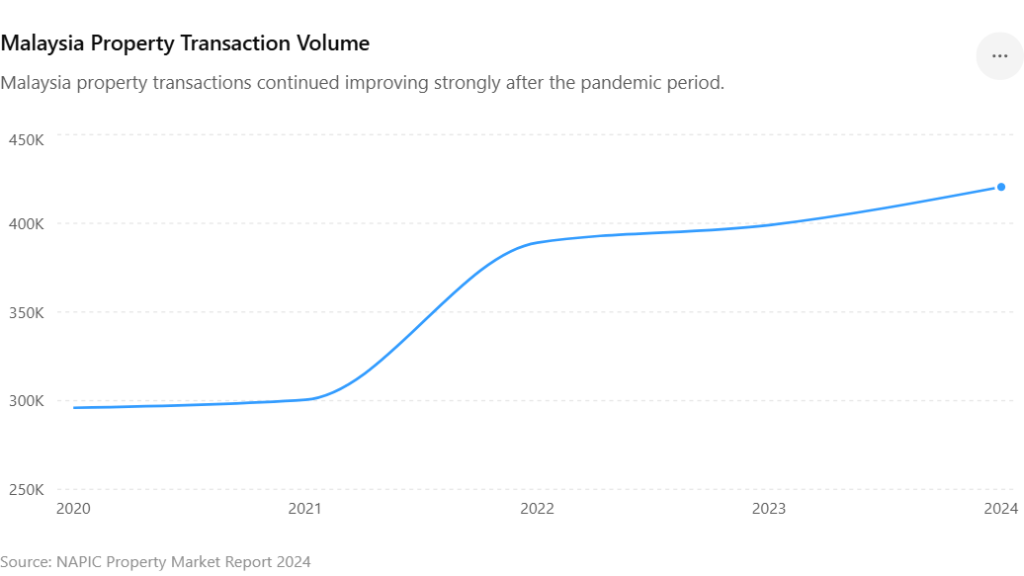
    According to the National Property Information Centre (NAPIC), Malaysia recorded more than 420,000 property transactions in 2024 — one of the strongest performances in the past decade.

    This tells us something important:
    The market still has buyers.

    However, today’s buyers are no longer buying property the same way they did years ago.

    Buyers today are becoming more informed, more cautious, and more selective before making decisions.

    In the past, some buyers purchased based on emotions, marketing hype, showroom designs, rebates, or fear of missing out (FOMO).

    Today, buyers are asking more questions:

    • Is the pricing reasonable?
    • Is there real demand in the area?
    • Can the property generate rental income?
    • Is the developer reliable?
    • Is there oversupply nearby?
    • Will the property still hold value in the future?

    In short — buyers today are becoming more picky.

    And honestly, that is not necessarily a bad thing.

    A property purchase is one of the biggest financial commitments for most people. Buyers today are thinking carefully about:

    • Monthly instalments
    • Interest rates
    • Maintenance fees
    • Cash flow commitments
    • Rental demand
    • Future resale value
    • Lifestyle suitability
    • Long-term financial stability

    This explains why some projects continue to perform well while others struggle with slower take-up.

    In fact, NAPIC data also shows that Malaysia continues to face residential overhang issues in certain market segments. This means completed units remain unsold due to factors such as pricing mismatch, oversupply, poor accessibility, weak product positioning, or changing buyer preferences.

    This does not mean there are no buyers in the market.
    It simply means buyers are becoming more selective about where they place their money.

    Before buying any property project, buyers should spend time understanding:

    • The actual market demand
    • Existing and future supply in the area
    • Nearby competing developments
    • Developer track record and credibility
    • Connectivity and infrastructure plans
    • Market pricing compared to surrounding projects
    • Rental and resale potential
    • Their own financial holding power
    • Whether the property truly fits their long-term goals

    Many people still buy emotionally.
    But smart buyers buy strategically.

    A beautiful showroom alone should never be the reason to purchase a property.

    One thing I always encourage buyers to do before committing is to attend property seminars, educational talks, and market-sharing sessions.

    Why?

    Because knowledge reduces expensive mistakes.

    A good seminar can help buyers:

    • Understand current market trends
    • Learn from real case studies
    • Compare projects more objectively
    • Understand buyer psychology and market cycles
    • Avoid common investment mistakes
    • Gain confidence before making a large commitment

    In today’s market, education is becoming one of the most important tools for property buyers.

    The market may not necessarily be weak.
    It may simply be that buyers today are smarter, more informed, and more selective than before.

    And personally, I believe that is a healthy direction for the property market.

    From the Desk of,

    Miichael Yeoh

    Property Strategist

    Disclaimer: This reflects the author’s personal views based on market experience and current observations. It is not financial advice. Smart investors do their own research before making any move.

  • Property Is Still Alive — But the Game Has Changed

    Property Is Still Alive — But the Game Has Changed

    Buying a property today is very different compared to 10 or 20 years ago.

    Back then, property could sell very easily.
    Developers launched, buyers queued, and decisions were made quickly.

    Today, the world has changed.

    The way people buy property has changed.
    The way markets behave has changed.
    And more importantly, the way buyers think has changed.

    Buyers today are far more informed.

    Before even paying a booking fee, many would have already:

    • Compared multiple projects
    • Studied pricing trends
    • Checked developer track record
    • Analysed location fundamentals
    • Calculated loan eligibility and cash flow

    In other words, today’s buyers are not just buyers — they are researchers.


    At the same time, the global environment is not exactly calm.

    We are seeing ongoing geopolitical tensions — from the US–Iran situation to instability in parts of the Middle East.
    Interest rates, inflation, and currency movements continue to shift.

    All these create one thing: uncertainty.

    And when uncertainty comes in, market behaviour changes.

    From what I observe in today’s property market:

    • Investors are waiting — not exiting
    • Sellers are holding — not reducing
    • Buyers are selective — not absent

    Let that sink in.

    The market is not dead.
    It is simply… more cautious.


    And here is something many people miss:

    👉 When the market is not stable, that is where the opportunity lies.

    Why?

    Because:

    • Less emotional buying
    • More rational pricing
    • More room for negotiation
    • More time to analyse properly

    In a hot market, people chase.
    In a cautious market, people choose.

    And those who choose well, win.


    This is exactly why I started focusing on Property Market Intelligence.

    Not just looking at property as a product,
    but understanding:

    • Market timing
    • Buyer psychology
    • Financing structure
    • Exit strategy
    • Risk positioning

    This approach is built from more than 25 years in the property and banking industry.

    I have gone through multiple market cycles:

    • Asian Financial Crisis
    • Global Financial Crisis
    • Property slowdowns
    • Policy changes
    • And shifting buyer behaviours across decades

    Every cycle teaches one thing:

    👉 The market will always move — but not everyone moves with it.


    Today, success in property is no longer about:
    “Buy and wait.”

    It is about:
    “Buy with clarity.”

    Because in today’s market:

    • Information is everywhere
    • But insight is rare

    If you are buying today, don’t just ask:

    “Is this a good property?”

    Ask instead:

    • Who will buy from me later?
    • What is the demand driver here?
    • How does financing affect my holding power?
    • What happens if the market stays slow for 3–5 years?

    That is how professionals think.


    The market has not disappeared.

    It has simply matured.

    And in a mature market,
    strategy will always beat impulse.


    Miichael Yeoh
    Property Strategist | Author

    Author of:
    Think Like a Banker, Act Like a Player
    Property Investment BLT
    Buying Property Like a Pro (MPH Bestseller)

  • Residential Property & Mortgage Trends in Malaysia (2026 and beyond)

    Residential Property & Mortgage Trends in Malaysia (2026 and beyond)

    By Miichael Yeoh

    The Malaysian property market has been through a lot in the last few years — pandemic, inflation, rising construction costs, slow wage growth, and changing buyer behaviour. But as we step into 2025, one thing is clear:

    Property is still moving… but the market is no longer the same.
    Buyers are more cautious, banks are more selective, and affordability remains a major issue.

    Here’s my take on what’s really happening in the residential property and mortgage landscape, and what you should pay attention to — especially if you’re planning to buy, invest, or restructure your loans.


    📈 Long-Term Price Trend: Property Still Moves Up

    Whether the market is “good” or “bad”, one fact remains consistent:

    Property prices in Malaysia have been rising steadily for the last 20+ years.

    Urban areas like Klang Valley, Penang and Johor consistently show appreciation because of:

    • population growth
    • job concentration
    • infrastructure development
    • scarcity of prime land

    But here’s the catch:
    House prices have risen much faster than income, making affordability the No.1 challenge for Malaysians today.

    This explains why many young buyers are stuck deciding between renting longer… or compromising on location and size.


    🏘️ What’s Happening in the Market Now?

    1. Transaction volume is rising — but buyers are choosy

    2024 recorded strong growth in overall property transactions, and 2025 is projected to see single-digit positive growth.
    People are buying — but not blindly.

    Buyers today compare:

    • price per sq ft
    • rental potential
    • exit value
    • access to MRT / LRT
    • developer reputation

    Gone are the days when anything “new launch” can sell out.
    Today, value matters more than hype.


    💰 Mortgage & Financing Trend: Here’s the Real Story

    The biggest shift recently is OPR dropping to 2.75%, making borrowing cheaper.

    This directly means:

    • Lower monthly instalments
    • Higher loan eligibility
    • Better cashflow for investors

    But with great news comes reality…
    Banks are approving loans more carefully than ever.

    Your CCRIS, CTOS, commitments and even gig-income consistency matter.
    If your financial health is not clean, even a low OPR won’t help you.

    For many Malaysians, the challenge isn’t interest rate — it’s getting the loan approved.


    🧱 Supply vs Demand: The Affordable Gap

    You’re hearing this everywhere:

    “So many houses unsold!”
    —but at the same time—
    “I can’t find any home I can afford!”

    Why?
    Because the overhang is mainly:

    • too expensive for the mass market
    • too big (1,000 sq ft and above)
    • wrong location

    This mismatch will continue unless developers pivot more aggressively into the mid-market segment.


    🧭 What Buyers & Investors Should Look At Now

    ✔️ If you’re a first-time buyer

    This is a golden window.
    Low OPR + many choices + developers offering incentives = value for money.

    Look for:

    • good location > big size
    • future MRT/LRT corridors
    • reputable developers
    • high rental demand areas

    ✔️ If you’re an investor

    Capital gain will still happen — but don’t expect overnight appreciation.
    Focus on:

    • rental yield
    • undervalued areas
    • distress or motivated sellers
    • T.O.P. projects with ready tenants

    The smart investors in 2025 are not speculating.
    They’re buying below market value, or in growth corridors, or early in new infrastructure zones.

    ✔️ If you own multiple properties with loans

    This is the best time to:

    • refinance
    • consolidate debts
    • reset your cashflow
    • restructure your portfolio

    A small adjustment in interest rate can save thousands per year.


    🧩 Conclusion: The Market Isn’t Booming, But It’s Moving

    Malaysia’s residential market today is stable, resilient, and buyer-driven.
    We’re not in a bubble.
    We’re not in a crash.

    We’re in a value-driven market, where the winners are:
    ✔️ informed buyers
    ✔️ strategic investors
    ✔️ those who manage their loans wisely

    If you understand the trends — and you know how to analyse value correctly — 2025-2026 can be a very profitable year for you.

  • Hot Topics in Malaysia’s 2025 Property Market: What You Need to Know

    Hot Topics in Malaysia’s 2025 Property Market: What You Need to Know

    The Malaysian property market is buzzing with conversations in 2025 as investors, developers, and buyers respond to new trends, policy shifts, and emerging opportunities. From cooling measures to infrastructure-driven growth corridors, the landscape is evolving rapidly. Rising construction costs, industrial and logistics demand, and the spotlight on data centres are just some of the themes shaping discussions today.

    The following are the current hot topics in Malaysia’s property market that every buyer and investor should be aware of:

    1. Residential Market Performance & Price Dynamics

    • House Price Growth Moderating
      Malaysia’s housing price index has been rising, but growth is slowing. For Q4 2024, the national average house price was ~ MYR 483,879, with year-on-year (YoY) growth modest. Global Property Guide
      There were quarter-on-quarter declines in Q4 2024 in many property types (terraced, high-rise, detached, semi-detached) — showing possible short-term corrections or softening. Global Property Guide
    • Regional Price Variations
      • In Penang, average house price remains well above MYR 400,000: about MYR 475,037 in Q4 2024. Global Property Guide
      • Kuala Lumpur is the most expensive, with average ~ MYR 794,467 in Q4 2024. Global Property Guide
      • Other states (e.g. Johor, Selangor) are in between; more affordable housing tends to be further out or in less central locations. Global Property Guide+1
    • Transaction Volume & Supply
      Residential transaction count rose ~4% in 2024 to about 260,516 units; transaction value grew ~5.9 % to ~MYR 106.92 billion. Global Property Guide
      The number of new housing starts rose ~20.6 % in 2024 (for both landed + high-rise) to ~106,236 units; completions rose ~9.7% to ~82,135 units. Global Property Guide
      Also, new planned supply was rising— ~100,461 units in 2024, up ~24.1%. Global Property Guide
    • Overhang / Unsold Stock
      Overhang remains a concern, especially in less premium or lower-value housing. The number of unsold affordable homes has increased. According to Rehda, in 1Q 2025 affordable homes accounted for ~20.7% of unsold residential units. EdgeProp.my
      In Penang, overhang has been showing improvement (decrease in unsold stock) but still persists, especially in certain price bands. Scoop

    2. Developer Sentiment & New Launches

    • Reduced Developer Confidence
      The Rehda survey (1H 2025) shows confidence among developers fell sharply. Only ~19% were optimistic about market prospects mid-2025, down from ~51% six months earlier. EdgeProp.my
      Many developers are being more cautious: ~41% plan new launches in 2H 2025, versus higher rates earlier. Some are not looking to acquire new land because of cost and risk. EdgeProp.my
    • Mismatch of Supply vs Demand (especially “affordable” units)
      A big issue flagged by developers is that many affordable units are being built in locations or at price levels that are not aligned with what local buyers can afford / prefer. Even though lower-priced units tend to have higher demand, their take-up depends heavily on location, amenities, connectivity. EdgeProp.my+1
    • Prime / High-end / Branded Projects Doing Better
      In KL, new launches in “prime” segments are seeing 30-50% take-up rates. Buyers of premium / branded residences (or units in strong locations) are more willing to pay for quality, service, amenities. JLL
      Branded residences are more visible in Penang too (e.g. Marriott Residences at Gurney Drive) reflecting demand (or at least supply) for high-end product. Wikipedia

    3. Commercial, Industrial & Office Sectors

    • Office Vacancy / Demand
      Kuala Lumpur’s office market is recovering: vacancy falling, net absorption positive. For example, KL City saw ~231,392 sq ft net absorption in Q2 2025. Vacancy in KL fell from ~23.6% (Q2 2024) to ~19.2% (Q2 2025). JLL
      Grade A office spaces (those with superior amenities, good location) are better placed; tenants are shifting to better quality buildings. JLL+1
    • Industrial / Logistics / Data Centres Growing Strong
      Demand for industrial space is strong — especially in prime logistics, e-commerce, and supply chain related sectors. In KL / Klang Valley, new supply is being absorbed, and vacancy rates are very low for good quality assets. JLL+1
      The data centre pipeline is large: Malaysia has about 638 MW of capacity completed, ~1,300 MW under construction, and an even larger future pipeline. Investment in this space is seen as strategic. JLL

    4. Government Policy, Taxation & Regulation

    • Budget 2025 Measures
      Budget 2025 includes support for infrastructure, sustainable development, and trying to attract investment in high-value sectors. Real estate/spatial planning tied to ESG / green building is emphasized. JLL
      There’s also focus on more efficient use of land, perhaps more mixed-use zoning or strategic zones. JLL
    • Tax / Fees / Local Levies
      In Penang, for instance, there is proposed quit rent increase (2026) — between ~29% to 200% increase for various land categories. For residential urban land, a hike is less steep; commercial / industrial parcels are more affected. Strata properties may face increases later (from 2027). The Vibes
    • Affordable Housing Policy Pressures
      Developers are required to allocate certain proportions of new developments to affordable housing, but this has led to some unintended consequences: in some cases, these units are in less attractive locations or are priced above what locals can realistically afford. This mismatch leads to slower sales/unsold inventory. EdgeProp.my

    5. Regional Focus: Penang (and Selected States)

    • Overhang Glut Gradually Easing in Penang
      Penang had been among the states with large unsold property inventory. In recent years, unsold units in Penang have reduced (e.g. from ~5,493 in 2021 to ~2,796 in 2024). Scoop
      However, there are still mismatches: properties priced between RM 300,000–500,000 and below are struggling more; high-end (>RM1 million) do better. Location, amenities, connectivity remain critical. Scoop
    • Infrastructure & Transport Matters More
      Projects like the Penang Transport Master Plan (including the Mutiara LRT) are expected to impact property values / demand in areas served. Wikipedia
      Also, improvements like Gurney Bay / Gurney Bay waterfront park are enhancing appeal of coastal / beachfront / high-view precincts in George Town. Wikipedia
    • Local Revenue / Cost Pressures
      The quit rent hike in Penang is being discussed: residents are reacting, especially for commercial / industrial land. This adds to holding costs and might shift developers’ cost calculations. The Vibes
    • High-end / Branded Residences Becoming More Common
      Examples in Penang: Marriott Residences Penang is a new branded residential tower at Gurney Drive. Wikipedia
      The Muze @ PICC is also a large mixed residential project in Bayan Baru with tall towers. Wikipedia

    6. Risks, Headwinds & Constraints

    • Cost Inflation, Construction / Input Costs
      Rising costs for materials, labour shortfalls, logistical challenges (supply chain) are squeezing margins. Developers have less flexibility on pricing vs cost. This trend is being widely reported. EdgeProp.my
    • Financing / Interest Rates
      Borrowing costs, stricter lending criteria, risk of loan rejection are issues especially for buyers of affordable homes. Developer access to finance is also more cautious. EdgeProp.my
    • Unsold Affordable Units Risk
      If many affordable units stay unsold, there is risk of overhang, lower returns for developers, possible depreciation in certain segments. Also risk of price stagnation in non-prime locations. EdgeProp.my+1
    • Regulatory Uncertainty / Local Policy Changes
      Increases in quit rent, possible changes in tax / service tax / sales tax, land use zoning, requirements for affordable housing quotas, etc., create uncertainty. Developers and investors are watching local councils, state governments.
    • Macro / External Risks
      Global supply chain disruptions (especially for industrial / data centre / electronics sectors), geopolitical tensions, input cost volatility, and currency / inflation risk. Also, any downturn in global trade could affect Malaysia’s manufacturing / export sectors (with knock-on effects on property demand, especially for worker housing, industrial real estate).

    7. Opportunities & What to Watch

    • Strategically Located High-Quality / Branded Projects
      Projects with strong amenities, good connectivity (esp. to transit / highways / LRT etc.), high build quality, smart / green features, branded residences — these are likely to command premium pricing and maintain demand.
    • Industrial, Logistics & Data Centres
      Given the global trends (e-commerce, supply chain reshoring, semiconductor investment), Malaysia (especially Penang, Johor, Klang Valley) is seeing growing investor interest in industrial / logistics parks, warehouses, data centre space. These are viewed as relatively defensive assets.
    • Mixed-Use Development & Transit-Oriented Development (TOD)
      Areas around transport infrastructure (LRT, MRT, light rail, major highway nodes) are likely to benefit. Mixed-use developments (residential + retail + office or amenity) that offer a lifestyle component will be attractive.
    • Green / ESG / Sustainability Features
      Buyers / tenants increasingly consider energy efficiency, green certifications, smart home features, environmental impact. Developers incorporating these will have competitive advantage.
    • Government Incentives & Zone Designations
      Investment zones, special economic zones, incentives in Budget 2025, tax breaks (where available), and government infrastructure spending (transport, utilities) are going to influence property hot spots.
    • Price Correction / Buyer Power
      For savvy buyers, there might be opportunities: slower demand in non-prime sectors, more incentive packages by developers, better negotiations (price, furnishing, perks) especially in properties that are not moving quickly.

    Conclusion

    Malaysia’s property market in 2025 is at a turning point, balancing between growth opportunities and structural challenges. While affordability and regulatory changes continue to test both developers and buyers, new catalysts such as data centres, logistics demand, and large-scale infrastructure projects are reshaping the landscape.

    For investors, the key lies in identifying which segments offer long-term resilience and value. For homeowners, understanding how policies, costs, and location trends play out will make all the difference. Ultimately, the hot topics of today are shaping the strategies, risks, and rewards of tomorrow’s property market.

    From the Desk of

    Miichael Yeoh

  • Malaysia Budget 2025: Enhancing Homeownership

    Malaysia Budget 2025: Enhancing Homeownership

    Prime Minister and Finance Minister Datuk Seri Anwar Ibrahim has unveiled the Malaysian Budget 2025, highlighting significant measures to boost housing and development. Key initiatives focus on making homeownership more affordable and improving community living standards.

    First-Time Home Buyers Support

    The Housing Credit Guarantee Scheme (SJKP) will now provide guarantees on loans up to RM500,000 for first-time home buyers purchasing properties on wakaf land. So far, the scheme has approved RM12.8 billion in loans, benefiting more than 57,000 first-time buyers.

    Housing Tax Relief

    To encourage homeownership, first-time buyers of homes priced up to RM500,000 can claim tax relief of up to RM7,000. For homes priced between RM500,000 and RM750,000, buyers can claim up to RM5,000 in tax relief. These benefits can be claimed for three consecutive years for sale and purchase agreements signed between January 1, 2025, and December 31, 2027.

    Affordable Housing Initiatives

    A budget of RM900 million has been allocated for 48 People’s Residency Programs (PRR) and 14 Rumah Mesra Rakyat (RMR) projects, including new PRR developments in Port Dickson and Seberang Perai Tengah. By the end of 2025, 30 PRR projects will be completed, providing homes for nearly 17,500 people.

    Additionally, up to RM90,000 in financial aid will be available for building new homes for residents, including those in the hardcore poor housing programme (PPRT), fishermen, and Chinese new villages. The government has also raised the maximum financial assistance for home repairs to RM20,000. UDA Holdings Bhd will receive RM200 million to develop affordable housing on wakaf land, and the Public Sector Home Financing Board (LPPSA) will assist civil servants in buying homes on such land.

    Maintenance and Facilities Upgrades

    RM200 million has been set aside for maintaining low- and medium-cost public strata housing, with funds going toward replacing old elevators. Another RM100 million will be used to upgrade 48 Madani Public Parks, enhancing recreational areas across the country.

    To further improve communities, RM84 million will be allocated to upgrade basic infrastructure and social facilities in Chinese New Villages, while the Housing and Local Government Ministry will focus on meeting the needs of Indian settlements.

    These comprehensive initiatives aim to ease the path to homeownership and improve living conditions for Malaysians across various communities.

    From the Desk of Miichael Yeoh