Tag: PropertyStrategy

  • WEEKLY PROPERTY ROUNDUP

    WEEKLY PROPERTY ROUNDUP

    Week in Review | 5–11 September 2026

    Malaysia Property • Global Insights • Better Decisions

    Hi everyone,

    This week’s stories remind us that property isn’t driven by headlines alone. A stronger market comes from healthy demand, smart capital, sustainable buildings and confidence in the wider economy.

    Here are the 5 developments I believe are most meaningful for buyers, investors and property professionals this week.

    🇲🇾 1. Malaysia’s Property Market Tops RM105 Billion

    Sky Meridien Residence @ Sentul East Renovated Condo For Sale RM950K | Malaysia Property and Real Estate

    What Happened?

    Malaysia recorded 187,320 property transactions worth RM105.12 billion during the first half of 2026.

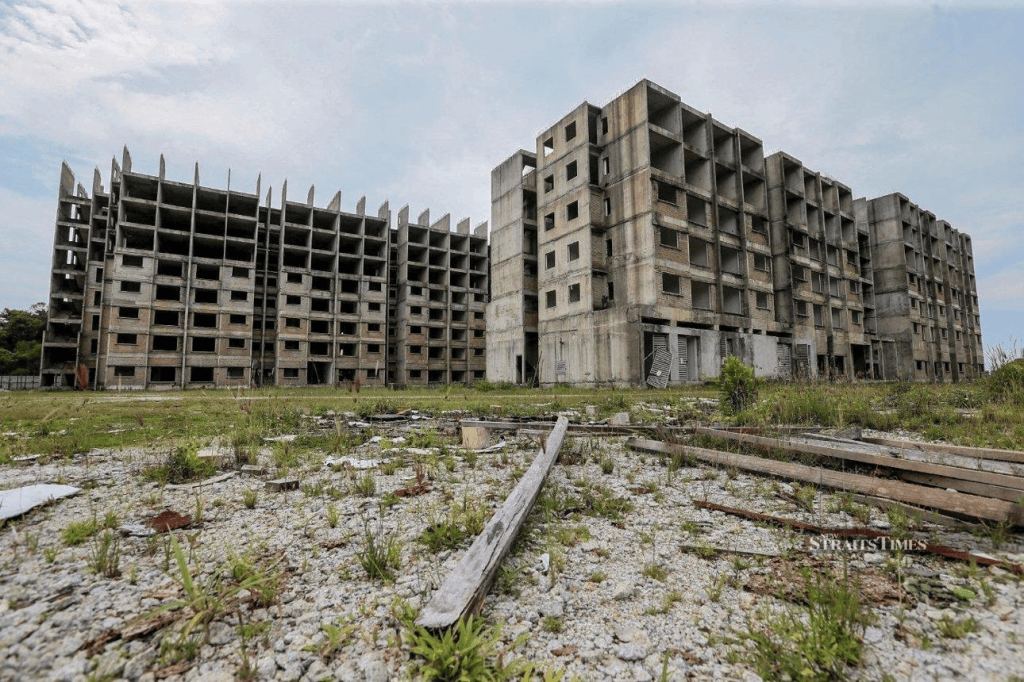
    However, there is another number worth paying attention to: 33,094 completed residential units remain unsold, an increase of 8.6% from the previous period.

    Why It Matters

    A busy market does not mean every project is successful. The difference between transaction volume and sales absorption tells us buyers are becoming much more selective.

    Miichael’s Review

    When people ask whether the property market is good or bad, my answer is usually:

    “Which market are we talking about?”

    A healthy property decision begins with understanding demand, supply and affordability—not simply following price movements.

    Source: JPPH 1H 2026 Property Market Report.

    🇲🇾 2. A RM331 Million Office Deal Signals Confidence in KL Commercial Property

    Knight Frank

    What Happened?

    AmFIRST REIT is seeking unitholder approval to dispose of Menara AmBank in Kuala Lumpur for RM331 million. The transaction is one of the more significant commercial office deals announced this week.

    Why It Matters

    Commercial property often gives us an early indication of how institutional investors view the market. Capital recycling allows REITs to strengthen balance sheets and reposition their portfolios.

    Miichael’s Review

    Residential property usually receives the attention, but I always watch office and commercial transactions closely.

    Large institutional deals often tell us where long-term confidence is moving before the broader market notices.

    Source: The Star Business

    🇲🇾 3. Green Buildings May Soon Receive New Tax Incentives

    Eco-Friendly Buildings in Malaysia: Worth the Cost? | Rummah.my

    What Happened?

    The Housing Ministry has submitted proposals for new tax incentives to encourage greener building development ahead of Budget 2026. The initiative aims to accelerate sustainable construction and improve environmental performance across future projects

    Why It Matters

    Sustainability is gradually becoming a financial consideration, not just an environmental one. Incentives could influence developer decisions, construction costs and buyer demand over time.

    Miichael’s Review

    I believe future property value will increasingly include another question:

    “Is this building sustainable enough to remain competitive 20 years from now?”

    Green features may become part of long-term asset value—not simply a marketing brochure.

    Source: The Star, 5 September 2026.

    🌏 4. Australia’s Housing Sector Faces a Reality Check

    Housing

    What Happened?

    Australian housing developer Bathla stood down more than 200 employees as financial pressure continues affecting parts of the residential development sector. The story highlights the challenges facing developers despite ongoing housing shortages.

    Why It Matters

    Housing demand alone doesn’t guarantee developer profitability. Rising construction costs, financing pressure and project cash flow remain critical risks.

    Miichael’s Review

    This is an important reminder for investors:

    A strong housing market and a strong development business are not always the same thing.

    Always understand the developer’s financial strength—not just the project.

    Source: The Guardian Australia.

    🌏 5. Global Markets Are Watching Interest Rates Closely

    Benefit Street Partners

    What Happened?

    Global investors are closely watching upcoming US Federal Reserve decisions, while Malaysia has maintained its OPR at 2.75%, providing relative stability for domestic borrowers.

    Why It Matters

    Interest rates influence mortgage affordability, investment returns and foreign capital flows. Even when Bank Negara holds rates steady, global monetary policy still affects market sentiment.

    Miichael’s Review

    Rather than asking whether rates will rise or fall, buyers should ask:

    “Can I comfortably afford this property if rates stay higher for longer?”

    That is a much healthier way to evaluate risk.

    Source: WSJ & Bank Negara Malaysia.

    📊 Property Number of the Week

    Transactions

    187,320

    Properties transacted in 1H 2026

    Market Value

    RM105.1B

    Total transaction value nationwide

    Commercial Deal

    RM331M

    Proposed Menara AmBank disposal

    Policy Focus

    Green Incentives

    Potential boost for sustainable buildings

    👀 Worth Watching

    Over the coming weeks, I’ll be watching:

    • Budget 2026 housing and green-building incentives
    • More institutional commercial property transactions
    • Whether unsold residential stock begins to decline
    • Global interest-rate direction and its impact on mortgages

    💡 My Takeaway This Week

    This week isn’t about one spectacular property launch.

    It’s about confidence.

    Confidence from homebuyers. Confidence from institutional investors. Confidence in sustainable development. And confidence created by stable economic policy.

    As buyers, I believe we should always ask one question before making a decision:

    “Will this property still make sense 10 years from today?”

    That question often matters more than today’s promotional price.

    Miichael Yeoh

    PROPERTY STRATEGIST

    🌐 http://www.miichaelyeoh.com

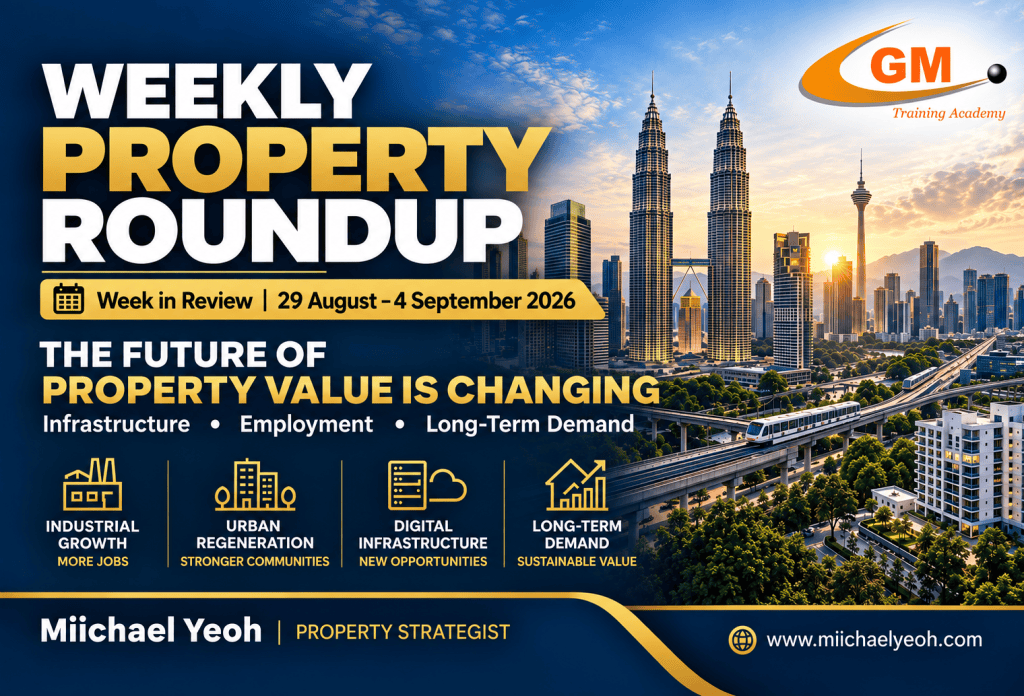
  • WEEKLY PROPERTY ROUNDUP | Week in Review (29 August – 4 September 2026)

    WEEKLY PROPERTY ROUNDUP | Week in Review (29 August – 4 September 2026)

    Top 3 developments I believe every buyer and investor should know

    Good morning everyone,

    Every week, I try to answer one simple question:

    What really matters in Malaysia’s property market?

    The biggest lesson from the past week is this: property value is increasingly created by infrastructure, employment and the quality of the surrounding ecosystem—not just by the building itself.

    Here are the Top 3 developments I believe every buyer and investor should know.

    1. Malaysia’s Industrial Growth Continues to Drive Property Demand

    Malaysia's semiconductor industry development strategy

    What happened?

    Malaysia’s advanced manufacturing and semiconductor sectors continued attracting new investment, with Penang remaining one of the country’s strongest industrial growth regions. Industry reports show industrial investment remains concentrated in high-value manufacturing, electronics and supply-chain expansion.

    Why it matters

    Industrial growth doesn’t just create factories—it creates jobs, talent, housing demand, logistics, retail and commercial activity. Historically, areas experiencing sustained employment growth tend to enjoy healthier long-term property demand than areas driven purely by speculation.

    Miichael’s Review

    Many buyers ask me:

    “Which project will appreciate the most?”

    I think the better question is:

    “Where will people still be working five to ten years from now?”

    Follow employment before following property prices.

    Source: Industrial investment & manufacturing reports.

    2. Urban Regeneration Is Becoming the New Growth Story

    Malaysia Real Estate & Property in Seremban | Bandar Sri Sendayan

    What happened?

    Developers continue investing in mixed-use regeneration projects within mature townships rather than expanding endlessly into new suburbs. Projects like PJ Quarter demonstrate a growing focus on integrating residential, retail, public spaces and community facilities into established neighbourhoods.

    Source: EdgeProp

    Why it matters

    Today’s buyers increasingly value:

    • Walkability
    • Public transport
    • Healthcare & education
    • Lifestyle convenience
    • Community spaces

    These factors often contribute more to sustainable demand than simply having a prestigious address.

    Miichael’s Review

    A property’s postcode is important.

    But its ecosystem is even more valuable.

    That’s where long-term liveability and resale demand are created.

    Source: Developer announcement & urban regeneration reports.

    3. Digital Infrastructure Is Quietly Changing Land Value

    支持AI算力部署!万国数据马来西亚努沙再也科技园数据中心园区(二期)正式投运 - 万国数据服务有限公司

    What happened?

    Malaysia’s digital infrastructure momentum continues as developers and institutional investors increasingly recognise the strategic value of land supported by power capacity, fibre connectivity and industrial infrastructure. Data centres remain one of the strongest emerging land-demand drivers across several Malaysian states.

    Why it matters

    The next property growth story may not begin with another condominium launch.

    It may begin with:

    • Power infrastructure
    • Data connectivity
    • AI & cloud investment
    • Industrial ecosystem
    • Business expansion

    Miichael’s Review

    The opportunity isn’t owning a data centre.

    The opportunity is identifying the surrounding locations that benefit from the jobs, businesses and services that follow.

    That’s where long-term property value is often created.

    Source: Digital infrastructure & property investment reports.

    📊 Property Snapshot This Week

    Industrial Investment

    Strong

    Advanced manufacturing continues supporting property demand.

    Growth Focus

    Mature Townships

    Urban regeneration is attracting developer investment.

    Emerging Driver

    Data Centres

    Power & connectivity are becoming strategic land assets.

    Buyer Trend

    More Selective

    Buyers are placing greater emphasis on long-term value.

    👀 Worth Watching

    Over the coming weeks, I’ll be watching four areas closely:

    • Expansion of Malaysia’s semiconductor ecosystem
    • New mixed-use regeneration projects
    • Data-centre related land acquisitions
    • Locations where employment growth translates into genuine housing demand

    These will likely become the next wave of meaningful property stories.

    🎯 My Takeaway This Week

    Three different stories.

    Industrial growth. Urban regeneration. Digital infrastructure.

    But they all point to one conclusion:

    Don’t evaluate the property in isolation. Evaluate the ecosystem that supports it.

    Before buying, I would always ask:

    • Where will the jobs come from?
    • Is infrastructure improving?
    • Will people genuinely want to live or work here?
    • What creates demand five years from today?

    That’s where better property decisions begin.

    Miichael Yeoh

    PROPERTY STRATEGIST

    🌐 http://www.miichaelyeoh.com

    Thank you for subscribing!

    Please check your email to confirming your subscription.

  • Before You Buy Property, Do This First — Or You’re Just Guessing

    Before You Buy Property, Do This First — Or You’re Just Guessing

    Smart Investors Don’t Start With Property — They Start With Demand

    Most people think property investment starts with:

    Location.
    Price.
    Developer.

    It doesn’t.

    It starts with a much more fundamental question:

    Are you buying for own use… or for investment?

    Because if you get this wrong, everything else becomes noise.


    Step 1: Define Your Purpose (No Grey Area)

    I’ve seen buyers say they are investing…

    But make decisions based on:

    • Design
    • Lifestyle
    • Personal preference

    That’s not investing.

    That’s emotion.

    If it’s own stay, you follow your lifestyle.

    If it’s investment, you follow demand and numbers.


    Step 2: Know Your Budget (This Sets Your Playing Field)

    Before anything else:

    • What is your true affordability?
    • What is your financing capacity?
    • What is your holding strength?

    Because in property:

    You don’t lose money when you buy wrong.
    You lose money when you can’t hold.

    Especially for investors—cash flow and holding power are everything.


    Step 3: Real Investors Do One Thing Differently — They RESEARCH

    This is the biggest gap in the market.

    Most buyers rely on:

    • Marketing materials
    • Sales narratives
    • “Good location” claims

    But experienced investors?

    They study the market before they commit.


    What Do You Actually Research?

    1. Demand & Demographics (The Real Starting Point)

    Forget the building first.

    Ask:

    Who is the end user of this property?

    • Young professionals?
    • Families?
    • Tourists?
    • Businesses?

    If you don’t understand demand,
    you’re not investing—you’re guessing.


    And This Is Where Industrial Property Becomes Interesting

    For big-budget investors, the shift is already happening.

    Demand is no longer driven by lifestyle.

    It’s driven by business movement and capital flow.

    Look at what’s happening:

    • Manufacturing relocation into Malaysia
    • Growth in logistics and warehousing
    • E-commerce expansion
    • Supply chain restructuring across ASEAN

    This creates a different type of demand:

    • Larger space requirements
    • Functional layouts over aesthetics
    • Accessibility to ports, highways, and labour
    • Long-term tenancy from businesses (not individuals)

    In other words:

    Industrial demand is economic-driven, not sentiment-driven.

    And that’s exactly what sophisticated investors are looking for.


    2. Price Per Square Foot (Entry Determines Exit)

    You make money when you buy right.

    Compare:

    • Nearby transactions
    • Competing projects
    • Replacement cost

    If you enter too high, your upside is already limited.


    3. Surrounding Supply (The Silent Risk)

    Most investors ignore this.

    But supply determines:

    • Rental pressure
    • Vacancy risk
    • Exit liquidity

    Too much incoming supply?

    Even a “good project” can underperform.


    4. Infrastructure & Connectivity (Follow the Growth)

    No area grows randomly.

    Growth follows:

    • Highways
    • Ports
    • Rail (LRT / MRT / logistics links)
    • Industrial corridors

    If infrastructure is expanding, demand usually follows.


    5. Rental & Yield Reality Check

    At the end of the day:

    Can it generate income?

    • What is the realistic rental?
    • Who is the tenant profile?
    • What is the occupancy expectation?

    If the numbers don’t work on paper,
    don’t rely on hope.


    What I’ve Learned From the Ground

    After evaluating multiple projects and markets, one thing is clear:

    The winners are not those who buy the most.
    The winners are those who understand demand the best.

    Every property I consider goes through:

    • Demand validation
    • Market comparison
    • Supply analysis
    • Financial assessment

    Because once you commit,
    you’re not just buying property…

    You’re locking in a decision for years.


    Final Thought

    Property investment has evolved.

    It’s no longer about chasing what’s popular.

    It’s about understanding why demand exists—and where it’s going next.

    Those who do the work will always have an edge.

    Those who don’t…

    Will always be reacting.


    Disclaimer: This reflects the author’s personal views based on market experience and current observations. It is not financial advice. Smart investors do their own research before making any move.

    From the Desk of

    Miichael Yeoh

  • Think Like a Banker Before You Buy Property

    Think Like a Banker Before You Buy Property

    One thing I learned from working closely with banks is this:

    Banks are extremely careful before approving a property loan.

    They analyse risks, stress-test your finances, and study whether you can survive difficult situations.

    But here’s the irony.

    Many property buyers don’t analyse their purchase the same way.

    They look at the show unit.
    They listen to marketing promises.
    They follow what others are buying.

    But they rarely ask the same questions a banker would ask.

    If you want to invest in property wisely, start by thinking like a banker.

    Here are three things bankers always analyse.


    1️⃣ Debt Ratio – Are You Stretching Yourself Too Thin?

    Banks look closely at your Debt Service Ratio (DSR).

    This measures how much of your income is used to pay debts.

    Even if a bank approves your loan, you should still ask yourself:

    • What happens if interest rates increase?
    • What if my income drops temporarily?
    • Will I still feel comfortable servicing the loan?

    A property might look affordable today.

    But bankers always plan for tomorrow’s risks.


    2️⃣ Holding Power – Can You Hold Through Market Cycles?

    Property markets don’t always go up.

    There will be slow periods.

    Bankers evaluate whether a borrower has the financial strength to continue paying during tough times.

    Smart investors should ask:

    • Can I hold this property for 5–10 years if needed?
    • Do I have cash reserves?
    • What if the market takes longer to recover?

    Many investors fail not because they bought the wrong property…

    They fail because they cannot hold it long enough.


    3️⃣ Rental Sustainability – Can the Property Support Itself?

    Another banker mindset is income sustainability.

    Before buying, ask:

    • Is there real rental demand here?
    • Who are the potential tenants?
    • Can the rental help support the loan?

    A strong investment property should ideally generate rental income that supports part of the financing.

    This reduces pressure and improves long-term stability.


    Final Thought

    Successful property investors don’t buy emotionally.

    They evaluate property like a banker evaluating risk.

    Before your next purchase, ask yourself:

    Does this property pass the banker’s test?

    When you start thinking like a banker, you don’t just buy property.

    You build a stronger and safer property portfolio.


    Miichael Yeoh
    Property Strategist | Developer Consultant | Investment & Mortgage Expert
    Author of Think Like a Banker, Act Like a Player