Tag: PropertyMarket

  • Before You Buy Property, Do This First — Or You’re Just Guessing

    Before You Buy Property, Do This First — Or You’re Just Guessing

    Smart Investors Don’t Start With Property — They Start With Demand

    Most people think property investment starts with:

    Location.
    Price.
    Developer.

    It doesn’t.

    It starts with a much more fundamental question:

    Are you buying for own use… or for investment?

    Because if you get this wrong, everything else becomes noise.


    Step 1: Define Your Purpose (No Grey Area)

    I’ve seen buyers say they are investing…

    But make decisions based on:

    • Design
    • Lifestyle
    • Personal preference

    That’s not investing.

    That’s emotion.

    If it’s own stay, you follow your lifestyle.

    If it’s investment, you follow demand and numbers.


    Step 2: Know Your Budget (This Sets Your Playing Field)

    Before anything else:

    • What is your true affordability?
    • What is your financing capacity?
    • What is your holding strength?

    Because in property:

    You don’t lose money when you buy wrong.
    You lose money when you can’t hold.

    Especially for investors—cash flow and holding power are everything.


    Step 3: Real Investors Do One Thing Differently — They RESEARCH

    This is the biggest gap in the market.

    Most buyers rely on:

    • Marketing materials
    • Sales narratives
    • “Good location” claims

    But experienced investors?

    They study the market before they commit.


    What Do You Actually Research?

    1. Demand & Demographics (The Real Starting Point)

    Forget the building first.

    Ask:

    Who is the end user of this property?

    • Young professionals?
    • Families?
    • Tourists?
    • Businesses?

    If you don’t understand demand,
    you’re not investing—you’re guessing.


    And This Is Where Industrial Property Becomes Interesting

    For big-budget investors, the shift is already happening.

    Demand is no longer driven by lifestyle.

    It’s driven by business movement and capital flow.

    Look at what’s happening:

    • Manufacturing relocation into Malaysia
    • Growth in logistics and warehousing
    • E-commerce expansion
    • Supply chain restructuring across ASEAN

    This creates a different type of demand:

    • Larger space requirements
    • Functional layouts over aesthetics
    • Accessibility to ports, highways, and labour
    • Long-term tenancy from businesses (not individuals)

    In other words:

    Industrial demand is economic-driven, not sentiment-driven.

    And that’s exactly what sophisticated investors are looking for.


    2. Price Per Square Foot (Entry Determines Exit)

    You make money when you buy right.

    Compare:

    • Nearby transactions
    • Competing projects
    • Replacement cost

    If you enter too high, your upside is already limited.


    3. Surrounding Supply (The Silent Risk)

    Most investors ignore this.

    But supply determines:

    • Rental pressure
    • Vacancy risk
    • Exit liquidity

    Too much incoming supply?

    Even a “good project” can underperform.


    4. Infrastructure & Connectivity (Follow the Growth)

    No area grows randomly.

    Growth follows:

    • Highways
    • Ports
    • Rail (LRT / MRT / logistics links)
    • Industrial corridors

    If infrastructure is expanding, demand usually follows.


    5. Rental & Yield Reality Check

    At the end of the day:

    Can it generate income?

    • What is the realistic rental?
    • Who is the tenant profile?
    • What is the occupancy expectation?

    If the numbers don’t work on paper,
    don’t rely on hope.


    What I’ve Learned From the Ground

    After evaluating multiple projects and markets, one thing is clear:

    The winners are not those who buy the most.
    The winners are those who understand demand the best.

    Every property I consider goes through:

    • Demand validation
    • Market comparison
    • Supply analysis
    • Financial assessment

    Because once you commit,
    you’re not just buying property…

    You’re locking in a decision for years.


    Final Thought

    Property investment has evolved.

    It’s no longer about chasing what’s popular.

    It’s about understanding why demand exists—and where it’s going next.

    Those who do the work will always have an edge.

    Those who don’t…

    Will always be reacting.


    Disclaimer: This reflects the author’s personal views based on market experience and current observations. It is not financial advice. Smart investors do their own research before making any move.

    From the Desk of

    Miichael Yeoh

  • Will the US–Israel–Iran War Affect Property in Malaysia?

    Will the US–Israel–Iran War Affect Property in Malaysia?

    Will the US–Israel–Iran War Affect Property in Malaysia?

    Most people think war is “far away”.

    Middle East… not Malaysia… not our problem.

    But if you’ve been in property long enough, you’ll realise this:

    What happens globally will always find its way into your loan, your instalment, and your tenant’s wallet.

    Let’s break it down — from a real-world property perspective.


    1. The Impact Will Not Be Direct — But It Will Be Real

    Malaysia is not at war.

    Our property market is not suddenly crashing tomorrow.

    In fact, economists say the direct impact on Malaysia is limited — but the indirect effects are where things get interesting.

    And property… is always affected by indirect forces.


    2. The First Domino: Oil Prices

    Right now, oil prices are already spiking above USD100 due to the conflict.

    Why does this matter?

    Because oil affects everything:

    • Construction cost (cement, steel, transport)
    • Developer margins
    • Inflation
    • Interest rates

    When oil goes up → cost of living goes upbuyers become more cautious

    And this is where property sentiment starts to shift.


    3. Rising Cost of Living = Slower Property Decisions

    Experts already warn that prolonged conflict will push up:

    • Food prices
    • Fertiliser costs
    • Transportation costs

    We are already seeing supply chain disruptions globally.

    Simple logic:

    When people feel poorer… they delay big decisions.

    And property is the biggest decision of all.

    From my experience:

    • First-time buyers will hesitate
    • Investors will become more selective
    • Loan approvals may tighten

    4. Interest Rates — The Silent Killer

    War → Inflation → Central banks stay cautious

    Even if Bank Negara doesn’t immediately raise rates, the global environment matters.

    If inflation remains high:

    • Financing cost stays elevated
    • Instalments stay high
    • Yield becomes more important than ever

    This is where many investors get it wrong.

    They buy based on “price appreciation”.

    But in uncertain times:

    Cash flow becomes king.


    5. Currency & Investor Sentiment

    During global conflict:

    • Money flows to “safe havens”
    • Emerging markets (like Malaysia) can see weaker currency

    This affects:

    • Foreign investment
    • High-end property demand
    • Developer confidence

    It doesn’t crash the market…

    But it slows momentum.


    6. The Hidden Opportunity (Most People Miss This)

    Here’s the part many don’t talk about.

    Malaysia is actually in a neutral advantage position:

    • We are politically stable
    • Not directly involved
    • Still attractive compared to more volatile regions

    Historically, during global uncertainty:

    Smart investors don’t exit — they reposition.

    Opportunities may appear in:

    • Undervalued projects
    • Developers needing stronger sales
    • Better packages (rebates, freebies, furnished units)

    Sound familiar?


    7. My Personal Take (From the Ground)

    I’ve gone through multiple cycles — financial crisis, policy changes, Covid.

    War is just another external shock.

    And property always reacts in the same pattern:

    Phase 1: Fear
    Phase 2: Slowdown
    Phase 3: Adjustment
    Phase 4: Opportunity

    Right now, we are somewhere between Phase 1 and 2.


    Final Thought

    Will this war affect Malaysia property?

    Yes — but not in the way most people think.

    It won’t crash the market overnight.

    But it will:

    • Change buyer behaviour
    • Shift investor strategy
    • Reward those who understand fundamentals

    And this is where experience matters.


    My Advice

    If you are buying:

    • Don’t panic
    • Don’t rush
    • Focus on cash flow, not speculation

    If you are investing:

    This is the time to be sharper — not quieter.


    Miichael Yeoh
    Property Strategist | Author

    Author of:
    Think Like a Banker, Act Like a Player
    Property Investment BLT
    Buying Property Like a Pro (MPH Bestseller)

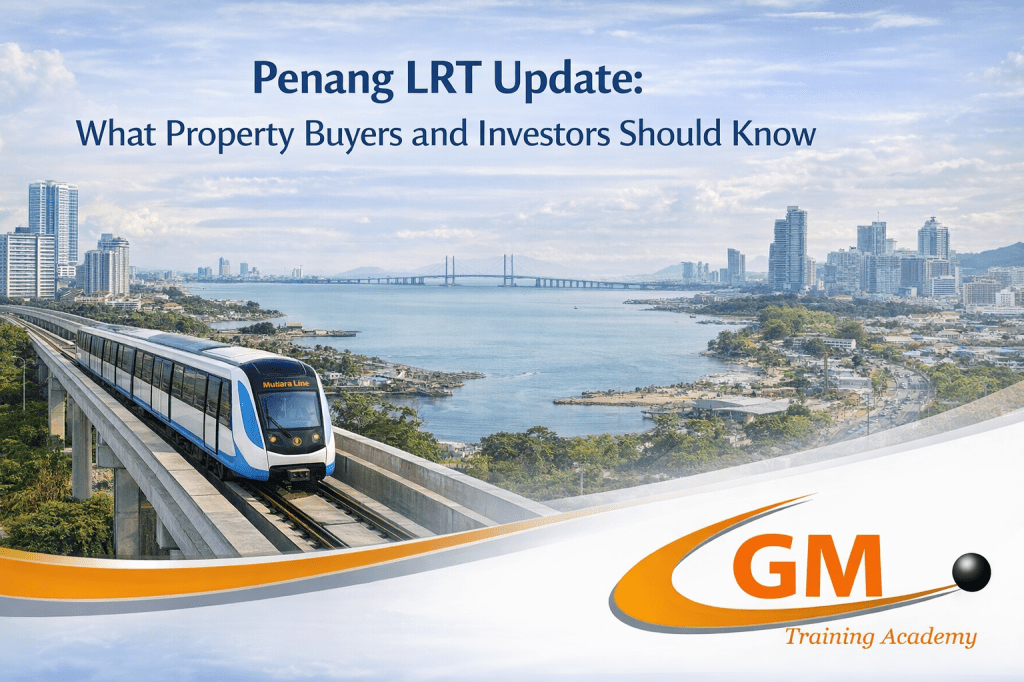
  • Penang LRT Update: What Property Buyers and Investors Should Know

    Penang LRT Update: What Property Buyers and Investors Should Know

    For years, the lack of rail transit has been one of the biggest infrastructure gaps in Penang. While cities like Kuala Lumpur have extensive rail networks, Penang has relied heavily on cars and buses.

    That is now changing.

    The Penang Light Rail Transit (LRT) project — known as the Mutiara Line — is officially underway, marking one of the largest infrastructure developments in northern Malaysia. For property buyers and investors, this project will reshape accessibility, mobility, and potentially property values across key corridors in Penang.

    In this article, we explore the latest updates on the Penang LRT and what it means for the property market.


    1. Overview of the Penang LRT (Mutiara Line)

    The Mutiara Line will be Penang’s first urban rail system and the first LRT outside the Klang Valley. It forms a key component of the Penang Transport Master Plan (PTMP) aimed at improving connectivity across the island and mainland.

    Key facts about the project:

    • Length: approximately 29.5 km
    • Stations: about 21 stations
    • Type: elevated light rail system
    • Estimated cost: about RM16–17 billion
    • Target completion: around 2031

    The line will connect Silicon Island / Penang South Reclamation area to Penang Sentral, passing through major areas such as:

    • Bayan Lepas
    • Sungai Tiram
    • Gelugor
    • Jelutong
    • George Town (Komtar)

    It will also link with Penang Sentral, providing connections to ETS, KTM Komuter and ferry services.

    This integration is designed to create a seamless transport system between Penang Island and Seberang Perai.


    2. Latest Construction Updates (2025–2026)

    Recent developments show that the project has moved from planning into active implementation.

    Penang projects powering ahead

    Important milestones include:

    Construction has begun
    The first phase of works started in 2025, with contractors appointed and preliminary works such as soil investigations and site preparation underway.

    Major works expanding in 2026
    Construction activity is expected to intensify throughout 2026, including elevated track construction and station development.

    Traffic diversions already in place
    Road diversions along areas such as Jalan Sultan Azlan Shah near Bayan Lepas have begun to accommodate construction works that may last up to 38 months.

    Public inspection of revised rail scheme
    Authorities have also opened a public inspection period for revised plans, including a proposed cross-sea link to Penang Sentral, which will strengthen connectivity between the island and mainland.


    3. Why the LRT Matters for the Property Market

    Infrastructure has always played a major role in shaping property values.

    Based on experiences in Kuala Lumpur, rail transit typically creates three types of property impact.

    1️⃣ Transit-Oriented Development (TOD)

    Properties located near LRT stations tend to see increased demand due to convenience and connectivity.

    Areas expected to benefit include:

    • Bayan Lepas
    • Sungai Nibong
    • Gelugor
    • Jelutong
    • Komtar / George Town

    These areas could evolve into future TOD zones, attracting both residential and commercial developments.


    2️⃣ Improved Accessibility

    Currently, travelling from Bayan Lepas to George Town during peak hours can take more than an hour.

    With the LRT:

    • Travel time could be significantly reduced
    • Workers in the Bayan Lepas industrial zone gain easier access to the city
    • Tourism and business mobility improve

    Better connectivity often leads to stronger rental demand.


    3️⃣ Long-Term Economic Growth

    The LRT is not just a transport project. It is also a strategic economic infrastructure designed to support:

    • Silicon Island development
    • the Bayan Lepas industrial hub
    • tourism in George Town
    • cross-strait connectivity with mainland Penang

    Large infrastructure projects tend to stimulate surrounding investments and commercial activity.


    4. A Strategic Perspective for Property Buyers

    However, buying property purely because it is near an LRT station is not enough.

    From an investment perspective, buyers should still analyse:

    • Rental demand around the station
    • Employment nodes nearby
    • Supply of new developments
    • Holding power during construction years

    The Penang LRT is expected to complete around 2031, meaning property investors must adopt a long-term view rather than short-term speculation.


    Final Thoughts

    The Penang LRT has been discussed for more than a decade. Now that construction has begun, the project is moving from concept to reality.

    For Penang, the LRT represents more than just a transport system — it is a structural shift in how the city grows and how people move.

    For property buyers and investors, the key question is no longer whether the LRT will happen.

    The real question is:

    Are you positioning your property decisions ahead of this infrastructure transformation?


    Written by:
    Miichael Yeoh
    Property Strategist | Developer Consultant | Investment & Mortgage


    References

    1. MRT Corp – Mutiara Line Project Information
    2. Bernama – Penang LRT construction update
    3. The Star / Penang infrastructure updates
    4. Malay Mail / Infrastructure reports on LRT cost and timeline
    5. Wikipedia – Mutiara Line LRT project overview