Tag: PropertyInvestmentMalaysia

  • What Is OPR in Malaysia and How Does It Affect Housing Loan Interest Rates?

    What Is OPR in Malaysia and How Does It Affect Housing Loan Interest Rates?

    By Miichael Yeoh

    As someone who has spent nearly three decades in banking, mortgage advisory and property strategy, one question I get repeatedly from investors and homebuyers is:

    “Why did my bank increase (or educe) my interest rate when I didn’t change anything?”

    The answer almost always traces back to one key number — the Overnight Policy Rate (OPR).

    Let’s break down how OPR is derived, who decides it, and how it directly affects your housing loan, business financing, and even fixed deposits.


    What Is OPR?

    Bank Negara Malaysia (BNM) uses the Overnight Policy Rate (OPR) as its main monetary policy tool.

    The OPR is the interest rate at which banks lend money to one another overnight. It serves as the benchmark rate that influences all other interest rates in the country.

    Think of it as the “master switch” of Malaysia’s financial system.


    How Is OPR Derived?

    OPR is not randomly adjusted. It is decided by BNM’s Monetary Policy Committee (MPC) based on several key economic indicators:

    1️⃣ Inflation (Price Stability)

    If inflation is rising too quickly, BNM may increase OPR to slow down spending and borrowing.
    If inflation is low or the economy is weak, BNM may reduce OPR to stimulate growth.

    2️⃣ Economic Growth (GDP)

    Strong economic growth may lead to higher OPR to prevent overheating.
    Weak GDP growth may lead to lower OPR to encourage borrowing and investment.

    3️⃣ Employment & Consumer Spending

    High unemployment? Lower OPR to boost activity.
    Strong consumer demand? Possibly tighten policy.

    4️⃣ Global Economic Conditions

    US Federal Reserve rates, global trade trends, currency strength, and geopolitical risks all influence Malaysia’s monetary decisions.

    5️⃣ Financial System Stability

    BNM ensures banks remain liquid and stable. OPR adjustments help manage systemic risk.

    In simple terms:

    OPR balances growth and inflation.


    How OPR Affects Banks’ Interest Rates

    When OPR changes, banks adjust their benchmark rates such as:

    • BR (Base Rate)
    • SBR (Standardised Base Rate)

    Most housing loans today are priced as:

    SBR + Spread (e.g., SBR + 1.5%)

    When OPR increases:

    • SBR increases
    • Monthly instalments increase
    • Loan affordability reduces

    When OPR decreases:

    • SBR decreases
    • Monthly instalments reduce
    • Borrowing becomes cheaper

    Example: How It Impacts a Housing Loan

    Let’s say:

    • Loan: RM500,000
    • Tenure: 35 years
    • Rate: SBR 3.00% + 1.50% = 4.50%

    If OPR increases by 0.25%:

    • SBR may rise to 3.25%
    • New rate becomes 4.75%
    • Monthly instalment increases

    Even a 0.25% increase can mean thousands of ringgit extra over the loan tenure.

    This is why property investors must monitor OPR closely.


    Impact on Different Groups

    🏠 Homeowners

    Higher OPR = higher instalments (if on floating rate).

    🏢 Property Investors

    Rental yield may be squeezed if instalments rise but rental cannot increase proportionally.

    💼 Businesses

    Cost of financing increases, affecting expansion decisions.

    💰 Savers

    Good news — Fixed deposit rates usually improve when OPR rises.


    Why OPR Matters in Property Strategy

    As a developer consultant and property strategist, I always advise clients:

    Don’t only calculate today’s instalment. Stress-test at +1% or +2%.

    Markets move in cycles. OPR will not stay low forever.

    Smart investors:

    • Lock in good spreads during low-rate environments
    • Structure debt efficiently
    • Maintain cash flow buffers

    Final Thoughts

    OPR is not just a technical banking term.

    It is the heartbeat of the financial system, influencing property prices, loan affordability, rental yields, and overall market sentiment.

    Understanding how it works allows you to:

    • Make better borrowing decisions
    • Time property acquisitions strategically
    • Structure financing intelligently

    If you are planning your next property move, always ask:

    “What is the interest rate cycle telling me?”

    Because in property investing,
    Timing and financing strategy often matter more than price.
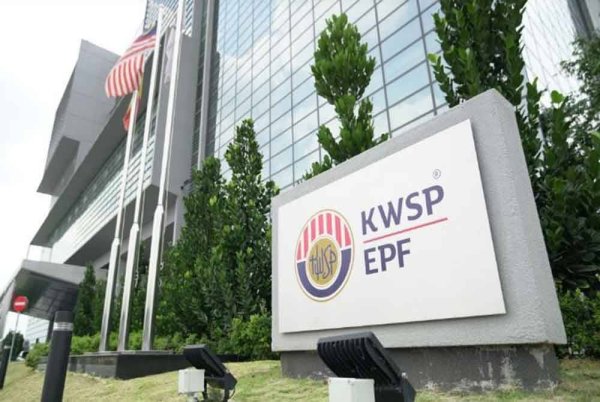
  • What the New EPF Policy Changes Mean for Your Retirement — and Your Financial Freedom in 2026

    What the New EPF Policy Changes Mean for Your Retirement — and Your Financial Freedom in 2026

    Happy New Year, friends! Starting today, a suite of important changes to the Employees Provident Fund (EPF) takes effect — and if you’re serious about building financial security and retirement freedom, you’ll want to know what these mean for you.

    As someone who talks to regular Malaysians about money, property and long-term planning every week, my goal is simple: help you turn policies into practical moves you can use to grow your wealth.

    Let’s break this down in a way that’s clear and actionable.


    🔹 1. Expanded Retirement Planning Tools (RIA Framework)

    EPF has introduced a Retirement Income Adequacy (RIA) Framework that gives benchmarks for how much you should aim to save by retirement:

    • Basic Savings: RM390,000
    • Adequate Savings: RM650,000
    • Enhanced Savings: RM1.3 million
      These are guidelines, not limits — but they are extremely useful targets to align your financial plan with real aspirations and lifestyle goals in retirement.

    🔹 2. More Flexibility for High-Savings Members

    If you’ve been disciplined and grown your EPF to more than RM1 million, the new rules give you more control over that excess:

    • From 2026, the threshold before you can withdraw excess savings will increase gradually — starting at RM1.1M this year, then RM1.2M and RM1.3M in future years.

    Why is this smart? Because the policy encourages strong retirement savings first before letting you unlock surplus funds — great if you are thinking about investment or business opportunities after securing your basics.


    🔹 3. New Opportunities for Gig and Informal Workers

    This is a huge deal for drivers, riders and the self-employed:
    EPF is launching i-Saraan Plus, an enhanced contribution scheme just for gig workers — with government matching of up to RM600 per year (capped at RM6,000 lifetime).

    This means you’re effectively getting a subsidy from the government just for saving — and that boosts your retirement-nest egg without extra burden.


    🔹 4. i-Suri Extended to Age 60

    For homemakers and spouses who contribute voluntarily under i-Suri, the eligibility age has been raised from 55 to 60.
    Plus, the 50% government matching incentive continues — meaning more government help to grow your savings pot.

    For many families, this is a practical way to build savings even without a traditional salary.


    🔹 5. Haj Withdrawal Limit Increased

    Good news if performing Hajj is in your 2026 plans:
    You can now withdraw up to RM10,000 from your EPF Hajj savings, up from RM3,000 previously — and with a simpler process.

    This change shows that EPF understands real life goals — not just retirement — and is adapting to help you plan important life milestones.


    🔹 6. Helpful Changes to Investment Eligibility

    The Members Investment Scheme (MIS) — which lets EPF contributors invest part of their savings — will now align with the basic RIA savings level.
    This means the minimum savings balance required for MIS participation increases gradually, ensuring that investment decisions don’t compromise your core retirement needs.


    What This Means for Your Money Strategy

    Here’s how you can think about these changes in your financial plan:

    Make EPF savings your foundation — the new RIA Framework gives goals to aim for.
    If you’re a gig worker or informal worker, take advantage of voluntary schemes like i-Saraan Plus — free government matching is like extra income.
    Plan ahead for retirement AND life goals — from Hajj to home deposits to future business capital.
    Keep investing mindfully — the MIS changes protect retirement security first, while letting disciplined savers grow their wealth.


    My Take: Retirement Isn’t Just an Age — It’s a Strategy

    Too many Malaysians think of EPF as just something you touch at 55. But with these changes, EPF is becoming a more powerful engine for lifelong financial planning — from your 20s all the way to retirement and beyond.

    If you’re building property portfolios, planning business income, or aiming for financial freedom, understanding how to use EPF strategically makes all the difference.

    Stay savvy, stay disciplined — and let’s make 2026 the year your financial future gets real traction.

    💬 Got questions about how to align these EPF changes with your property or investment goals? Ask me below!

    From the Desk of

    Miichael Yeoh

  • 🇲🇾 Malaysia Budget 2026: What Property Buyers and Investors Need to Know

    🇲🇾 Malaysia Budget 2026: What Property Buyers and Investors Need to Know

    By Miichael Yeoh | October 11, 2025

    The Malaysian Budget 2026 was tabled yesterday by Prime Minister and Finance Minister Dato’ Seri Anwar Ibrahim, themed “Memacu Ekonomi MADANI: Memperkasa Rakyat.”

    With a total allocation of RM470 billion, this budget continues the government’s commitment to building a fair and inclusive economy — with property and housing once again taking center stage.

    Here’s my summary and insight on what Budget 2026 means for property buyers, developers, and investors.


    🏡 1. Stamp Duty Exemption Extended for First-Time Buyers

    Good news — the full stamp duty exemption on both the instrument of transfer and loan agreement for first-time buyers remains in place until 31 December 2027.

    This applies to residential properties priced up to RM 500,000.

    👉 What this means:
    If you’re planning to buy your first home, your upfront costs remain much lower. For many young Malaysians, this can be the difference between “maybe later” and “buy now.”


    💰 2. Bigger Housing Loan Guarantee (SJKP Doubled to RM 20 Billion)

    The Housing Credit Guarantee Scheme (SJKP) is being expanded from RM 10 billion to RM 20 billion, expected to help over 80,000 first-time buyers — including self-employed, gig workers, and informal earners.

    👉 What this means:
    Loan approvals should become easier. This is crucial for those who may not have formal payslips but have consistent income — a growing segment of today’s workforce.


    🌍 3. Higher Stamp Duty for Foreign Buyers

    To cool speculative buying, stamp duty for non-citizens and foreign companies buying residential properties will rise from 4% to 8%.

    Permanent residents (PRs) are not affected.

    👉 What this means:
    Foreign investors will likely focus only on premium areas like KLCC, Mont Kiara, and Penang island. For locals, this could mean less competition — and potentially better entry prices.


    🏢 4. Tax Deduction for Converting Commercial Buildings into Homes

    A forward-thinking move — developers who convert old commercial buildings into residential use can now claim a 10% tax deduction (up to RM 10 million) on eligible renovation costs.

    👉 What this means:
    Expect more adaptive reuse projects — turning old offices or malls into apartments or co-living units. This could help rejuvenate urban centers while reducing idle property stock.


    🏠 5. Support for Rent-to-Own (RTO) and Build-Then-Sell (BTS) Schemes

    Banks are encouraged to support RTO and BTS housing models to make ownership easier and reduce project abandonment.

    👉 What this means:
    More flexibility for buyers who can’t yet afford a traditional down payment, and stronger assurance that projects are completed before full payment.


    👨‍💼 6. Higher LPPSA Loan Limit for Civil Servants

    The Public Sector Home Financing Board (LPPSA) limit will increase to RM 1 million in 2026.

    👉 What this means:
    Civil servants can now afford better homes in urban areas without needing multiple loans.


    🧱 7. RM 672 Million for Affordable Housing and Repairs

    The government is allocating RM 672 million for:

    • Affordable homes (Residensi Rakyat, Rumah Mesra Rakyat)
    • Refurbishing old or dilapidated houses
    • Maintenance for low- and medium-cost flats (e.g. lift replacements)

    👉 What this means:
    Positive for social stability and overall living quality. Also good news for contractors and local developers involved in affordable housing.


    ⚙️ 8. Construction and Tax Updates

    • SST on construction services will apply for new contracts from 1 Jan 2026.
    • Carbon tax will begin in stages, affecting material costs (cement, steel).
    • These may slightly raise overall building costs — developers should factor this into pricing.

    🔎 My Insights: What to Watch in 2026

    1. Affordable and Mid-Range Housing
      Remains the government’s priority. Buyers in this segment have strong support — expect steady demand.
    2. Conversion Projects = Hidden Opportunity
      Old commercial spaces could become the next hot residential spots. Developers who act early may gain an edge.
    3. Foreign Demand Softens, Local Focus Strengthens
      With higher duties, foreign demand may dip — but this creates more room for local owner-occupiers and long-term investors.
    4. Construction Cost Pressure
      SST and carbon-related costs might raise project expenses by 3–5%. Efficient developers with strong cash flow will manage better.
    5. Financing Still Key
      Even with incentives, loan approval remains the biggest hurdle. Buyers should prepare documentation properly (income proof, CCRIS record, existing commitments).

    📈 Final Thoughts

    Budget 2026 shows that Malaysia is moving toward a more sustainable and inclusive housing market — one that balances affordability with innovation.

    For homebuyers, it’s a window of opportunity to act while incentives are strong.
    For investors, it’s time to look beyond traditional launches and explore conversion, rental, and co-living strategies.
    And for developers, the message is clear — adapt fast, innovate smart.

    The property market in 2026 will favor those who understand trends early and act strategically.

  • Boost Your Loan Approval Chances in Malaysia

    Boost Your Loan Approval Chances in Malaysia

    Malaysian bank lending (especially for property purchases) is currently shaped by several key monetary, regulatory, and market-demand factors. Rates have been easing somewhat, but approval conditions remain cautious. Below are the latest numbers and trends.


    Current Figures & Trends

    1. Overnight Policy Rate (OPR) & Reference Rates
      • In July 2025, Bank Negara Malaysia (BNM) cut the OPR from 3.00% to 2.75% – the first cut in five years.
      • Major banks have adjusted their Standardised Base Rate (SBR) to 2.75% per annum following the OPR cut.
      • Base Rate (BR) has also been adjusted (for many banks) in line with this, though BR tends to be higher than SBR. For example, Alliance Bank’s BR is about 3.57%.
    2. Base Lending Rate / Base Financing Rate (BLR/BFR)
      • The BLR or BFR (for Islamic financings) for many banks remains in the ~6.35% to ~6.65% range. For example, Maybank’s BLR is 6.40%, Hong Leong Bank’s is ~6.64%, etc. baserate.my+3Maybank2u+3NewPages+3
    3. Effective Housing Loan Rates
      • While the base/reference rates give a starting point, effective lending rates (what borrowers actually pay) tend to be higher because banks add a margin/spread depending on risk, loan amount, tenure, etc.
      • Recent reports suggest effective rates for housing loans are in many cases 4.15% to 5.7% p.a. depending on bank, borrower profile, loan value, promotion, etc. Property Genie
    4. Loan Approval & Volume
      • There was a 25.7% month-on-month increase in approvals of housing-loan applications in July 2025 after a slump in June. Focus Malaysia – Business & Beyond
      • The approval ratio (i.e. approved vs applied) in July 2025 was about 44.8%, up from ~42.6% in June 2025. Focus Malaysia – Business & Beyond
      • On a year-on-year basis, total approved loan volume declined by ~5.1% for that month; cumulatively over the first 7 months of 2025, approved property loans were ~RM 161.4 billion, about -1.5% relative to same period in previous year. Focus Malaysia – Business & Beyond
    5. Outlook
      • With lower OPR and more competitive base/reference rates, there is optimism that loan approvals (both volume and ratio) may improve in the remaining months of 2025. Government’s likely to include incentives in Budget 2026 to support first-time buyers, low-to-middle income groups. Focus Malaysia – Business & Beyond

    Steps Borrowers Can Take to Increase Chances of Loan Approval

    Given the current environment, borrowers can do several things to strengthen their applications and improve likelihood of approval. Here are practical steps, both before and during application.

    StepWhat to DoWhy It Helps
    1. Check & Clean Up Your Credit HistoryObtain your credit report (e.g. through CTOS, CCRIS, Experian) ahead of time. Ensure there are no outstanding defaults, ensure credit card/HP payments are on time.Banks check creditworthiness; a clean credit history reduces risk and may allow you to access better rates.
    2. Assess Debt Service Ratio (DSR) / Total CommitmentsKnow your monthly obligations: other loans, credit cards, etc. Make sure your net income minus all obligations leaves enough room for loan instalments. Try to reduce existing liabilities if possible.Banks often reject or charge higher margins if your debts relative to income are too high. Lower commitments improves affordability assessment.
    3. Have Stable & Adequate IncomeDemonstrate consistent employment or business income; have documentation (pay slips, tax returns, EPF contributions). If self-employed or commission-based, provide past 2-3 years’ income statements, audited if possible.Stability & predictability of income give banks confidence in your ability to repay.
    4. Make Reasonable Down Payment / EquityThe more you put down (lower loan-to-value ratio), the less risk for the bank. If you’re first-time buyer programs exist (often requiring only 10% payment), check eligibility, but be aware these may still have stricter conditions.Less loan amount relative to property value helps bank exposure and reduces margin required.
    5. Choose Appropriate Loan TenureLonger tenure reduces monthly instalments but increases total interest paid; very long tenure may raise risk from bank’s perspective (future rate changes, income changes). Balance payroll constraints with ability to service.A manageable monthly repayment improves approval chances; less risk of default.
    6. Prepare All Supporting Documents ProperlyHave ready: identity documents, employment letters, income proof, EPF statements, tax returns (if applicable), bank statements, any other asset documentation. Ensure documents are current.It speeds up processing and reduces grounds for rejection due to missing information.
    7. Shop Around & Compare OffersDifferent banks have different margins, promotions, and underwriting criteria. Get multiple quotes. Negotiate (sometimes banks reduce spread or offer incentives).May get better rate, lower fees, more favorable terms.
    8. Provide Clear Purpose & Property DetailsHave the Sale & Purchase Agreement (SPA), valuation report (if needed), title deed, property details, etc. If property is new or under construction, ensure developer’s track record and required approvals are in order.Banks assess property risk as well: location, title, developer credibility affect approval.
    9. Maintain Good Savings / ReservesHaving savings or avoid fully depleting your accounts helps; having reserves gives cushion in case of rate increases or unexpected expenses.Shows financial discipline and lowers risk from bank’s viewpoint.
    10. Understand Bank Fees & RequirementsBe aware of legal fees, valuation fees, stamp duties, insurance (MRTA/MRTT), and any bank-specific requirements (e.g. guarantor, joint-applicant). Make sure to budget for them.Unexpected costs can derail the process; being well-prepared ensures smoother approval.

    Challenges & What Borrowers Should Watch Out For

    • Even with OPR at 2.75% and SBR adjusted, banks’ margins/spreads can still be high depending on borrower risk. So effective rates may still be less favourable for some.
    • Approval ratios (~44-47%) show that over half of applications still get declined. That means it’s not just about rates; credit & affordability are being closely scrutinized. Focus Malaysia – Business & Beyond
    • Rising costs for legal fees, valuation, and sometimes hidden fees can make total cost of financing higher than expected.
    • Inflation, future rate rises, economic uncertainties mean banks may reserve right to tighten conditions suddenly.


    Conclusion

    Bank lending is currently becoming somewhat more favourable in Malaysia thanks to the OPR cut and adjusted reference rates. However, borrowers must still present strong, well-prepared loan applications. Cleaning up credit, reducing existing obligations, having stable income and proper documentation, and choosing appropriate loan terms are all crucial.