7–13 November 2026
MALAYSIA · PROPERTY · GLOBAL MARKETS
This week’s edition has an interesting mix of news. Malaysia’s latest property-market figures show that transaction activity is holding up, but the gap between new housing supply and actual sales deserves attention. We also have a significant manufacturing investment in Penang and a new industrial infrastructure initiative in Negeri Sembilan.
Internationally, India is attracting substantial institutional property investment, while the UAE continues to report strong transaction and investment growth.
Malaysia – 3 stories
1. Malaysia’s property transactions grow, but unsold homes remain a concern
What Happened
The Valuation and Property Services Department (JPPH) released its Q3 2026 property-market figures on 13 November.
The headline numbers:
- Total property transactions reached 108,990, up 0.7% year-on-year.
- Total transaction value reached RM60.31 billion.
- The Malaysian House Price Index increased 0.5% to 235.4 points.
- Average house price stood at RM507,809.
- New residential launches increased 70.3% to 19,642 units.
- Sales performance for those new launches was 7.1%.
- Completed unsold residential properties reached 33,598 units, worth RM19.55 billion.
- Completed unsold serviced apartments totalled 23,568 units, worth RM20.13 billion.
The residential sector accounted for 61% of total property transactions. Shopping-complex occupancy stood at 76.6%, while purpose-built office occupancy reached 78.8%. NAPIC+2
Why It Matters
There are two sides to this market.
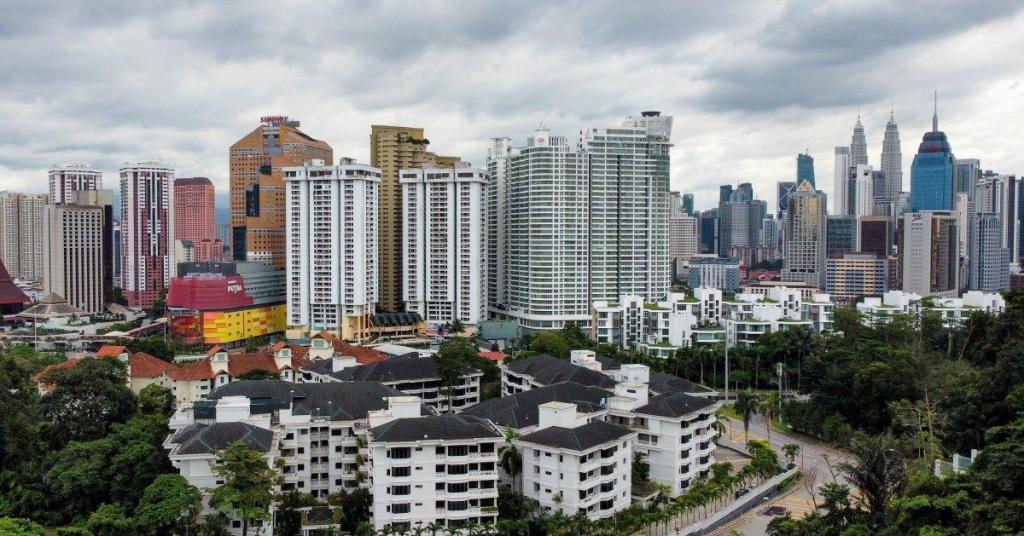
On one hand, transaction activity remains positive and the average house price index continues to record growth.
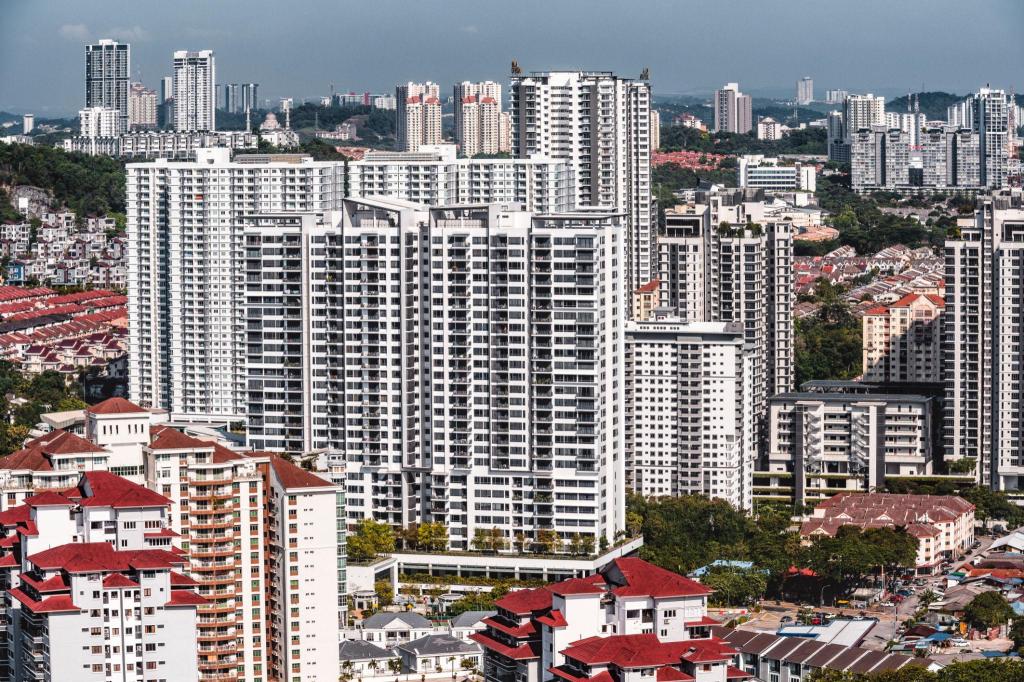
On the other hand, the sharp increase in new launches, coupled with low sales performance and rising completed unsold stock, highlights a possible mismatch between supply and genuine buyer demand.
This is particularly important because national figures can hide significant differences between individual states and locations.
Miichael’s Review
This is probably the most important story of the week.
I would not interpret the 70.3% increase in new launches as an indication that the market is booming. We need to look at the sales performance alongside the launch numbers.
A developer can launch thousands of units, but the real question is how many buyers are financially capable of purchasing them.
I am also interested in the difference between national and local market performance. For example, preliminary figures reported by EdgeProp showed residential transactions in Penang falling 11.8% year-on-year, while Kuala Lumpur, Selangor and Johor recorded increases.
For developers, this reinforces the importance of understanding local demand before deciding what to build.
For buyers, it is a reminder not to confuse a new launch or an attractive marketing campaign with a sound property decision.
Source: JPPH – Q3 2026 Property Market Release
2. Eppendorf invests RM180.9 million in its first Southeast Asian manufacturing facility in Penang
What Happened
German life-sciences company Eppendorf broke ground on its first Southeast Asian manufacturing facility at Bandar Cassia Technology Park in Penang on 12 November.
Key details:
- Investment: approximately €40 million (RM180.92 million).
- Site area: approximately 11.98 acres.
- Planned built-up area: 172,223 sq ft.
- Expected workforce: approximately 130 employees by the end of 2029.
- Building completion and equipment installation targeted by the end of 2027.
- Production expected to begin gradually in 2028.
The facility will manufacture selected centrifuges and laboratory instruments for global customers. It will also include production, warehousing, offices, quality-related functions and logistics.
The company is targeting LEED Gold certification, with planned solar panels, energy-efficient building systems and water-retention features. EdgeProp
Why It Matters
This is a meaningful investment for Penang.
The project strengthens Penang’s position not only as an electronics and semiconductor manufacturing location, but also as a destination for life-sciences and laboratory equipment manufacturing.
Beyond the direct investment, it may create opportunities for local suppliers, logistics operators, skilled workers and supporting businesses.
Industrial investments of this nature can also generate demand for nearby commercial property, housing and supporting infrastructure.
Miichael’s Review
I particularly like this development because it represents real economic activity rather than just an announcement of investment intention.
The project has moved into the construction stage, with a clear production timeline and an expected workforce.
When evaluating an industrial property location, I always look beyond the factory itself.
We need to consider the surrounding ecosystem: employment opportunities, suppliers, logistics, accessibility, utilities and the availability of supporting amenities.
These are the factors that can help create sustainable demand for properties in the surrounding area.
For Penang, this is certainly encouraging news.
Source: EdgeProp – Eppendorf breaks ground on €40m Penang plant
3. EcoWorld and Negeri Sembilan explore alternative water supply for industrial parks
What Happened
Eco World Development Group and NS Corporation signed a one-year memorandum of understanding on 13 November to explore alternative industrial water supply solutions.
The collaboration covers Eco Business Park VII and potential future EcoWorld industrial developments in Negeri Sembilan.
The parties will conduct feasibility studies for a proposed desalination water treatment plant to provide an alternative and supplementary source of industrial water.
An interesting figure: EcoWorld reported that Eco Business Park VII had recorded approximately RM2 billion in sales in less than a year since its launch in November 2025.
Negeri Sembilan recorded RM41.5 billion in approved investments between 2023 and June 2026, comprising RM24.2 billion in domestic direct investment and RM17.3 billion in foreign direct investment. StarProperty
Why It Matters
Industrial property development requires more than land and buildings.
Reliable utilities, especially water and electricity, are critical for attracting manufacturers, technology companies and data-centre operators.
The proposed water initiative recognises that infrastructure capacity needs to grow alongside industrial investment.
However, this is still a feasibility initiative under an MoU, not a confirmed desalination plant. Its eventual impact will depend on the study findings, investment requirements and implementation.
Miichael’s Review
This is an important reminder that property development is closely linked to infrastructure planning.
When developers market industrial parks, investors naturally look at land prices, location, accessibility and incentives.
But experienced industrial investors will also ask about water availability, electricity capacity, road connectivity and long-term operating costs.
These factors can influence whether a company chooses to establish operations in a particular location.
I believe industrial property opportunities should be assessed as part of a wider economic ecosystem, rather than simply as land or factory investments.
Source: StarProperty – EcoWorld and NS Corp to explore industrial park water supply solutions
International – 2 stories from 2 countries
4. India overtakes China in cross-border real estate investment
What Happened
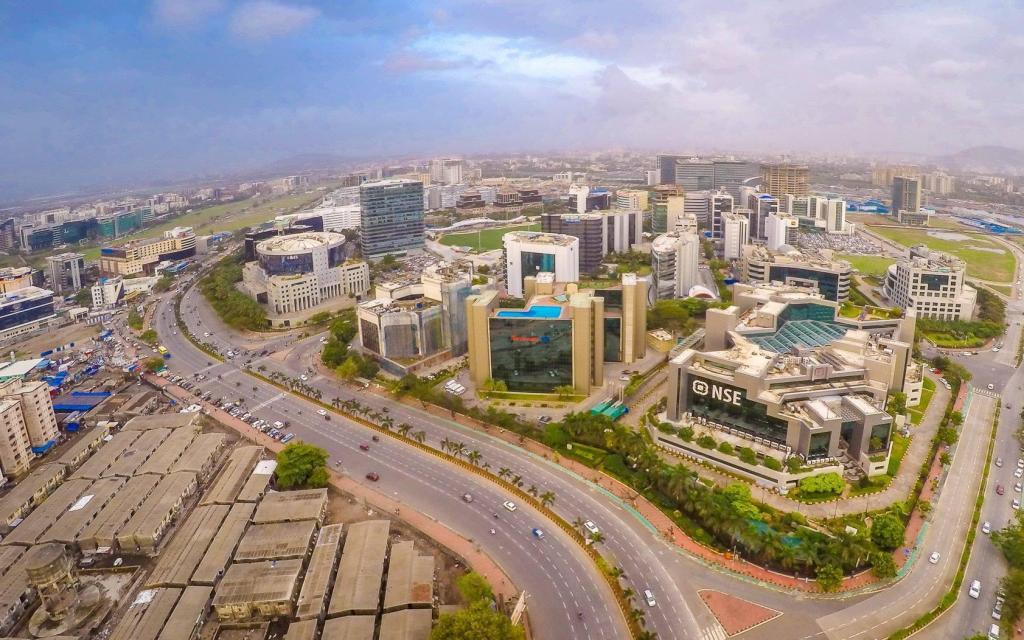
India attracted approximately US$5.5 billion in cross-border real estate investment during the first nine months of 2026, overtaking mainland China, which attracted approximately US$3.7 billion.
The figures were reported by Moneycontrol, citing Savills’ Asia-Pacific capital markets research.
Other highlights include:
- Data-centre investment in India reached US$3.9 billion.
- This was nearly twice the investment in the office segment.
- Grade A office yields were estimated at 7.75%–8%.
- Office rentals were increasing by approximately 7%–8% annually.
- India’s overall real estate transaction volume reached US$14.3 billion over the past four quarters, up 13%.
Across Asia-Pacific, real estate investment volumes approached US$200 billion in the first nine months of 2026, representing 27% year-on-year growth. Moneycontrol+1
Why It Matters
India’s growing appeal reflects the combination of urbanisation, occupier demand, rental growth and demand for digital infrastructure.
The data-centre sector is particularly interesting because it demonstrates how changes in technology and business activity can create demand for new categories of real estate.
This is also a reminder that international investors are not necessarily looking for residential properties alone. Commercial offices, industrial facilities, development land and data centres are all competing for investment capital.
Miichael’s Review
What I find interesting is the way investment opportunities are evolving.
Traditional property investment categories remain important, but technology and changing business requirements are creating new demand for specialised real estate.
For investors, this means we need to understand the economic activity driving demand behind a property.
A data centre, for example, is not simply an industrial building. Its viability depends on electricity, connectivity, cooling infrastructure, location and the requirements of its operators.
The bigger lesson is that property investment opportunities often follow economic and technological changes.
5. UAE property market records strong growth, with Abu Dhabi transactions up 76.1%
What Happened
The Emirates News Agency reported strong property-market performance across the UAE on 13 November.
Abu Dhabi recorded particularly impressive figures during the first nine months of 2026:
- Total property transactions reached AED171.26 billion.
- Transaction value increased 76.1% year-on-year.
- Transaction volume increased 32.8%.
- Total transactions reached 38,483.
- Foreign investment in investment zones increased 131% to AED86.11 billion.
- Sales transactions reached AED119.33 billion.
Meanwhile, Dubai recorded approximately AED625 billion in real estate transactions during the first ten months of 2026, involving 181,866 transactions.
Dubai also completed 104 real estate projects in the first half of 2026, with a combined investment value exceeding AED111 billion. Emirates News Agency
Why It Matters
The UAE continues to demonstrate its ability to attract both domestic and international property investment.
The figures from Abu Dhabi are particularly notable because they show growth in both transaction value and transaction volume.
This suggests that the increase is not simply the result of a few high-value transactions.
The expansion of development activity also indicates continued confidence in the market, although investors should still consider supply, pricing, financing and regulatory conditions.
Miichael’s Review
The UAE is an interesting market to watch because of its ability to attract international capital.
However, I would caution against comparing markets based only on transaction values or headline growth rates.
Every market has different tax structures, ownership regulations, financing arrangements, population growth and supply conditions.
For anyone considering overseas property investment, understanding the local market is essential.
A strong market does not automatically mean every property is a good investment.
We still need to assess the location, developer, pricing, rental demand, ownership costs and exit strategy.
Source: Emirates News Agency – UAE real estate sector maintains strong momentum, growing global confidence
Worth Watching
Three developments deserve further attention:
1. Malaysia’s proposed integrated housing data repository
KPKT is developing a shared housing data repository to help authorities match housing supply with local demand, affordability, household income and unsold stock. The ministry is also open to exploring rent-to-own partnerships involving completed unsold homes. This could become an important policy development if implemented effectively. EdgeProp
2. Malaysia’s industrial and data-centre infrastructure
The government is considering tighter data-centre oversight, including disclosures on operators, electricity consumption and imported equipment. The latest report cited 117 approved projects, of which 55 had begun operating. This makes infrastructure planning an increasingly important part of industrial property development. EdgeProp
3. ECRL commercial operations
Malaysia Rail Link has set starting fares for ECRL services, with commercial operations targeted for mid-December 2026. Once operational, the railway could influence connectivity, business activity and property demand along its corridor. Actual property benefits will depend on station accessibility and surrounding economic activity. EdgeProp
My Takeaway This Week
This week’s news reinforces one important principle:
Property development must follow real demand, not assumptions about demand.
Malaysia’s latest market figures show that transaction activity is still growing, but unsold stock and low launch sales performance deserve attention.
Penang’s latest manufacturing investment demonstrates how employment and industrial activity can support wider property demand. Meanwhile, EcoWorld’s water-infrastructure initiative highlights the importance of utilities in attracting industrial investors.
Internationally, India and the UAE show how economic growth, institutional investment and changing business requirements can create opportunities across different property sectors.
For buyers, investors and developers, the questions remain the same:
- Is there genuine demand?
- Is the location supported by economic activity?
- Is the property priced appropriately?
- Can it generate sustainable income or long-term value?
- Is there a realistic exit strategy?
A property decision should never be based on excitement alone. It should be based on research, assessment and understanding.
Discover Better. Decide Smarter.
Miichael Yeoh
Property Strategist
Disclaimer
This article is intended for general information and educational purposes only. It does not constitute financial, investment, legal or property purchasing advice. Readers should conduct their own due diligence and seek advice from qualified professionals before making any property-related decisions.