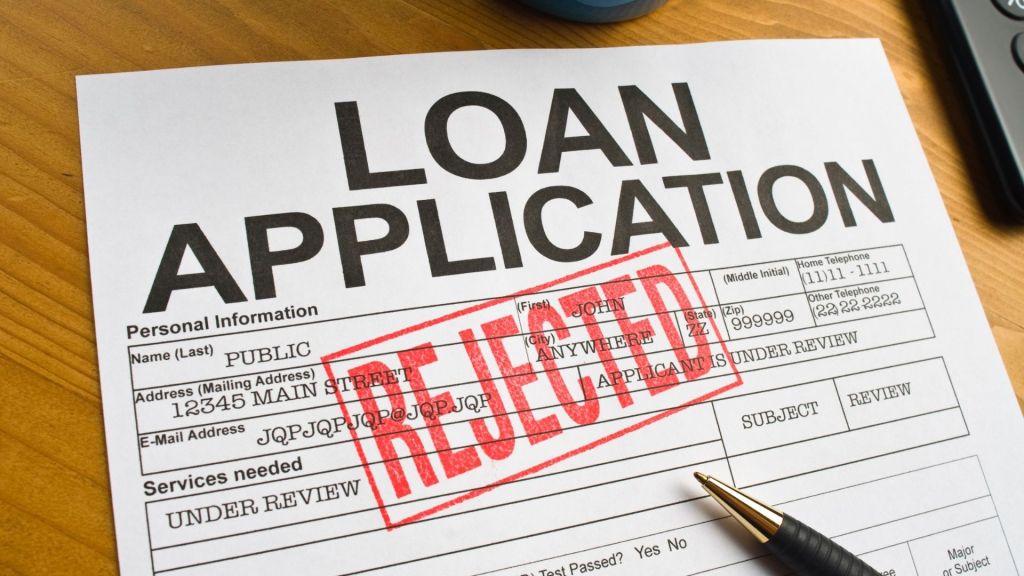
You found the property. You worked out the monthly instalment. You submitted your documents. Then the bank said no. What went wrong?
For many property buyers, getting a home loan approved is one of the most stressful parts of buying a property.
Some applicants earn a reasonable salary but still struggle to obtain financing. Others have been working for years, have savings in the bank and believe they are financially ready, only to discover that their loan application does not meet the bank’s requirements.
The first reaction is often frustration.
Some blame the bank. Others immediately approach another bank, hoping for a different answer.
But before submitting another application, there is a more important question to ask:
What exactly made the bank uncomfortable with your application?
A bank does not assess a property buyer based on salary alone. It considers repayment ability, existing financial commitments, credit history, income documentation, the property and its own lending criteria. Bank Negara Malaysia explains that CCRIS is one source of information used by financial institutions, not a blacklist or a credit approval decision by itself.
The good news? A rejected application does not necessarily mean you can never obtain a home loan. But your next step should be based on the actual reason for the rejection, not guesswork.
Here are eight steps every property buyer should understand.
1. Find out why your loan was rejected
This is where you should begin.
Do not immediately submit applications to five other banks. If the underlying problem remains unresolved, you may end up with several unsuccessful applications without improving your financial position.
Contact the bank or mortgage officer who handled your application. Ask for clarification on the main factor affecting the decision and whether there is anything you can address before applying again.
The reason might involve:
- Your monthly debt commitments being too high.
- Late payments or arrears recorded in your credit history.
- Income that the bank cannot adequately verify.
- Incomplete or inconsistent documents.
- Employment or business income that is considered uncertain.
- The requested loan amount or tenure.
- The property valuation or the bank’s assessment of the property.
The bank may not disclose every detail of its internal assessment, but even a general explanation can help you identify your next move.
The principle is simple: fix the reason for rejection before trying again.
2. Check your CCRIS and CTOS reports
Your credit record can influence how a bank assesses your application.
CCRIS, operated by Bank Negara Malaysia, records credit information reported by participating financial institutions. This includes financing facilities, repayment conduct and relevant application information.
You can access your CCRIS report through the official eCCRIS portal:
You may also review your CTOS credit report through:
Look for the following:
- Late or missed repayments.
- Outstanding arrears.
- Credit facilities you may have overlooked.
- Incorrect personal or account information.
- Records that you do not recognise.
- Existing or recently submitted credit applications.
If you find an error, contact the relevant institution or credit reporting agency to dispute it. If you have genuine arrears, speak to the lender about bringing the account up to date and establishing a manageable repayment arrangement.
Do not assume that paying an overdue amount today will immediately erase the previous repayment history. Updates take time, and historical information may remain visible for a period.
One important point: CCRIS is not a blacklist. Bank Negara Malaysia also confirms that a rejection by one financial institution does not automatically mean every other bank will reject you. Different banks have different lending policies and risk assessments.
3. Understand your Debt Service Ratio (DSR)
One of the most important things to understand before applying for a home loan is your Debt Service Ratio, commonly known as DSR.
In simple terms, DSR compares your monthly debt repayments with the income recognised by the bank.
A simplified illustration is:
DSR = Total monthly debt commitments ÷ Recognised monthly income × 100%
Suppose your recognised monthly income is RM6,000.
Your existing monthly commitments are:
- Car loan: RM900
- Personal loan: RM400
- Other financing commitments: RM200
Your total existing commitments are RM1,500.
If the proposed housing loan instalment is RM1,800, your total monthly debt commitments would become RM3,300.
Your illustrative DSR would be:
RM3,300 ÷ RM6,000 × 100% = 55%
This is only an illustration, not a universal approval threshold. Banks differ in how they recognise income, calculate commitments and determine acceptable DSR levels. They may also consider living expenses and other risk factors.
The practical lesson is that a salary that looks sufficient on paper may not leave enough recognised repayment capacity for the proposed loan.
What can you do?
- Review all existing loans and financing commitments.
- Avoid taking on unnecessary new debt before applying.
- If appropriate and financially sensible, reduce outstanding commitments.
- Reassess the property price and proposed loan amount.
- Consider a longer tenure only if it is available and suitable for your circumstances, understanding that it can increase total interest or profit paid over time.
Do not take a new personal loan just to make your down payment unless you have fully assessed the additional repayment burden. It may worsen the very problem you are trying to solve.
4. Make your income easy for the bank to verify
A bank needs evidence that your income is genuine, sufficient and reasonably sustainable.
This is particularly important for commission earners, self-employed individuals, business owners and people whose income varies from month to month.
If you are a salaried employee, prepare the documents requested by the bank, which may include:
- Recent payslips.
- Bank statements showing salary credits.
- Employment confirmation or other employment records.
- EPF statements.
- Income tax documents, where required.
If you are self-employed or run a business, the bank may request:
- Personal and business bank statements.
- Income tax returns and supporting tax documents.
- Business registration documents.
- Financial statements or management accounts.
- Evidence of business income and its consistency.
The exact requirements vary by bank and applicant profile.
Here is a common mistake: an applicant declares a certain income, but the supporting documents do not clearly demonstrate where that income comes from or whether it is recurring.
For example, a business owner may have substantial money flowing through a bank account. However, total deposits are not necessarily the same as personal income or business profit.
Prepare a clear, consistent and truthful record of your income. Explain unusual deposits or variable earnings where necessary, and provide supporting evidence when requested.
The objective is not merely to show that money enters your account. It is to demonstrate the income you can reasonably sustain.
5. Reduce unnecessary financial commitments before applying
Your existing commitments affect how much room you have for a new housing loan.
Review your car financing, personal loans, credit card balances and other credit facilities. Understand how the bank will treat each commitment in its assessment.
If you have outstanding credit card balances, reducing them may improve your overall financial position. However, do not assume that cancelling a card or paying down one facility will automatically produce a particular DSR or guarantee approval.
Prioritise actions that genuinely improve your ability to repay.
Also, avoid taking on a new car loan, personal financing or other major commitment just before applying for a mortgage unless it is necessary and you have assessed its impact.
A property purchase is a long-term financial commitment. You should not have to make your entire financial life fragile just to qualify for the loan.
6. Choose a property that fits your actual borrowing capacity
This is where many buyers need to rethink their approach.
They start by asking, “Which property do I want?”
A better starting point is, “What property can I finance comfortably, while still managing my other financial responsibilities?”
A bank’s approval is not the same as proof that a property is affordable for your household.
Even if you qualify for a particular loan amount, you still need to account for expenses such as:
- The down payment.
- Legal fees and stamp duty, where applicable.
- Valuation and financing-related costs.
- Renovation, furnishing and moving expenses.
- Maintenance charges and sinking fund contributions, where applicable.
- Insurance or takaful.
- Repairs, vacancies and other property-related costs if the property is intended for rental.
Do not spend every ringgit of your savings on the purchase and leave yourself without a financial buffer.
If the loan amount is too high, consider a less expensive property, a larger down payment if it does not deplete your emergency reserves, or delaying the purchase while you strengthen your finances.
A more modest property that you can sustain may be a better decision than a larger property that leaves you financially stretched.
7. Get your financing assessed before committing to the property
One of the most expensive mistakes is assuming that a loan will be approved simply because the buyer has a stable job or has received an encouraging initial assessment.
An initial eligibility check or preliminary indication is not necessarily a final loan approval.
Before paying a booking fee or committing to a purchase, speak to a qualified mortgage officer or financing adviser. Provide accurate information about your income, existing commitments, credit record and intended property.
Ask questions such as:
- Based on my current financial position, what loan amount may be realistic?
- How does the bank calculate my recognised income?
- What commitments will affect my eligibility?
- What documents do I need to prepare?
- Are there any issues I should address before submitting a formal application?
- What happens if the property valuation is lower than the purchase price?
Remember that an eligibility estimate does not guarantee approval. Final approval remains subject to the bank’s assessment, verification and applicable conditions.
It is also important to understand the purchase agreement and booking terms, including what happens if financing is unsuccessful. Do not assume that every booking fee is automatically refundable.
8. If your loan is rejected, follow a recovery plan
A rejection should prompt a review of your financial position, not a rushed attempt to obtain another loan.
Use this sequence:
Step 1 — Request clarification. Ask the bank what factors affected the decision.
Step 2 — Review your credit reports. Check CCRIS and CTOS for repayment issues, outstanding facilities and errors.
Step 3 — Recalculate your affordability. Review your income, debt commitments and proposed housing instalment.
Step 4 — Strengthen your documentation. Resolve inconsistencies and prepare complete supporting records.
Step 5 — Address the actual weakness. This may involve reducing commitments, regularising arrears, correcting an error, improving income documentation or reconsidering the property price.
Step 6 — Seek a suitable financing assessment. Once you understand the issue, discuss your circumstances with an appropriate lender or qualified mortgage adviser. Different banks may assess a case differently, but no one can guarantee approval.
Step 7 — Apply again when you are ready. Do not reapply simply because time has passed. Reapply when you have a clear reason to believe the application is stronger or better suited to the lender’s criteria.
If you need more help, Bank Negara Malaysia’s MyKNP initiative provides a route for unsuccessful home-financing applicants to seek guidance through the relevant advisory channels, including AKPK for home financing.
Find out more through Bank Negara Malaysia:
If you are already struggling to manage existing debts, seek proper financial counselling before taking on further commitments. AKPK provides financial counselling and debt-management assistance for eligible individuals.
The bigger lesson: prepare before you fall in love with a property
Let us look at the problem from a different perspective.
A home loan application is not simply a form to complete after you have chosen a property. It is an assessment of whether the proposed financing fits your financial circumstances and the lender’s requirements.
That means the property discovery process should begin before the showroom visit.
Before choosing a property, understand your finances. Before applying for a loan, review your credit record. Before making a commitment, assess whether the purchase remains manageable if your expenses rise, your income changes or the property takes longer than expected to generate rental income.
At Property Discovery System™, we believe that buyers should be equipped to make informed decisions rather than relying on assumptions.
The objective is not merely to obtain a loan.
It is to obtain financing for a property you can afford, sustain and live with comfortably over the long term.
Because getting a loan approved is only the beginning. Being able to manage it well is what matters next.
Discover Better. Decide Smarter.
From the desk of
Miichael Yeoh
Property Strategist
Disclaimer: This article is for general educational purposes and does not constitute individual financial, credit or legal advice. Loan approval criteria and documentation requirements vary by financial institution and applicant. Approval is never guaranteed.