By Miichael Yeoh | Property Discovery System(PDS)
Malaysia’s Budget 2027 has introduced several measures that could influence the country’s property market, from first-home ownership and housing financing to the rehabilitation of abandoned housing projects.
But what do these announcements actually mean for Malaysians considering a property purchase?
A stamp duty exemption may reduce the upfront cost of buying a home. A housing loan guarantee may help certain buyers access financing. Public housing and infrastructure investments may create opportunities in selected locations.
Yet none of these measures automatically makes a property affordable, a development attractive or an investment profitable.
For homebuyers, investors and developers, the more important question is how these policies affect real property decisions.
Here is my assessment of the key property-related measures in Malaysia Budget 2027 and what they could mean for the market, including Penang.
1. First-home buyers: Stamp duty relief expands up to RM750,000
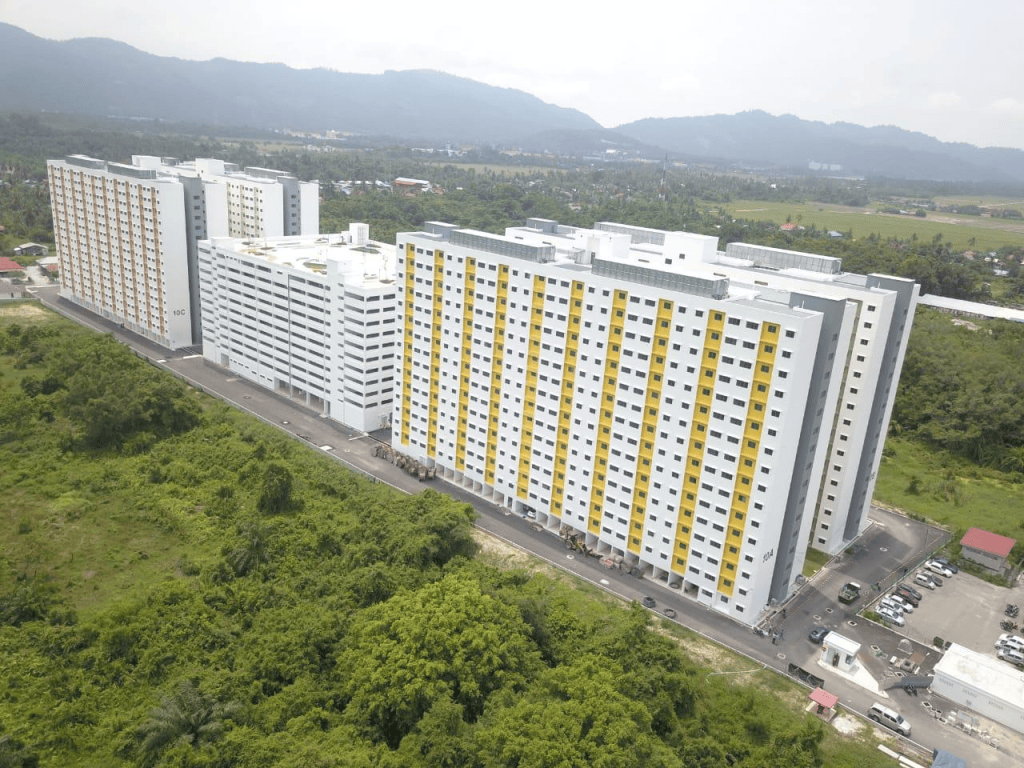
One of the most significant property announcements in Budget 2027 is the proposed expansion of stamp duty exemptions for first-home purchases.
According to the Budget speech delivered by Prime Minister and Finance Minister Datuk Seri Anwar Ibrahim on 9 October 2026, the proposed relief will apply to sale and purchase agreements executed from 1 January 2027 to 31 December 2030.
The proposed structure is:
- First homes priced up to RM500,000: Full stamp duty exemption on the instrument of transfer and housing loan agreement.
- First homes priced above RM500,000 and up to RM750,000: Full exemption on the first RM500,000, with a 50% exemption on the remaining amount.
The proposal is intended to reduce the upfront costs of purchasing a first home.
Source: Prime Minister’s Office — Budget 2027 speech
What does this mean for homebuyers?
For eligible buyers, lower stamp duty can reduce the cash required at the point of purchase.
The expanded price range is also relevant to buyers who have been looking at homes above RM500,000 but below RM750,000. However, the actual savings will depend on the final implementation rules, the transaction value and the applicable loan terms.
Buyers should also distinguish between a reduction in transaction costs and an improvement in long-term affordability.
A home that qualifies for stamp duty relief may still be financially unsuitable if the monthly instalment, maintenance charges, insurance and other commitments stretch the household budget.
My view: Treat stamp duty relief as a financial advantage, not the main reason to buy a property.
2. RM20 billion in housing financing guarantees for first-time buyers
Budget 2027 also provides for up to RM20 billion in housing financing guarantees through the Housing Credit Guarantee Scheme, known as SJKP.
The scheme is expected to assist approximately 80,000 first-time homebuyers, with particular attention to self-employed individuals and people without fixed monthly incomes.
This is important because not every prospective buyer has a conventional salary structure.
Business owners, freelancers and other self-employed individuals may have sufficient earning capacity but face difficulties meeting standard income-documentation requirements.
SJKP is intended to improve access to housing financing for eligible applicants.
Source: BERNAMA — Budget 2027 housing financing guarantees
Does a housing guarantee mean everyone can obtain a loan?
No. A guarantee does not automatically mean loan approval.
Applicants must still meet the scheme’s eligibility conditions and the relevant lender’s assessment requirements. Buyers should confirm the applicable financing limits, documentation requirements and repayment obligations before committing to a purchase.
The key consideration is not simply whether financing is available, but whether the buyer can comfortably sustain the repayments.
My view: Better financing access is useful when it connects eligible buyers with homes they can genuinely afford. It becomes risky if buyers interpret easier access to financing as a reason to borrow beyond their means.
3. Can Budget 2027 help revive abandoned housing projects?
Another significant proposal is the full stamp duty exemption for qualifying transactions involving the rehabilitation of abandoned housing projects.
The proposed relief covers loan agreements and instruments of transfer executed by contractors or developers rescuing abandoned projects, as well as by the original purchasers involved in those projects.
The proposed effective period is 1 January 2027 to 31 December 2030.
The measure forms part of the government’s stated ambition to achieve zero abandoned housing projects by 2030.
Source: Prime Minister’s Office — Budget 2027 speech
Will this solve the abandoned housing problem?
Stamp duty relief can reduce transaction costs, but reviving an abandoned project is more complicated than reducing taxes.
A successful rescue may depend on:
- Whether the project is financially viable.
- Whether a capable rescue developer can be appointed.
- Whether land, financing and legal issues can be resolved.
- Whether construction can be completed within a realistic timeframe.
- Whether original purchasers can ultimately receive their homes.
For affected buyers, the priority remains understanding the legal and financial status of the project and the conditions under which completion can proceed.
My view: The incentive is a useful part of the solution, but actual project rehabilitation and delivery will be the real test.

4. Nearly RM1 billion for housing programmes
Budget 2027 provides nearly RM1 billion for programmes including Rumah Mesra Rakyat and Program Residensi Rakyat.
Four new housing projects are identified in Kulai, Johor; Nilai, Negeri Sembilan; Paya Rumput, Melaka; and Pertang Valley, Terengganu.
The Budget also identifies Bandar MADANI Bukit Jalil as a residential development with supporting amenities, including a vertical school.
These initiatives reflect the continuing role of government-supported housing in addressing housing needs.
Source: Prime Minister’s Office — Budget 2027 speech
For buyers, however, the announcement of a housing programme is only the beginning.
Eligibility, location, unit pricing, delivery schedules and access to public amenities all affect whether a particular development meets a household’s needs.
Affordable housing should not be assessed by price alone. Accessibility to employment, transport, schools and essential services also matters.
5. What could Budget 2027 mean for Penang property?
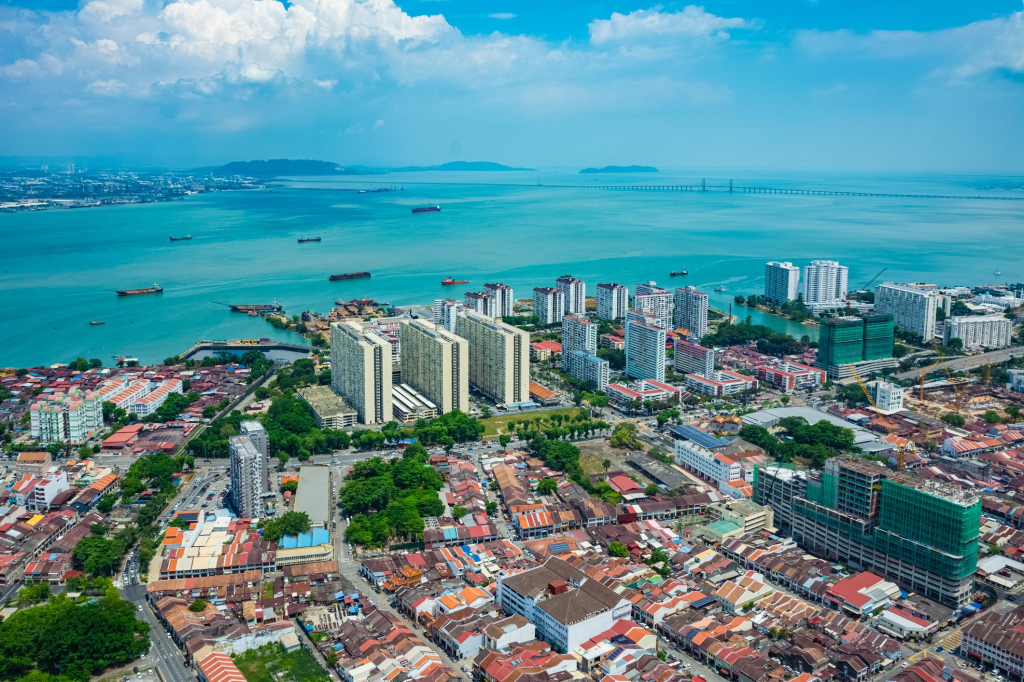
Penang’s property market has its own economic drivers. Its manufacturing base, semiconductor ecosystem, employment opportunities, infrastructure and limited availability of certain types of land all influence property demand.
Budget 2027 includes a RM100 million Strategic Investment Fund involving Khazanah and InvestPenang to support early-stage semiconductor and advanced manufacturing companies.
The Budget also identifies transport-related infrastructure investment involving roads in port areas and airports, including Penang International Airport.
These announcements could have indirect implications for property demand if they translate into business expansion, job creation and improved connectivity.
Source: Prime Minister’s Office — Budget 2027 speech
Which property segments could benefit?
Industrial and logistics property
Business expansion may create demand for suitable industrial facilities, warehouses and supporting commercial space. Actual demand will depend on investment commitments, company requirements and available supply.
Residential property near employment centres
If industrial investment generates additional jobs, it could support demand for housing in accessible locations. The effect will vary according to workers’ incomes, commuting patterns, rental budgets and the supply of competing homes.
Commercial property
Business growth may create opportunities for offices, retail services and other supporting uses. These opportunities should be assessed against occupancy, tenant demand and operating costs.
Does this mean Penang property prices will rise?
Not necessarily.
Infrastructure and investment announcements are not guarantees of capital appreciation. The impact on individual developments depends on their location, purchase price, accessibility, competing supply, rental demand and the actual delivery of the announced projects.
For buyers, the right question is not simply whether an area will benefit from economic growth. It is whether a particular property is priced reasonably relative to its likely demand and long-term usefulness.
6. What should property investors watch?
Budget 2027 creates several areas worth monitoring, but investors should distinguish between a policy announcement and a measurable investment opportunity.
Follow employment and business expansion
Industrial investment may support housing and commercial demand, but the most useful evidence will be actual investment commitments, completed facilities, employment growth and tenant activity.
Assess rental demand rather than relying on capital appreciation
A property near an expanding employment centre may attract tenants, but rental demand does not guarantee a satisfactory yield.
Investors should calculate realistic rental income after vacancies, maintenance, management fees, financing costs and other expenses.
Check competing supply
Even a location with strong economic activity can experience weak rental performance if too many similar units compete for tenants.
Evaluate the purchase price
Government incentives can influence demand, but buyers still need to assess whether the asking price is supported by comparable transactions, rental evidence and the property’s fundamentals.
My view: Investors should follow the economic effects of the Budget, not simply the headlines. A good investment still requires a sound entry price and a clear understanding of risk.
7. What does Budget 2027 mean for property developers?
The Budget’s housing measures may help reduce some barriers to homeownership. However, developers continue to face the practical challenges of land, construction, financing, regulatory compliance and buyer affordability.
The Real Estate and Housing Developers’ Association Malaysia (REHDA) welcomed the proposed homeownership measures and housing financing guarantees. It also called for a review of development-related charges and highlighted construction costs and the need to address completed but unsold residential properties.
Source: EdgeProp — REHDA’s response to Budget 2027
For developers, three questions deserve attention.
First, does the product match the buyer’s budget?
A property may have attractive facilities and branding, but the target buyer must still be able to afford the purchase and ongoing ownership costs.
Second, does the project offer a clear reason to buy?
Location, accessibility, layout, price, surrounding amenities and realistic future demand matter more than marketing claims alone.
Third, is the sales process helping buyers make confident decisions?
Buyers need clear information about costs, financing, project delivery, ownership obligations and relevant risks.
The Budget may improve some aspects of the purchasing environment, but it cannot replace sound product positioning, credible communication and responsible sales practices.
8. Five questions every homebuyer should ask before purchasing
Regardless of government incentives, I encourage buyers to work through five questions before making a commitment.
- Can I afford this property comfortably? Calculate the deposit, transaction costs, monthly instalment, maintenance and a realistic contingency reserve.
- Does the location fit my needs? Consider employment, transport, schools, amenities and daily travel requirements.
- Is the price supported by evidence? Compare similar properties, recent transactions and realistic rental values where relevant.
- What risks am I taking? Understand the developer’s track record, construction status, legal terms, competing supply and likely holding costs.
- Does this property fit my long-term plan? A home for own occupation and an investment property may require different priorities.
These questions are especially important when an incentive makes a purchase appear more attractive. A lower upfront cost does not necessarily make a property the right choice.
9. My takeaway: Policy support is useful, but property decisions still matter
Malaysia Budget 2027 proposes meaningful support for first-home buyers through expanded stamp duty relief, housing financing guarantees and measures intended to facilitate the rehabilitation of abandoned projects.
It also identifies housing programmes and investment initiatives that could influence economic activity in selected locations, including Penang.
The eventual impact will depend on implementation, financing access, actual investment and the underlying supply and demand for property.
For homebuyers, the opportunity is to understand the assistance available without losing sight of affordability.
For investors, it is to identify genuine demand rather than assume every policy announcement will increase property values.
For developers, it is to understand what buyers need and communicate the value of a project clearly and responsibly.
At the Property Discovery System™ (PDS), our approach is straightforward: understand the market, evaluate the options, identify the risks and make decisions based on evidence.
Because buying property should never be about following a headline alone.
Discover Better. Decide Smarter.
This article is for general property education and information. Budget 2027 measures described as proposed remain subject to the relevant legislation, implementation guidelines and eligibility requirements. Readers should confirm their individual circumstances with the relevant authorities and professional advisers before making financial or property decisions.