Tag: malaysia

  • Is the Property Market Slowing Down… Or Are Buyers Becoming More Picky?

    Is the Property Market Slowing Down… Or Are Buyers Becoming More Picky?

    Lately, many people have been asking:

    “Is the property market slowing down?”

    Some projects are taking longer to sell.
    Some launches are seeing slower take-up.
    Buyers seem to be hesitating more before committing.

    At first glance, it may appear that the market is becoming weak.

    But when we look deeper into the numbers and buyer behaviour, the story may actually be different.

    According to the National Property Information Centre (NAPIC), Malaysia recorded more than 420,000 property transactions in 2024 — one of the strongest performances in the past decade.
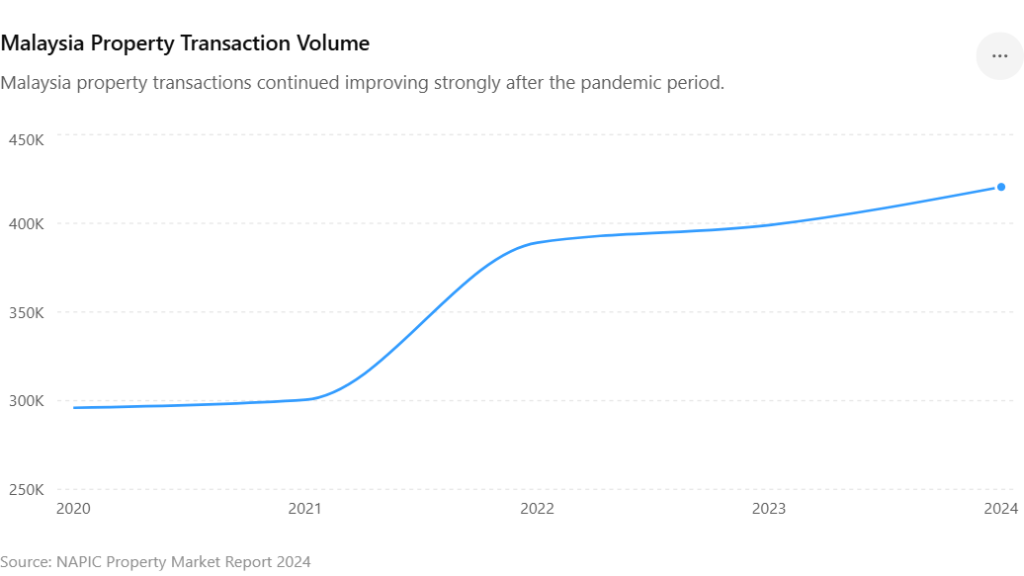
    This tells us something important:
    The market still has buyers.

    However, today’s buyers are no longer buying property the same way they did years ago.

    Buyers today are becoming more informed, more cautious, and more selective before making decisions.

    In the past, some buyers purchased based on emotions, marketing hype, showroom designs, rebates, or fear of missing out (FOMO).

    Today, buyers are asking more questions:

    • Is the pricing reasonable?
    • Is there real demand in the area?
    • Can the property generate rental income?
    • Is the developer reliable?
    • Is there oversupply nearby?
    • Will the property still hold value in the future?

    In short — buyers today are becoming more picky.

    And honestly, that is not necessarily a bad thing.

    A property purchase is one of the biggest financial commitments for most people. Buyers today are thinking carefully about:

    • Monthly instalments
    • Interest rates
    • Maintenance fees
    • Cash flow commitments
    • Rental demand
    • Future resale value
    • Lifestyle suitability
    • Long-term financial stability

    This explains why some projects continue to perform well while others struggle with slower take-up.
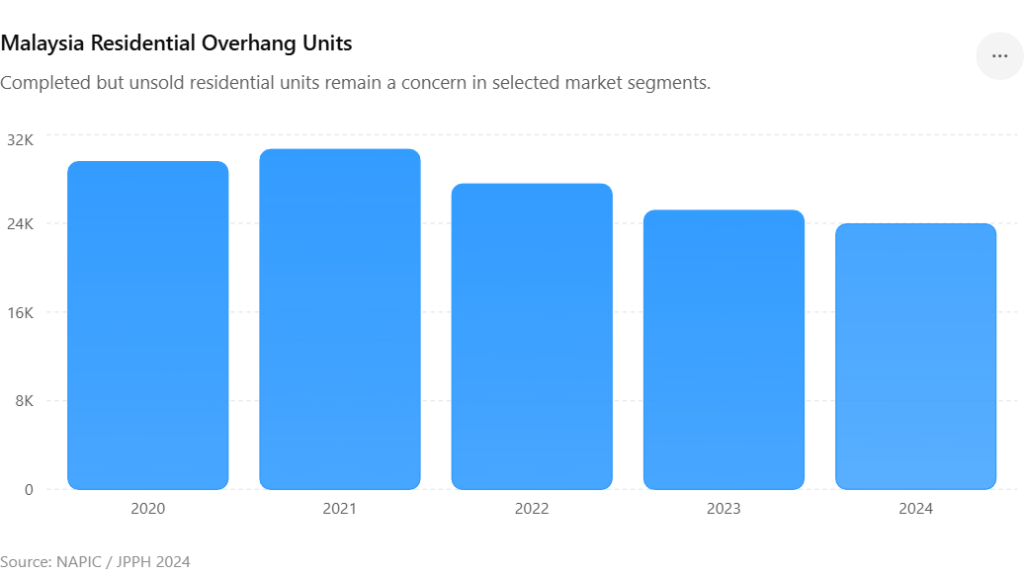
    In fact, NAPIC data also shows that Malaysia continues to face residential overhang issues in certain market segments. This means completed units remain unsold due to factors such as pricing mismatch, oversupply, poor accessibility, weak product positioning, or changing buyer preferences.

    This does not mean there are no buyers in the market.
    It simply means buyers are becoming more selective about where they place their money.

    Before buying any property project, buyers should spend time understanding:

    • The actual market demand
    • Existing and future supply in the area
    • Nearby competing developments
    • Developer track record and credibility
    • Connectivity and infrastructure plans
    • Market pricing compared to surrounding projects
    • Rental and resale potential
    • Their own financial holding power
    • Whether the property truly fits their long-term goals

    Many people still buy emotionally.
    But smart buyers buy strategically.

    A beautiful showroom alone should never be the reason to purchase a property.

    One thing I always encourage buyers to do before committing is to attend property seminars, educational talks, and market-sharing sessions.

    Why?

    Because knowledge reduces expensive mistakes.

    A good seminar can help buyers:

    • Understand current market trends
    • Learn from real case studies
    • Compare projects more objectively
    • Understand buyer psychology and market cycles
    • Avoid common investment mistakes
    • Gain confidence before making a large commitment

    In today’s market, education is becoming one of the most important tools for property buyers.

    The market may not necessarily be weak.
    It may simply be that buyers today are smarter, more informed, and more selective than before.

    And personally, I believe that is a healthy direction for the property market.

    From the Desk of,

    Miichael Yeoh

    Property Strategist

    Disclaimer: This reflects the author’s personal views based on market experience and current observations. It is not financial advice. Smart investors do their own research before making any move.


  • 🌏 Malaysia Tourism  On the Rise and Heading for Visit Malaysia Year 2026

    🌏 Malaysia Tourism On the Rise and Heading for Visit Malaysia Year 2026

    Tourism in Malaysia is bouncing back — and it’s not just recovering, it’s growing stronger than before. As we move closer to Visit Malaysia Year 2026 (VM2026), the numbers are looking solid, and the opportunities are exciting for those in travel, hospitality, and even property.


    🇲🇾 The Big Picture

    According to the Department of Statistics, domestic tourism in late 2024 hit 66.8 million trips, with Malaysians spending RM29 billion — that’s a 21% jump from the year before.

    On the international front, Malaysia welcomed 12.9 million foreign visitors in just the first half of 2025. The sector is once again one of the country’s strongest pillars for growth — good news for business owners, developers, and local communities alike.


    🌍 Top 5 Countries Visiting Malaysia (2024 Figures)

    RankCountryVisitors
    🥇 1Singapore9.10 million
    🥈 2Indonesia3.65 million
    🥉 3China3.29 million
    4Thailand1.64 million
    5Brunei1.14 million

    (Source: The Star, Feb 2025)

    In total, 25.02 million international tourists came to Malaysia in 2024 — up 24.2% from 2023 — generating RM106 billion in receipts.

    No surprise that Singapore tops the list with easy land access and frequent travel. But what’s interesting is how China has made a strong comeback — Penang and KL are seeing a sharp rise in Chinese arrivals, especially after new flight routes were launched.

    Indonesia remains one of our most loyal markets, with over 590 direct flights weekly between the two countries. And though Brunei and Thailand are smaller contributors, their proximity keeps border traffic vibrant, especially to East Malaysia.


    ✈️ What’s Driving Malaysia’s Tourism Growth

    1️⃣ Better Connectivity

    Penang alone recorded a 118% increase in Chinese arrivals early this year, thanks to more direct flights. Malaysia is also targeting 4.3 million Indonesian tourists in 2025 — and building new connections with Central Asia and the Middle East to diversify source markets.

    2️⃣ Diversifying Tourism Beyond Beaches

    Malaysia is moving beyond the usual “sun and sea” image. There’s now a stronger push for:

    • Medical tourism (especially Penang and KL)
    • Eco and community-based tourism (Sabah’s model brought in RM7 million in 2024 alone)
    • Cultural and food tourism (our nasi lemak and roti canai breakfast culture even got UNESCO recognition!)

    3️⃣ Strong Branding and Recognition

    Tourism Malaysia recently won the Asia Best Choice Tourism Organisation Award 2025, and Kuala Lumpur hosted over 600 international tourism buyers at the Global Tourism Meet 2025 — a big step toward positioning Malaysia as a MICE and event hub in ASEAN.


    ⚠️ A Few Challenges Ahead

    While the outlook is bright, there are some issues to watch:

    • Rising hotel licence fees in places like Sabah could affect local operators.
    • Infrastructure and service quality need to keep up with rising tourist numbers.
    • Over-tourism management in hotspots like Penang and Langkawi is key to ensuring long-term sustainability.

    💡 Why This Matters

    For investors, this is a strong signal — hospitality, resort development, and even short-stay rentals are seeing renewed demand.

    For local communities, tourism is becoming a source of empowerment, especially through rural and community-based tourism programs.

    And for marketers, understanding the top five markets — Singapore, Indonesia, China, Thailand, and Brunei — is critical. Tailoring your messaging to their preferences, languages, and travel habits can make a huge difference.


    🚀 What’s Next – Towards 2026

    The upcoming Visit Malaysia Year 2026 aims to attract over 27 million visitors and generate RM120 billion in receipts.
    We can expect more funding in Budget 2026 for tourism infrastructure, digital promotion, and sustainability initiatives.

    What’s clear is that travellers today want meaningful, authentic experiences — not just sightseeing. Malaysia, with its mix of culture, nature, and warm hospitality, fits that demand perfectly.


    🏝️ My Take

    Tourism Malaysia is back on the map — stronger, smarter, and more diverse. We’re seeing a solid mix of local and international growth, and if the country keeps focusing on value-driven, sustainable travel, Malaysia could easily become one of ASEAN’s top tourism powerhouses again by 2026.

    The opportunity is right here — for investors, entrepreneurs, and communities to ride this new tourism wave together.

    From the Desk of

    Miichael Yeoh

  • Penang LRT Mutiara Line Depot Progress Report

    Penang LRT Mutiara Line Depot Progress Report

    Image Source: Buletin Mutiara

    The depot land for the Penang Light Rail Transit (LRT) Mutiara Line, located on Silicon Island, is progressing according to schedule and is expected to be completed and handed over to the project developer and asset owner, Mass Rapid Transit Corporation (MRT Corp), by the end of 2025. This key milestone is part of the ongoing development of the LRT system, which is set to improve public transportation in Penang.

    To date, 70 acres of the expansive 2,300-acre Silicon Island have been successfully reclaimed. Of this reclaimed land, six acres have been specifically allocated for the LRT depot, and reclamation work continues to progress smoothly, ensuring that the project will meet its handover deadline. Starting in 2025, the reclamation efforts will significantly ramp up, with an annual goal of reclaiming between 300 to 400 acres, which will further support the island’s development.

    Beyond the LRT depot, Silicon Island is being positioned as a central hub for economic growth in Penang, with plans to attract substantial investments, create thousands of jobs, and strengthen the region’s competitive edge on both a national and global scale. The development of Silicon Island is part of a broader strategy to transform Penang into a high-tech and innovation-driven economic powerhouse.

    Image Souce: Buletin Mutiara

    One of the most significant components of the island’s development is the Green Tech Park, which is being earmarked for industrial development. The first 100 acres of the park are expected to be ready for use by the first quarter of 2026. Shortly after, the construction of manufacturing facilities will begin, with operations expected to start by mid-2027. The Green Tech Park is expected to focus on high-value industries such as semiconductors, medical technology, and industrial automation, further boosting Penang’s role in the global economy.

    Silicon Island’s development is not just about infrastructure—it represents a comprehensive vision for sustainable growth. The project combines cutting-edge technology, environmental sustainability, and economic opportunity to create a balanced and forward-thinking approach to urban development. The island’s design integrates green technologies and sustainable practices that align with the state’s commitment to environmental responsibility.

    As the project continues to unfold, Silicon Island is set to redefine Penang’s future, turning it into a high-tech, innovation-driven economic hub that will leave a lasting impact on the region and contribute to Malaysia’s growth as a whole. Silicon Island is more than just a development project; it is a transformative initiative that will shape the future of Penang and play a key role in the country’s broader economic and technological advancements.

    From the Desk of

    Miichael Yeoh

  • Penang LRT Project – Updated News (09/01/2025)

    Penang LRT Project – Updated News (09/01/2025)

    _________________________________________

    Penang’s LRT Project Set to Begin with Groundbreaking Ceremony in December: A Game-Changer for the Property Market

    Read all about it at

    _________________________________________

    Have you ever considered the impact of public transportation on the property market? Your guess is likely similar to mine—it tends to drive property prices up. Some people believe they should wait to purchase property until a project is complete, but that usually means paying higher prices. My advice is to buy when the project is in the planning stage, as prices are generally lower.

    The latest development in Penang is the Mutiara Line light rail transit (LRT) project, which is on track despite a few amendments to the original plan. The adjustment to the LRT route is to extend the line from Penang Island to Penang Sentral via an elevated track above the sea, which is good news for residents on the mainland and property investors alike.

    According to the latest report from MRT Corp, the route will begin at Penang Sentral on the mainland and head to the first proposed station on Penang Island at Macallum. From Macallum, the route will pass through Komtar, Jalan Gurdwara, Solok Sungai Pinang, Sungai Pinang, Jelutong Timur, and continue to Silicon Island.

    Penang LRT Line (Unofficial)

    The above is the detailed proposal and locations of LRT stations in Penang. There are a total of 22 stations along the line. Imagine what will happen to property prices going forward along the line and nearby the stations?

    GEORGE TOWN, Jan 9 2025

    GEORGE TOWN, Jan 9— This year marks the final edition of the iconic Pesta Pulau Pinang at Tapak Pesta Sungai Nibong, as plans are underway to relocate the event to a new venue next year.

    The decision to move is driven by the incorporation of part of the festival site into the Mutiara Light Rail Transit (LRT) Line project. The 2025 edition is expected to be the last held at this historic location.

    Despite the change in venue, the festival’s significance as a vibrant celebration for Penangites will remain unchanged, symbolizing both the state’s progress and its rich cultural traditions.

    From the desk of Miichael Yeoh

    Related Article: