Tag: housing-market

  • Is the Property Market Slowing Down… Or Are Buyers Becoming More Picky?

    Is the Property Market Slowing Down… Or Are Buyers Becoming More Picky?

    Lately, many people have been asking:

    “Is the property market slowing down?”

    Some projects are taking longer to sell.
    Some launches are seeing slower take-up.
    Buyers seem to be hesitating more before committing.

    At first glance, it may appear that the market is becoming weak.

    But when we look deeper into the numbers and buyer behaviour, the story may actually be different.

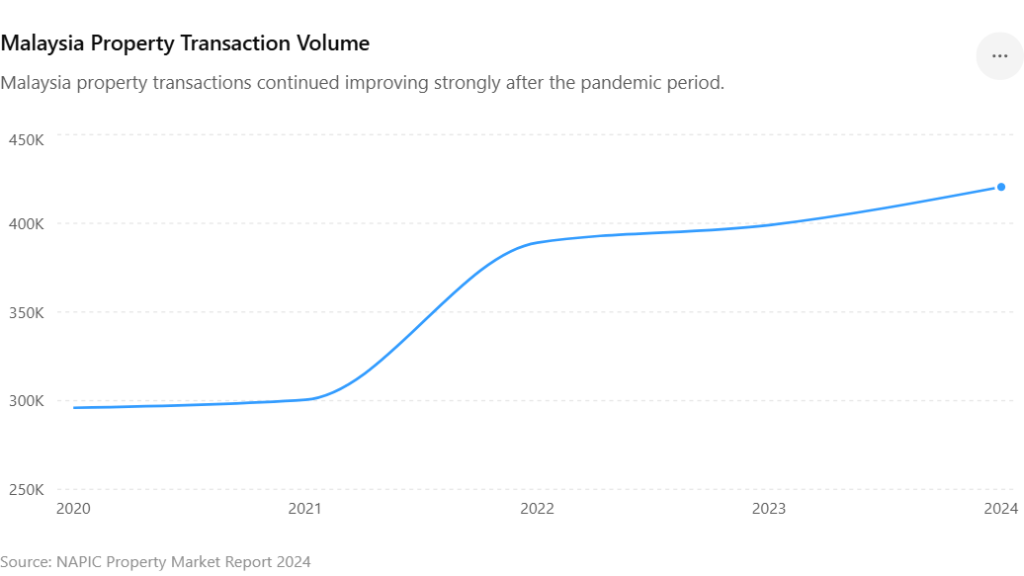
    According to the National Property Information Centre (NAPIC), Malaysia recorded more than 420,000 property transactions in 2024 — one of the strongest performances in the past decade.

    This tells us something important:
    The market still has buyers.

    However, today’s buyers are no longer buying property the same way they did years ago.

    Buyers today are becoming more informed, more cautious, and more selective before making decisions.

    In the past, some buyers purchased based on emotions, marketing hype, showroom designs, rebates, or fear of missing out (FOMO).

    Today, buyers are asking more questions:

    • Is the pricing reasonable?
    • Is there real demand in the area?
    • Can the property generate rental income?
    • Is the developer reliable?
    • Is there oversupply nearby?
    • Will the property still hold value in the future?

    In short — buyers today are becoming more picky.

    And honestly, that is not necessarily a bad thing.

    A property purchase is one of the biggest financial commitments for most people. Buyers today are thinking carefully about:

    • Monthly instalments
    • Interest rates
    • Maintenance fees
    • Cash flow commitments
    • Rental demand
    • Future resale value
    • Lifestyle suitability
    • Long-term financial stability

    This explains why some projects continue to perform well while others struggle with slower take-up.

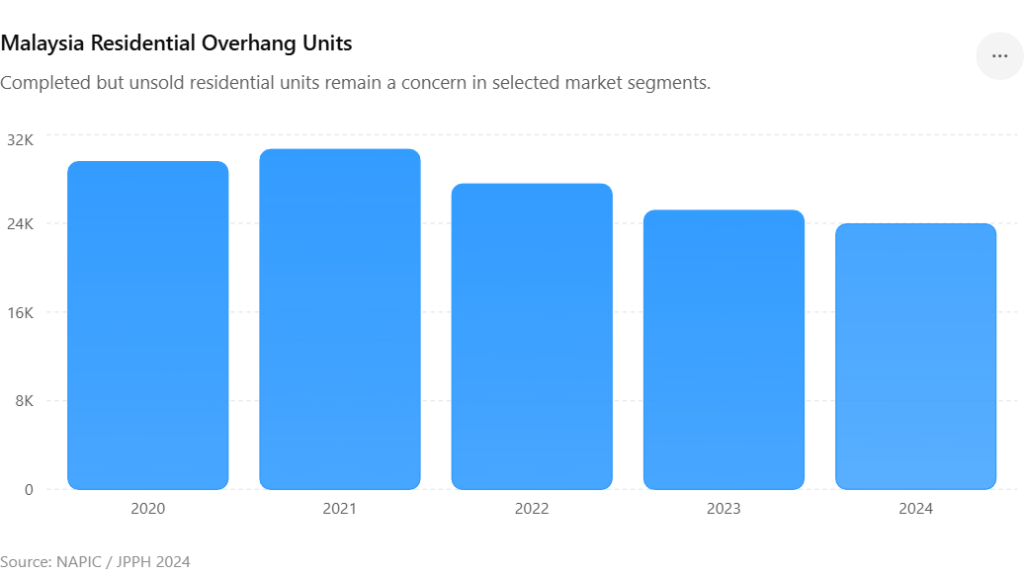
    In fact, NAPIC data also shows that Malaysia continues to face residential overhang issues in certain market segments. This means completed units remain unsold due to factors such as pricing mismatch, oversupply, poor accessibility, weak product positioning, or changing buyer preferences.

    This does not mean there are no buyers in the market.
    It simply means buyers are becoming more selective about where they place their money.

    Before buying any property project, buyers should spend time understanding:

    • The actual market demand
    • Existing and future supply in the area
    • Nearby competing developments
    • Developer track record and credibility
    • Connectivity and infrastructure plans
    • Market pricing compared to surrounding projects
    • Rental and resale potential
    • Their own financial holding power
    • Whether the property truly fits their long-term goals

    Many people still buy emotionally.
    But smart buyers buy strategically.

    A beautiful showroom alone should never be the reason to purchase a property.

    One thing I always encourage buyers to do before committing is to attend property seminars, educational talks, and market-sharing sessions.

    Why?

    Because knowledge reduces expensive mistakes.

    A good seminar can help buyers:

    • Understand current market trends
    • Learn from real case studies
    • Compare projects more objectively
    • Understand buyer psychology and market cycles
    • Avoid common investment mistakes
    • Gain confidence before making a large commitment

    In today’s market, education is becoming one of the most important tools for property buyers.

    The market may not necessarily be weak.
    It may simply be that buyers today are smarter, more informed, and more selective than before.

    And personally, I believe that is a healthy direction for the property market.

    From the Desk of,

    Miichael Yeoh

    Property Strategist

    Disclaimer: This reflects the author’s personal views based on market experience and current observations. It is not financial advice. Smart investors do their own research before making any move.

  • Property Is Still Alive — But the Game Has Changed

    Property Is Still Alive — But the Game Has Changed

    Buying a property today is very different compared to 10 or 20 years ago.

    Back then, property could sell very easily.
    Developers launched, buyers queued, and decisions were made quickly.

    Today, the world has changed.

    The way people buy property has changed.
    The way markets behave has changed.
    And more importantly, the way buyers think has changed.

    Buyers today are far more informed.

    Before even paying a booking fee, many would have already:

    • Compared multiple projects
    • Studied pricing trends
    • Checked developer track record
    • Analysed location fundamentals
    • Calculated loan eligibility and cash flow

    In other words, today’s buyers are not just buyers — they are researchers.


    At the same time, the global environment is not exactly calm.

    We are seeing ongoing geopolitical tensions — from the US–Iran situation to instability in parts of the Middle East.
    Interest rates, inflation, and currency movements continue to shift.

    All these create one thing: uncertainty.

    And when uncertainty comes in, market behaviour changes.

    From what I observe in today’s property market:

    • Investors are waiting — not exiting
    • Sellers are holding — not reducing
    • Buyers are selective — not absent

    Let that sink in.

    The market is not dead.
    It is simply… more cautious.


    And here is something many people miss:

    👉 When the market is not stable, that is where the opportunity lies.

    Why?

    Because:

    • Less emotional buying
    • More rational pricing
    • More room for negotiation
    • More time to analyse properly

    In a hot market, people chase.
    In a cautious market, people choose.

    And those who choose well, win.


    This is exactly why I started focusing on Property Market Intelligence.

    Not just looking at property as a product,
    but understanding:

    • Market timing
    • Buyer psychology
    • Financing structure
    • Exit strategy
    • Risk positioning

    This approach is built from more than 25 years in the property and banking industry.

    I have gone through multiple market cycles:

    • Asian Financial Crisis
    • Global Financial Crisis
    • Property slowdowns
    • Policy changes
    • And shifting buyer behaviours across decades

    Every cycle teaches one thing:

    👉 The market will always move — but not everyone moves with it.


    Today, success in property is no longer about:
    “Buy and wait.”

    It is about:
    “Buy with clarity.”

    Because in today’s market:

    • Information is everywhere
    • But insight is rare

    If you are buying today, don’t just ask:

    “Is this a good property?”

    Ask instead:

    • Who will buy from me later?
    • What is the demand driver here?
    • How does financing affect my holding power?
    • What happens if the market stays slow for 3–5 years?

    That is how professionals think.


    The market has not disappeared.

    It has simply matured.

    And in a mature market,
    strategy will always beat impulse.


    Miichael Yeoh
    Property Strategist | Author

    Author of:
    Think Like a Banker, Act Like a Player
    Property Investment BLT
    Buying Property Like a Pro (MPH Bestseller)

  • Hot Topics in Malaysia’s 2025 Property Market: What You Need to Know

    Hot Topics in Malaysia’s 2025 Property Market: What You Need to Know

    The Malaysian property market is buzzing with conversations in 2025 as investors, developers, and buyers respond to new trends, policy shifts, and emerging opportunities. From cooling measures to infrastructure-driven growth corridors, the landscape is evolving rapidly. Rising construction costs, industrial and logistics demand, and the spotlight on data centres are just some of the themes shaping discussions today.

    The following are the current hot topics in Malaysia’s property market that every buyer and investor should be aware of:

    1. Residential Market Performance & Price Dynamics

    • House Price Growth Moderating
      Malaysia’s housing price index has been rising, but growth is slowing. For Q4 2024, the national average house price was ~ MYR 483,879, with year-on-year (YoY) growth modest. Global Property Guide
      There were quarter-on-quarter declines in Q4 2024 in many property types (terraced, high-rise, detached, semi-detached) — showing possible short-term corrections or softening. Global Property Guide
    • Regional Price Variations
      • In Penang, average house price remains well above MYR 400,000: about MYR 475,037 in Q4 2024. Global Property Guide
      • Kuala Lumpur is the most expensive, with average ~ MYR 794,467 in Q4 2024. Global Property Guide
      • Other states (e.g. Johor, Selangor) are in between; more affordable housing tends to be further out or in less central locations. Global Property Guide+1
    • Transaction Volume & Supply
      Residential transaction count rose ~4% in 2024 to about 260,516 units; transaction value grew ~5.9 % to ~MYR 106.92 billion. Global Property Guide
      The number of new housing starts rose ~20.6 % in 2024 (for both landed + high-rise) to ~106,236 units; completions rose ~9.7% to ~82,135 units. Global Property Guide
      Also, new planned supply was rising— ~100,461 units in 2024, up ~24.1%. Global Property Guide
    • Overhang / Unsold Stock
      Overhang remains a concern, especially in less premium or lower-value housing. The number of unsold affordable homes has increased. According to Rehda, in 1Q 2025 affordable homes accounted for ~20.7% of unsold residential units. EdgeProp.my
      In Penang, overhang has been showing improvement (decrease in unsold stock) but still persists, especially in certain price bands. Scoop

    2. Developer Sentiment & New Launches

    • Reduced Developer Confidence
      The Rehda survey (1H 2025) shows confidence among developers fell sharply. Only ~19% were optimistic about market prospects mid-2025, down from ~51% six months earlier. EdgeProp.my
      Many developers are being more cautious: ~41% plan new launches in 2H 2025, versus higher rates earlier. Some are not looking to acquire new land because of cost and risk. EdgeProp.my
    • Mismatch of Supply vs Demand (especially “affordable” units)
      A big issue flagged by developers is that many affordable units are being built in locations or at price levels that are not aligned with what local buyers can afford / prefer. Even though lower-priced units tend to have higher demand, their take-up depends heavily on location, amenities, connectivity. EdgeProp.my+1
    • Prime / High-end / Branded Projects Doing Better
      In KL, new launches in “prime” segments are seeing 30-50% take-up rates. Buyers of premium / branded residences (or units in strong locations) are more willing to pay for quality, service, amenities. JLL
      Branded residences are more visible in Penang too (e.g. Marriott Residences at Gurney Drive) reflecting demand (or at least supply) for high-end product. Wikipedia

    3. Commercial, Industrial & Office Sectors

    • Office Vacancy / Demand
      Kuala Lumpur’s office market is recovering: vacancy falling, net absorption positive. For example, KL City saw ~231,392 sq ft net absorption in Q2 2025. Vacancy in KL fell from ~23.6% (Q2 2024) to ~19.2% (Q2 2025). JLL
      Grade A office spaces (those with superior amenities, good location) are better placed; tenants are shifting to better quality buildings. JLL+1
    • Industrial / Logistics / Data Centres Growing Strong
      Demand for industrial space is strong — especially in prime logistics, e-commerce, and supply chain related sectors. In KL / Klang Valley, new supply is being absorbed, and vacancy rates are very low for good quality assets. JLL+1
      The data centre pipeline is large: Malaysia has about 638 MW of capacity completed, ~1,300 MW under construction, and an even larger future pipeline. Investment in this space is seen as strategic. JLL

    4. Government Policy, Taxation & Regulation

    • Budget 2025 Measures
      Budget 2025 includes support for infrastructure, sustainable development, and trying to attract investment in high-value sectors. Real estate/spatial planning tied to ESG / green building is emphasized. JLL
      There’s also focus on more efficient use of land, perhaps more mixed-use zoning or strategic zones. JLL
    • Tax / Fees / Local Levies
      In Penang, for instance, there is proposed quit rent increase (2026) — between ~29% to 200% increase for various land categories. For residential urban land, a hike is less steep; commercial / industrial parcels are more affected. Strata properties may face increases later (from 2027). The Vibes
    • Affordable Housing Policy Pressures
      Developers are required to allocate certain proportions of new developments to affordable housing, but this has led to some unintended consequences: in some cases, these units are in less attractive locations or are priced above what locals can realistically afford. This mismatch leads to slower sales/unsold inventory. EdgeProp.my

    5. Regional Focus: Penang (and Selected States)

    • Overhang Glut Gradually Easing in Penang
      Penang had been among the states with large unsold property inventory. In recent years, unsold units in Penang have reduced (e.g. from ~5,493 in 2021 to ~2,796 in 2024). Scoop
      However, there are still mismatches: properties priced between RM 300,000–500,000 and below are struggling more; high-end (>RM1 million) do better. Location, amenities, connectivity remain critical. Scoop
    • Infrastructure & Transport Matters More
      Projects like the Penang Transport Master Plan (including the Mutiara LRT) are expected to impact property values / demand in areas served. Wikipedia
      Also, improvements like Gurney Bay / Gurney Bay waterfront park are enhancing appeal of coastal / beachfront / high-view precincts in George Town. Wikipedia
    • Local Revenue / Cost Pressures
      The quit rent hike in Penang is being discussed: residents are reacting, especially for commercial / industrial land. This adds to holding costs and might shift developers’ cost calculations. The Vibes
    • High-end / Branded Residences Becoming More Common
      Examples in Penang: Marriott Residences Penang is a new branded residential tower at Gurney Drive. Wikipedia
      The Muze @ PICC is also a large mixed residential project in Bayan Baru with tall towers. Wikipedia

    6. Risks, Headwinds & Constraints

    • Cost Inflation, Construction / Input Costs
      Rising costs for materials, labour shortfalls, logistical challenges (supply chain) are squeezing margins. Developers have less flexibility on pricing vs cost. This trend is being widely reported. EdgeProp.my
    • Financing / Interest Rates
      Borrowing costs, stricter lending criteria, risk of loan rejection are issues especially for buyers of affordable homes. Developer access to finance is also more cautious. EdgeProp.my
    • Unsold Affordable Units Risk
      If many affordable units stay unsold, there is risk of overhang, lower returns for developers, possible depreciation in certain segments. Also risk of price stagnation in non-prime locations. EdgeProp.my+1
    • Regulatory Uncertainty / Local Policy Changes
      Increases in quit rent, possible changes in tax / service tax / sales tax, land use zoning, requirements for affordable housing quotas, etc., create uncertainty. Developers and investors are watching local councils, state governments.
    • Macro / External Risks
      Global supply chain disruptions (especially for industrial / data centre / electronics sectors), geopolitical tensions, input cost volatility, and currency / inflation risk. Also, any downturn in global trade could affect Malaysia’s manufacturing / export sectors (with knock-on effects on property demand, especially for worker housing, industrial real estate).

    7. Opportunities & What to Watch

    • Strategically Located High-Quality / Branded Projects
      Projects with strong amenities, good connectivity (esp. to transit / highways / LRT etc.), high build quality, smart / green features, branded residences — these are likely to command premium pricing and maintain demand.
    • Industrial, Logistics & Data Centres
      Given the global trends (e-commerce, supply chain reshoring, semiconductor investment), Malaysia (especially Penang, Johor, Klang Valley) is seeing growing investor interest in industrial / logistics parks, warehouses, data centre space. These are viewed as relatively defensive assets.
    • Mixed-Use Development & Transit-Oriented Development (TOD)
      Areas around transport infrastructure (LRT, MRT, light rail, major highway nodes) are likely to benefit. Mixed-use developments (residential + retail + office or amenity) that offer a lifestyle component will be attractive.
    • Green / ESG / Sustainability Features
      Buyers / tenants increasingly consider energy efficiency, green certifications, smart home features, environmental impact. Developers incorporating these will have competitive advantage.
    • Government Incentives & Zone Designations
      Investment zones, special economic zones, incentives in Budget 2025, tax breaks (where available), and government infrastructure spending (transport, utilities) are going to influence property hot spots.
    • Price Correction / Buyer Power
      For savvy buyers, there might be opportunities: slower demand in non-prime sectors, more incentive packages by developers, better negotiations (price, furnishing, perks) especially in properties that are not moving quickly.

    Conclusion

    Malaysia’s property market in 2025 is at a turning point, balancing between growth opportunities and structural challenges. While affordability and regulatory changes continue to test both developers and buyers, new catalysts such as data centres, logistics demand, and large-scale infrastructure projects are reshaping the landscape.

    For investors, the key lies in identifying which segments offer long-term resilience and value. For homeowners, understanding how policies, costs, and location trends play out will make all the difference. Ultimately, the hot topics of today are shaping the strategies, risks, and rewards of tomorrow’s property market.

    From the Desk of

    Miichael Yeoh

  • Should You Buy Property in Malaysia Now? Insights 2025

    Should You Buy Property in Malaysia Now? Insights 2025

    Published: July 17, 2025
    By: Miichael Yeoh


    After a strong run in 2023 and 2024, Malaysia’s residential property market is finally taking a breather. While some see this as a red flag, the data paints a more balanced picture—one of resilience and recalibration, not recession.

    So, what exactly is happening in 2025? And should you be worried or ready to buy?

    Let’s break it down.


    📉 Q1 2025: Slower But Still Solid

    Malaysia’s residential property transactions dropped 6.2% in Q1 2025 compared to Q4 2024. That’s the first notable slowdown after nearly two years of consistent growth.

    But here’s the catch: activity levels are still higher than in 2022, which means we’re not seeing a crash—just a cooling-off.

    “The slowdown is expected. It’s the market stabilizing after a hot streak,” said a property analyst from KL.


    📈 Prices Are Still Moving Up

    The national average house price reached RM483,879 in Q1, reflecting a +1.4% year-on-year increase. Areas like Klang Valley, Penang Island, and Johor Bahru continue to dominate in both value and volume.

    Here’s a quick snapshot:

    AreaAvg. Price (Q1 2025)YoY Price Growth
    Klang ValleyRM 550,000+2.1%
    Penang IslandRM 620,000+1.8%
    Johor BahruRM 460,000+1.2%

    🏗️ Developers Stay Selective with New Launches

    With rising construction costs and cautious sentiment, developers are choosing quality over quantity. Most new launches are in well-connected, lifestyle-oriented locations—think smart townships, mixed developments, and green-certified homes.

    Hot-selling projects like Elmina Ridge 2 and Avalon Cybersouth saw near 90% take-up rates, showing buyers are still ready to act—when the product is right.


    🔍 What’s Supporting the Market?

    Despite the slowdown in transactions, several key factors are helping the market stay afloat:

    • Stable interest rates (BNM kept the OPR steady).
    • Low unemployment rate (around 3.3%).
    • Young home-buying population (millennials & Gen Z entering the market).
    • MM2H visa tweaks requiring foreigners to purchase property.

    These are long-term positives that signal stability in the residential segment.


    ⚠️ What Buyers & Investors Should Watch

    While the fundamentals are strong, here are a few caution signs to keep in mind:

    1. Affordability gaps in cities like KL and Penang may limit demand in certain price segments.
    2. Oversupply risks in high-rise areas still exist, especially where demand isn’t organic.
    3. Policy changes—any adjustments to RPGT, stamp duties, or loan rules could shift the playing field fast.

    💡 Final Thoughts

    If you’re a buyer or investor waiting for a market crash—you might be waiting for a while. What we’re seeing now is not the end of growth, but a healthier, more stable market emerging after years of turbulence.

    This could actually be the perfect window to enter—especially if you’re eyeing the right locations, products, and long-term value.

    🗣 “The best time to buy property is when others hesitate—because real opportunity hides in uncertainty.”


    Need help identifying the right property in 2025?
    Join the Property EDU Club — get expert guidance, real-life case studies, and insider access to property deals most investors never see.

    👉 Click here to learn more and join now

  • Malaysia Budget 2025: Enhancing Homeownership

    Malaysia Budget 2025: Enhancing Homeownership

    Prime Minister and Finance Minister Datuk Seri Anwar Ibrahim has unveiled the Malaysian Budget 2025, highlighting significant measures to boost housing and development. Key initiatives focus on making homeownership more affordable and improving community living standards.

    First-Time Home Buyers Support

    The Housing Credit Guarantee Scheme (SJKP) will now provide guarantees on loans up to RM500,000 for first-time home buyers purchasing properties on wakaf land. So far, the scheme has approved RM12.8 billion in loans, benefiting more than 57,000 first-time buyers.

    Housing Tax Relief

    To encourage homeownership, first-time buyers of homes priced up to RM500,000 can claim tax relief of up to RM7,000. For homes priced between RM500,000 and RM750,000, buyers can claim up to RM5,000 in tax relief. These benefits can be claimed for three consecutive years for sale and purchase agreements signed between January 1, 2025, and December 31, 2027.

    Affordable Housing Initiatives

    A budget of RM900 million has been allocated for 48 People’s Residency Programs (PRR) and 14 Rumah Mesra Rakyat (RMR) projects, including new PRR developments in Port Dickson and Seberang Perai Tengah. By the end of 2025, 30 PRR projects will be completed, providing homes for nearly 17,500 people.

    Additionally, up to RM90,000 in financial aid will be available for building new homes for residents, including those in the hardcore poor housing programme (PPRT), fishermen, and Chinese new villages. The government has also raised the maximum financial assistance for home repairs to RM20,000. UDA Holdings Bhd will receive RM200 million to develop affordable housing on wakaf land, and the Public Sector Home Financing Board (LPPSA) will assist civil servants in buying homes on such land.

    Maintenance and Facilities Upgrades

    RM200 million has been set aside for maintaining low- and medium-cost public strata housing, with funds going toward replacing old elevators. Another RM100 million will be used to upgrade 48 Madani Public Parks, enhancing recreational areas across the country.

    To further improve communities, RM84 million will be allocated to upgrade basic infrastructure and social facilities in Chinese New Villages, while the Housing and Local Government Ministry will focus on meeting the needs of Indian settlements.

    These comprehensive initiatives aim to ease the path to homeownership and improve living conditions for Malaysians across various communities.

    From the Desk of Miichael Yeoh