21–27 November 2026
Malaysia · Singapore · UAE
This week’s edition has some particularly interesting developments, especially for Penang.
Three stories stand out in Malaysia: CapitaLand Malaysia Trust’s RM76 million acquisition of a logistics property in mainland Penang, E&O’s ambitious plans for Andaman Island, and Sime Darby Property’s record nine-month profitability.
Internationally, Singapore has introduced planning changes that could influence how developers design buildings and pedestrian connections, while Dubai continues to record substantial property transaction activity.
Let’s look beyond the headlines and understand what these developments mean for buyers, investors and developers.
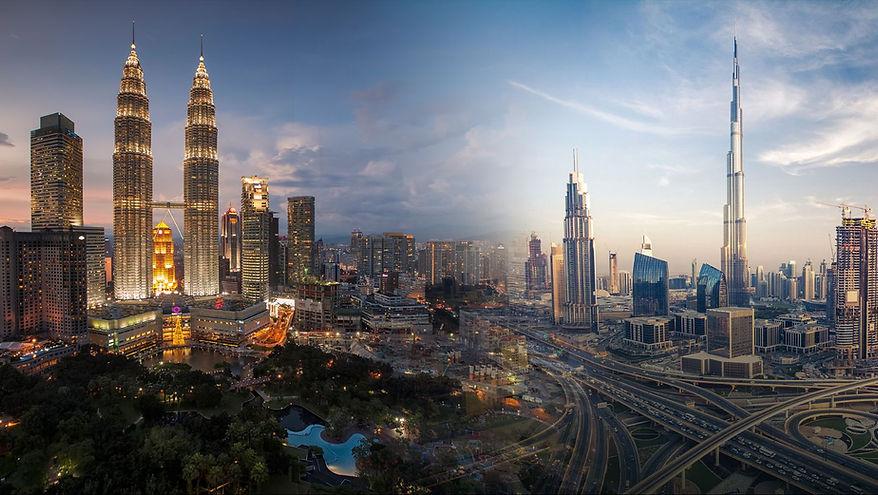
PART 1 — MALAYSIA PROPERTY MARKET
Story 1: CapitaLand Acquires RM76 Million Logistics Property in Penang
What Happened?
CapitaLand Malaysia Trust (CLMT) has entered into a conditional agreement to acquire a newly completed, fully leased freehold logistics property in Valdor, mainland Penang, for RM76 million.
The acquisition is particularly interesting because it strengthens CLMT’s exposure to Penang’s electrical and electronics (E&E) manufacturing ecosystem.
Key details:
| Particulars | Details |
|---|---|
| Purchase price | RM76 million |
| Independent valuation | RM76.2 million |
| Property tenure | Freehold |
| Built-up area | 164,245 sq ft |
| Location | VDI Industrial Park, Valdor |
| Estimated yield | 6.4% |
| Tenant | TransPak Penang Sdn Bhd |
| Expected completion | First half of 2027 |
The facility comprises an integrated production and warehouse building with an adjoining two-storey office.
It is fully leased to TransPak Penang, part of a US-headquartered logistics and engineered packaging group.
The property is strategically located near Batu Kawan Industrial Park, the North-South Expressway and the Penang Second Bridge. It also provides connectivity to Bayan Lepas and Penang International Airport.
The acquisition is expected to be distribution-per-unit accretive for CLMT. CapitaLand+2
Why It Matters
This is more than just another industrial property acquisition.
It demonstrates institutional investor interest in Penang’s industrial and logistics infrastructure.
As manufacturing activities expand, companies require more than factory buildings. They also need:
- Warehousing and distribution facilities.
- Logistics and supply-chain services.
- Industrial support facilities.
- Modern production space.
- Connectivity to ports, airports and major highways.
Penang’s E&E ecosystem is creating demand for supporting industrial infrastructure across both the island and mainland.
Miichael’s Review
I find this transaction particularly significant because it shows that institutional investors are willing to acquire income-producing industrial assets in mainland Penang.
Notice three things.
First, the property is freehold.
Second, it is already fully leased.
Third, the tenant operates in a specialised logistics and packaging business.
These characteristics provide a different investment proposition from buying vacant industrial land and waiting for future development.
For property investors, I believe the industrial and logistics segment deserves more attention, particularly in locations supported by established manufacturing activities.
However, we must also consider tenant concentration, lease terms, building specifications, acquisition financing and the sustainability of rental income.
The real attraction is not simply the industrial location. It is the combination of location, tenant quality and recurring income.
Worth Watching
- Will more institutional investors acquire industrial assets in mainland Penang?
- Can Batu Kawan and Valdor attract additional logistics operators?
- Will demand for modern warehouses strengthen further in 2027?
Story 2: E&O Plans a Major Megamall for Andaman Island, Penang
What Happened?
Eastern & Oriental Bhd (E&O) reported a 37.1% increase in second-quarter FY2027 profit after tax to RM76.1 million, supported largely by its property development activities in Penang.
Revenue increased 35.8% to RM277.6 million.
But the bigger development story is its ambition for Andaman Island.
E&O is planning a major mixed-use lifestyle destination, including a proposed megamall of approximately 2 million sq ft in built-up area.
Other key developments include:
- Andaman Island Phase 2 covers approximately 507 acres.
- Reclamation was reported to be 70% complete.
- Phase 2 is targeted for completion one year ahead of its concession timeline.
- E&O is planning new landed residences and waterfront high-rise developments.
- Upcoming developments have an estimated combined GDV of RM1 billion.
The developer also reported cumulative property sales of RM725.4 million and unbilled sales of RM1.7 billion.
The megamall remains at the planning stage; its final concept and development details have not yet been confirmed. EdgeProp+1
Why It Matters
Andaman Island is evolving beyond a residential waterfront development.
If successfully executed, the proposed megamall and supporting lifestyle facilities could create a broader destination for:
- Shopping and retail.
- Food and beverage.
- Entertainment.
- Leisure and tourism.
- Residential living.
- Commercial activities.
This could strengthen the positioning of the wider Seri Tanjung Pinang and Andaman area.
However, a large retail development also requires sufficient catchment population, spending power, accessibility and sustainable visitor traffic.
Miichael’s Review
This is one of the more interesting Penang property developments to watch.
I have always believed that successful waterfront developments need more than attractive residential towers.
They need an ecosystem.
A residential development creates a population base. Retail and lifestyle facilities create activities. Commercial spaces create employment. Connectivity brings people into the area.
The challenge is to ensure that all these elements develop at the right pace.
A 2-million-sq-ft megamall is a substantial undertaking. Its success will depend on tenant demand, retail positioning, catchment population and competition from existing shopping destinations.
I would also pay attention to the timing of infrastructure delivery and the actual residential population that will support the development.
A waterfront location can create a strong identity, but a successful destination needs people, activities and sustainable economic demand.
Worth Watching
- What will be the final concept and positioning of the proposed megamall?
- When will construction and development details be announced?
- How will Andaman Island compete with existing Penang shopping destinations?
- Will the development create additional demand for surrounding residential and commercial properties?
Story 3: Sime Darby Property Records RM599.7 Million Nine-Month Profit
What Happened?
Sime Darby Property Berhad delivered record nine-month profitability for FY2026.
For the period ended 30 September 2026:
| Financial indicator | 9M FY2026 |
|---|---|
| Revenue | RM3.0 billion |
| Profit before tax | RM828.2 million |
| Profit after tax and minority interest | RM599.7 million |
| PBT growth | 25.7% |
| PATAMI growth | 39.4% |
| Unbilled sales | RM3.6 billion |
An important contributor was its Investment and Asset Management (IAM) portfolio.
The segment recorded:
- Revenue of RM221.6 million, up 63.8%.
- Profit before tax of RM213.6 million, more than double the previous year.
Contributions included data centre lease income, retail assets and other investment properties.
The company also recorded RM2.5 billion in property sales during the nine-month period, with industrial products contributing RM1.1 billion, or 43%.
Its industrial portfolio and data centre developments are becoming increasingly important contributors to earnings. Sime Darby Property+1
Why It Matters
This illustrates how property developers are increasingly diversifying their business models.
Traditionally, developers relied heavily on selling residential and commercial properties.
However, recurring income from investment assets can provide another earnings stream.
These include:
- Industrial properties.
- Logistics facilities.
- Data centres.
- Shopping malls.
- Commercial investment properties.
A developer with both development income and recurring rental income may have a more diversified business model.
Miichael’s Review
One thing I find particularly interesting is the growing importance of industrial and investment assets in the earnings of established developers.
This is an important shift in the property industry.
Developers are no longer looking only at how many residential units they can sell.
They are also looking at assets that can generate recurring income over a longer period.
For investors evaluating developers, I would examine three areas:
- Development sales and unbilled sales.
- Recurring income from investment properties.
- Financial strength and gearing.
Strong sales are important, but the quality and sustainability of earnings are equally important.
A good property developer should not only be able to sell properties. It should also be able to build a sustainable business.
Worth Watching
- Will industrial properties continue to lead Sime Darby Property’s sales?
- Can recurring income grow further?
- Will data centres become a more significant contributor to developer earnings?
- Can the company maintain its profitability as new projects are launched?
PART 2 — INTERNATIONAL PROPERTY MARKETS
Story 4: Singapore Relaxes GFA Rules to Encourage Better Building Design
What Happened?
Singapore’s Urban Redevelopment Authority (URA) announced revisions to Gross Floor Area (GFA) exemptions on 26 November 2026.
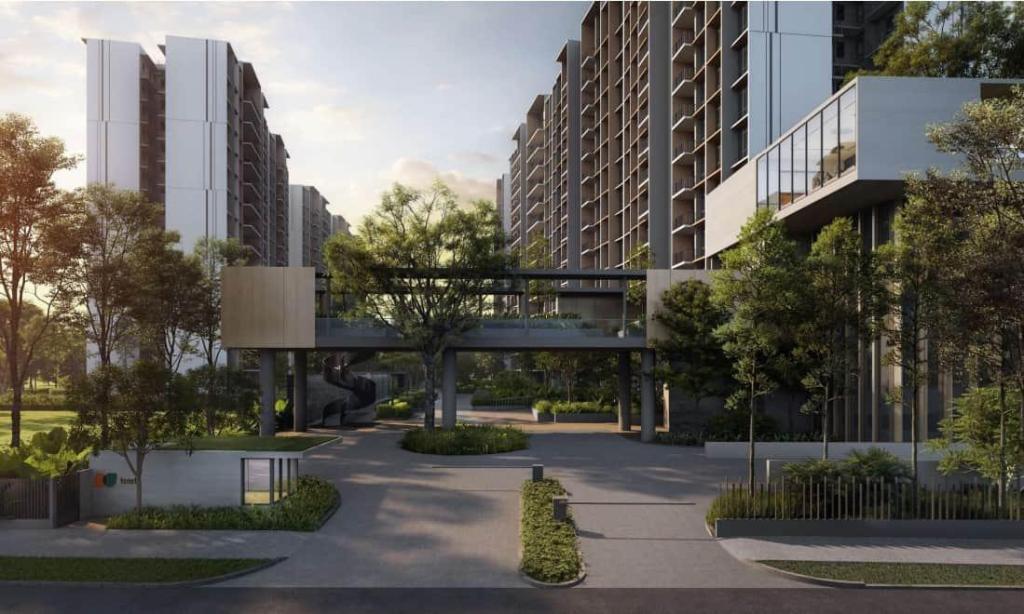
The changes cover roof eaves, sun-shading devices and covered linkways.
The key changes include:
1. Wider roof eaves and sun-shading devices
The maximum depth of qualifying roof eaves and sun-shading devices below the sixth storey that can be excluded from GFA has increased from 2 metres to 3 metres.
2. More flexibility for covered linkways
Qualifying covered linkways can now be excluded from GFA even if they are not incorporated into landscaped areas.
Developments must still meet the relevant greenery requirements.
The changes took effect immediately.
URA explained that the revisions are intended to encourage better protection from heat and rain while reducing regulatory burdens. Urban Redevelopment Authority (URA)+1
Why It Matters
Singapore’s planning approach demonstrates how regulations can influence the quality of urban developments.
In a tropical climate, covered walkways and shaded pedestrian areas are important.
They improve comfort, accessibility and the overall experience of moving between buildings.
For developers, changes in GFA treatment may provide greater design flexibility and help optimise building layouts.
However, these exemptions do not automatically increase the allowable plot ratio or guarantee additional saleable floor area.
Miichael’s Review
I think this is an interesting planning development because it focuses on something that buyers often overlook: the quality of the surrounding environment.
When evaluating a condominium or mixed-use development, we tend to focus on unit size, facilities, price and location.
But what about the pedestrian experience?
Can residents walk comfortably between buildings? Are there sheltered connections? Is the surrounding environment designed for daily use?
These features can influence the long-term attractiveness of a development.
For Malaysia, particularly Penang and Kuala Lumpur, there are useful lessons here.
Good urban planning is not just about how much we can build. It is also about how people experience the spaces we create.
Worth Watching
- Will more Singapore developers incorporate wider covered walkways?
- Will the changes influence future condominium and mixed-use designs?
- Can Malaysian developers adopt similar climate-responsive planning principles?
Story 5: Dubai Records AED13.35 Billion in Property Transactions in One Week
Island Luxury Apartments in Dubai
What Happened?
Dubai recorded approximately AED13.35 billion in real estate transactions across 3,972 deals during the working week of 23–27 November 2026.
According to weekly figures compiled from Dubai Land Department records:
| Transaction category | Value |
|---|---|
| Total transactions | AED13.35 billion |
| Property sales | AED7.75 billion |
| Mortgages | AED4.2 billion |
| Gifts | Approximately AED1.4 billion |
| Total deals | 3,972 |
Of the 2,502 registered property sales:
- 1,435 were off-plan transactions.
- 1,067 were ready-property transactions.
- Off-plan accounted for approximately 57% of sales by transaction count.
Dubai Islands led the sales rankings with approximately AED958.54 million, followed by Business Bay at AED566.97 million.
Total transaction value increased from approximately AED12.17 billion in the preceding working week.
An important distinction: the AED13.35 billion figure includes sales, mortgages and gifts. It is not the value of property sales alone. Ovation+1
Why It Matters
Dubai continues to demonstrate significant property-market activity.
The figures show activity across both new developments and completed properties.
Off-plan transactions remain an important component of the market, while ready properties continue to attract buyers seeking immediate occupation or rental income.
However, transaction volume alone does not establish whether property prices are sustainable.
Investors must also consider:
- Future supply.
- Rental demand.
- Completion risks.
- Location.
- Developer track record.
- Resale liquidity.
Miichael’s Review
Dubai is an interesting example of a property market that has successfully attracted international investor attention.
But I would be careful about interpreting high transaction values as proof that every development represents a good investment.
There is a difference between market activity and investment quality.
For example, an off-plan development may offer attractive payment arrangements, but investors still need to assess its location, competing supply, completion timeline and future rental demand.
I would also compare the economics of off-plan and completed properties rather than assuming one is automatically better.
A strong market creates opportunities, but disciplined property selection determines investment quality.
Worth Watching
- Will off-plan demand remain strong?
- Will ready-property transactions continue to grow?
- Can rental demand keep pace with new supply?
- Which Dubai locations can sustain long-term demand?
PART 3 — MY TAKEAWAY THIS WEEK
The property market is changing. Are investors looking at the right things?
There is a common thread running through this week’s five stories.
The property industry is increasingly being driven by economic ecosystems, recurring income and the quality of development planning.
Consider what we have seen:
- Penang: Institutional investors are acquiring income-producing logistics assets supported by the E&E industry.
- Penang: Andaman Island is moving towards a broader waterfront lifestyle destination.
- Malaysia: Established developers are strengthening recurring income through industrial, retail and data centre assets.
- Singapore: Planning regulations are evolving to encourage more liveable and climate-responsive developments.
- Dubai: Transaction activity remains substantial, but buyers still need to distinguish between market momentum and individual investment quality.
For me, the important lesson is that we should never evaluate a property simply by looking at its building, facilities or promotional price.
We need to understand the economic activity, surrounding infrastructure, actual demand and long-term sustainability.
Five questions every property buyer and investor should ask
- Habitability: Does the property provide a suitable living or working environment?
- Opportunity: Is the location supported by genuine economic and population growth?
- Money: Does the purchase price make financial sense?
- Exit Value: Is there a realistic rental and resale market?
- Sustainability: Can the property remain relevant and competitive over time?
These considerations are central to our PDS™ philosophy and HOME™ Property Discovery Framework.
Property investment should not be about following excitement.
It should be about making informed decisions.
Discover Better. Decide Smarter.
Miichael Yeoh
Property Strategist
____________________________________________
Frequently Asked Questions
Q1. What are the latest developments in Malaysia’s property market in November 2026?
Notable developments include CapitaLand Malaysia Trust’s RM76 million acquisition of a fully leased logistics property in Valdor, Penang, E&O’s proposed 2-million-sq-ft megamall at Andaman Island, and Sime Darby Property’s record RM599.7 million nine-month profit for FY2026.
Q2. Why is mainland Penang attracting industrial property investment?
Mainland Penang benefits from its established manufacturing ecosystem, particularly the electrical and electronics industry. Locations such as Valdor and Batu Kawan offer connectivity to industrial parks, highways, the Penang Second Bridge and Penang International Airport.
Q3. What is the proposed Andaman Island megamall in Penang?
Eastern & Oriental is planning a major retail and lifestyle development of approximately 2 million sq ft in built-up area at Andaman Island, Penang. The proposal remains under planning, with final development details yet to be confirmed.
Q4. Why are developers investing in industrial and logistics properties?
Industrial and logistics properties can provide recurring rental income supported by manufacturing, warehousing and supply-chain demand. They also allow developers and REITs to diversify beyond traditional residential property sales.
Q5. What are the latest Singapore property development rule changes?
Singapore’s URA increased qualifying GFA exemptions for roof eaves and sun-shading devices below the sixth storey from 2 metres to 3 metres and relaxed GFA treatment for qualifying covered linkways, effective 26 November 2026.
Q6. What happened in Dubai’s property market during 23–27 November 2026?
Dubai recorded AED13.35 billion in total property transactions across 3,972 deals, including AED7.75 billion in property sales and AED4.2 billion in mortgage transactions.
Disclaimer
This article is intended for general information and educational purposes only. It does not constitute financial, investment, legal or property purchasing advice. Figures and project details are based on information available at the time of writing and may change. Readers should conduct their own due diligence and seek advice from qualified professionals before making any property-related decisions.

