
17–23 October 2026
🇲🇾 MALAYSIA PROPERTY MARKET
STORY 1 — Sime Darby Property’s RM418.5 Million Kulai Land Deal: What Comes Next?

Illustrative image of agricultural land in Kulai, Johor; not the exact acquisition parcel.
What Happened?
On 20 October, EdgeProp reported further details about the proposed land acquisition by Sime Darby Property Berhad, which is seeking shareholder approval for its purchase of approximately 556.96 acres of freehold land from SD Guthrie Berhad.
The proposed transaction involves:
- Purchase price: RM418.5 million.
- Land area: Approximately 556.96 acres.
- Estimated gross development value (GDV): RM3 billion.
- Location: Kulai, within the Johor–Singapore Special Economic Zone growth corridor.
- Planned development: A residential and commercial township.
- First phase: Targeted for launch in 2028.
- Development horizon: Approximately 10–15 years.
The purchase price is approximately 4.23% below the RM437 million market valuation cited in the acquisition circular. Sime Darby Property’s extraordinary general meeting is scheduled for 3 November 2026 to seek approval from non-interested shareholders. The acquisition remains subject to the required approvals and other conditions. EdgeProp
Sources: EdgeProp — Kulai land acquisition and shareholder approval; Sime Darby Property’s official announcement.
Why It Matters
This is a long-term landbank strategy, not an immediate housing launch.
A developer acquiring a large parcel of land must consider more than the purchase price. Infrastructure, planning approvals, construction costs, future household demand and the pace of development all influence whether the investment ultimately creates value.
The Johor–Singapore Special Economic Zone provides a potential economic growth context, but its existence does not guarantee that every development within the corridor will succeed.
The estimated RM3 billion GDV is also not the same as profit. Development costs, financing, infrastructure obligations and the timing of sales still matter.
Miichael’s Review
I find this development interesting because it highlights the difference between buying land with potential and creating a successful township.
A large landbank gives a developer flexibility to phase development according to market conditions. It can avoid bringing too many homes to market at once and adjust the product mix as the surrounding area develops.
However, the ultimate question is whether the future township will meet genuine housing and commercial demand.
I would examine:
- The employment and population growth expected in the surrounding area.
- Existing competing residential supply.
- Planned transport and infrastructure improvements.
- The affordability of the proposed homes.
- The developer’s ability to phase construction responsibly.
My view: Land acquisition is the beginning of a property strategy, not proof of a successful investment. The real test will be how well the developer translates location potential into a sustainable community.
STORY 2 — CapitaLand Malaysia Trust’s Distributable Income Rises 32.2%
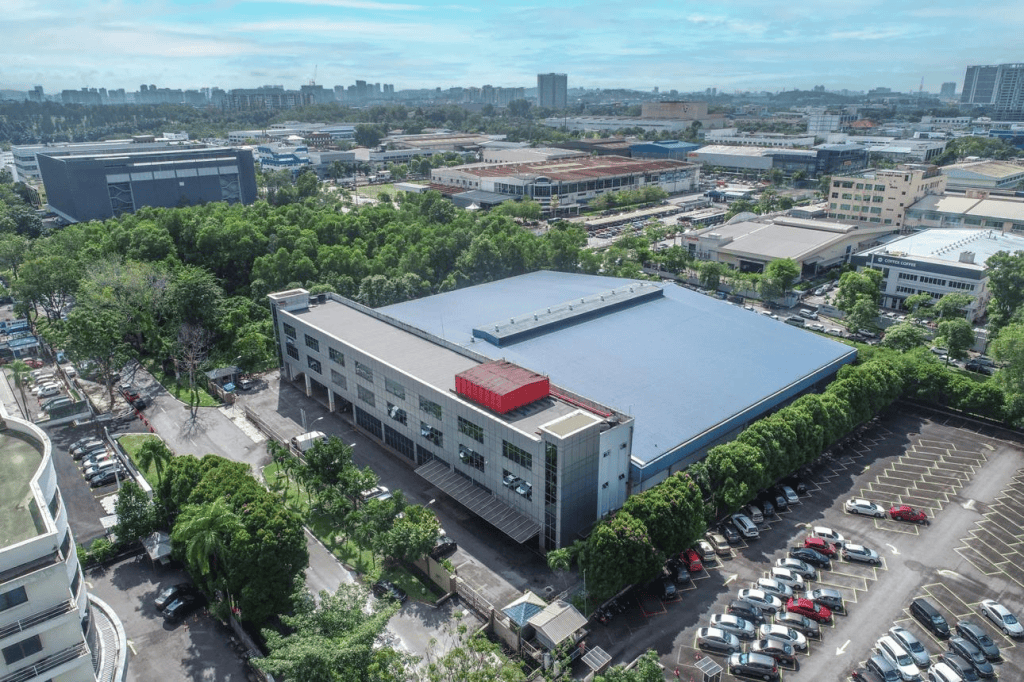
llustrative image of a logistics property relevant to Malaysia’s industrial and logistics real estate sector.
What Happened?
CapitaLand Malaysia Trust (CLMT) reported stronger third-quarter 2026 results, with distributable income increasing 32.2% year-on-year.
For the quarter ended 30 September 2026, the trust reported:
| Financial measure | Q3 2026 | Year-on-year change |
|---|---|---|
| Distributable income | RM46.3 million | +32.2% |
| Distribution per unit | 1.35 sen | +21.6% |
| Revenue | RM126.5 million | +9.1% |
| Net property income | RM79.4 million | +14.9% |
| Net profit | RM47 million | +35.5% |
CLMT attributed the stronger performance to contributions from industrial and logistics properties acquired in 2025, positive rental reversions, scheduled rent increases and lower financing costs.
As at 30 September, overall portfolio occupancy stood at 94.3%, while committed retail occupancy was 93.1%. The trust’s gearing ratio was 38.3%. EdgeProp
Sources: EdgeProp — CLMT’s third-quarter results, 22 October 2026; CLMT official website.
Why It Matters
This is a useful example of how a property investment trust can grow its income through a combination of acquisitions, rental performance and financing management.
The result also demonstrates why investors should look beyond headline revenue.
A REIT’s ability to generate distributable income depends on the performance of its properties, occupancy, operating expenses, financing costs and the capital required to maintain and expand its portfolio.
However, one strong quarter does not establish that future distributions will grow at the same rate.
Miichael’s Review
For me, the important point is the relationship between property assets and the income they can sustainably generate.
When evaluating a REIT, I would ask:
- Are its properties attracting tenants?
- Can rental income be maintained or improved?
- Are acquisitions adding value after financing costs?
- Is its debt manageable?
- Are distributions supported by recurring property income?
Industrial and logistics assets can also diversify a portfolio beyond conventional retail properties.
But the quality of the underlying assets and the price paid for them remain important.
My view: Property investment should be evaluated through both asset quality and income sustainability. A large property portfolio is valuable only when its assets can generate attractive returns relative to their costs and risks.
STORY 3 — IHH Plans an 18-Acre Healthcare Campus in Medini, Johor
What Happened?
On 20 October, EdgeProp reported that IHH Healthcare Berhad was acquiring Afiniti Wellness in Iskandar Puteri, with plans to convert the property into an ambulatory care centre.
The proposed facility will form part of an integrated healthcare campus spanning approximately 18 acres, bringing together the existing Gleneagles Hospital Johor, Afiniti Wellness and IHH’s existing landbank in Medini.
The new centre is intended to provide consultations, diagnostic services, day surgery and other outpatient treatments.
Retrofitting work was expected to begin shortly, with operations targeted for the second or third quarter of 2028. The purchase price for Afiniti Wellness was not disclosed. EdgeProp
Sources: EdgeProp — IHH’s planned Medini healthcare campus, 20 October 2026; IHH Healthcare Malaysia’s official website.
Why It Matters
This development highlights the role that specialised facilities can play in shaping a property’s long-term use and value.
Instead of constructing an entirely new building, IHH plans to adapt an existing property to support a wider healthcare ecosystem.
The project also reflects how demand for healthcare services can influence commercial property use, particularly in locations where population, business activity and access to specialist services are expected to grow.
However, the anticipated benefits will depend on actual demand, operating performance and the successful integration of the facilities.
Miichael’s Review
I see this as an example of property value being created through the right use, rather than simply through new construction.
An existing building may become more useful when it is repositioned to meet a specific market need.
For property developers and investors, the questions are:
- Is there sufficient demand for the intended use?
- Can the existing building be adapted efficiently?
- Will the location support the required customer or patient catchment?
- Does the new use create a sustainable operating model?
- Can the investment deliver long-term value without excessive capital expenditure?
This is particularly relevant to commercial property owners considering how to reposition underutilised assets.
My view: The strongest property strategies begin with understanding demand. Sometimes the opportunity is not to build more, but to make better use of what already exists.
🌏 INTERNATIONAL PROPERTY WATCH
🇯🇵 STORY 4 — Japan’s New Condo Market: Fewer Launches, but Prices Keep Rising
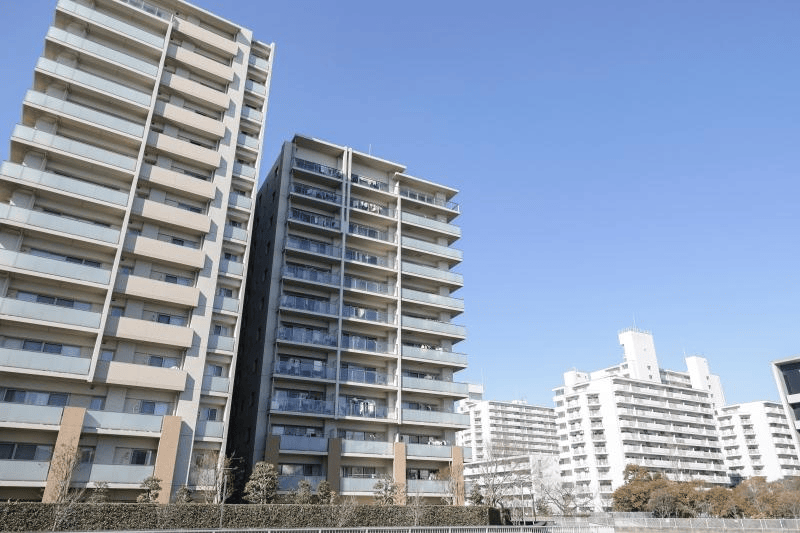
Illustrative image of residential condominiums in Japan.
What Happened?
A market report published on 22 October by Japan Property Insight, based on data from the Real Estate Economic Institute, highlighted a striking contrast in the Kinki region, which includes the areas around Osaka, Kyoto and Kobe.
For September 2026:
- New condominium launches fell 49.6% year-on-year to 752 units.
- The average unit price rose 37.6% to ¥70.75 million.
- The average price per square metre increased 19.7% to ¥1.15 million.
- The first-month contract rate was 62.6%.
- Unsold inventory stood at 3,007 units.
For the first half of Japan’s fiscal 2026, new launches in the region fell 8.6% to 6,557 units, while the average price rose 8.4% to ¥60.1 million. The first-month contract rate fell below 70% for the first time in four years. Japan Property Insight
Source: Japan Property Insight — September 2026 condominium market report, published 22 October.
Why It Matters
The figures illustrate a situation where fewer new properties are being offered to buyers even as average prices rise.
But an important distinction is necessary: the increase in average prices does not mean every existing property became 37.6% more valuable.
When fewer units are launched, the mix of properties entering the market can change significantly. A smaller number of expensive projects can push up the overall average.
At the same time, a lower contract rate suggests that sales absorption is not keeping pace with the higher price environment as comfortably as before.
This is why property-market analysis needs to examine supply, prices and actual sales together.
Miichael’s Review
I find this an important lesson for buyers and investors.
A market can report higher average prices while simultaneously experiencing weaker sales activity.
That means we should not automatically interpret rising prices as evidence of stronger underlying demand.
I would examine:
- Whether the properties being launched are comparable with those launched previously.
- Whether completed inventory is accumulating.
- Whether buyers can afford the new price levels.
- Whether transactions support the asking prices.
- Whether the market is becoming increasingly divided between premium and more affordable properties.
My view: Rising prices are only one part of the story. Understanding who can afford to buy, what is being supplied and how quickly units are selling gives us a much clearer picture of the market.
🇺🇸 STORY 5 — US Homebuilding Weakens as Mortgage Costs Pressure Affordability
Illustrative image of a US residential construction site.
What Happened?
On 20 October, Reuters reported that US single-family homebuilding fell in September as higher mortgage rates and elevated construction costs weighed on demand.
According to the US Commerce Department’s Census Bureau:
- Single-family housing starts fell 4.6% month-on-month to an annualised rate of 859,000 units, the lowest level since September 2025.
- Single-family building permits fell 4.0% to an annualised rate of 845,000 units, the lowest since March 2023.
- The average 30-year fixed mortgage rate was 7.40% in the preceding week, according to Freddie Mac data cited by Reuters.
Separately, the National Association of Home Builders/Wells Fargo Housing Market Index fell three points to 29 in October, its lowest reading since June 2012.
Builders were facing a combination of higher financing costs, elevated material and energy expenses, labour constraints and weak buyer demand. Reuters
Sources: Reuters — US housing starts and permits weaken, 20 October 2026; The Wall Street Journal — US homebuilder confidence falls to a 14-year low.
Why It Matters
The US housing market illustrates how financing costs affect both sides of the property market.
For buyers, higher mortgage rates reduce purchasing power and increase monthly repayments.
For developers, weaker demand can make new projects more difficult to justify, particularly when construction costs remain elevated.
There is also a longer-term concern: reducing new construction may ease immediate inventory pressure, but it does not automatically solve an underlying housing shortage.
The challenge is to deliver homes at prices that buyers can afford while ensuring that developments remain financially viable.
Miichael’s Review
This reinforces a principle I have always considered important in property decisions: affordability is not determined by the asking price alone.
A home may appear reasonably priced, but if financing costs push the monthly repayment beyond the buyer’s comfortable limit, demand can weaken.
For developers, this means product planning must be connected to the actual purchasing capacity of the target market.
For buyers, it means understanding the total cost of ownership rather than focusing only on the initial price.
I would look at:
- Household income and debt commitments.
- Mortgage rates and repayment sensitivity.
- Construction costs and the supply of comparable homes.
- The relationship between asking prices and completed transactions.
- Whether a property remains affordable under less favourable conditions.
My view: Sustainable property demand requires a realistic match between price, financing and household purchasing power. Without that balance, both buyers and developers can find themselves under pressure.
WORTH WATCHING
Here are the developments I would monitor over the next few weeks.
| Market | What to watch | Why it matters |
|---|---|---|
| Malaysia — Johor | Shareholder approval and subsequent planning steps for the Kulai land acquisition | Determines how the proposed township progresses from landbank strategy to implementation. |
| Malaysia — REITs | CLMT’s next results and distribution performance | Helps assess whether income growth is sustainable beyond one quarter. |
| Malaysia — Medini | Progress on the planned ambulatory care centre | Shows whether existing commercial property can be successfully repurposed for specialised demand. |
| Japan | New condo launches, contract rates and unsold inventory | Helps distinguish price increases caused by supply composition from stronger underlying demand. |
| United States | Mortgage rates, housing starts and builder confidence | Indicates whether financing pressure continues to affect homebuyers and future housing supply. |
MY TAKEAWAY THIS WEEK
This week’s property news reinforces a common theme across different markets.
In Malaysia, developers are positioning their landbanks for future growth, a REIT is reporting stronger income and an existing property is being repurposed for specialised healthcare use.
In Japan, new condominium supply has contracted sharply even as average prices have risen. In the United States, higher mortgage costs are putting pressure on homebuilding and affordability.
The circumstances differ, but the underlying questions remain similar.
- Is there genuine demand for the property?
- Is the asking price supported by market evidence?
- Can the intended buyers afford the property?
- Can the asset generate sustainable income?
- Does the development create lasting value for its owners and surrounding community?
A property can have a strong location, attractive design or impressive headline value and still be the wrong investment if the fundamentals do not support it.
My approach remains simple: research first, evaluate objectively and make decisions based on the fundamentals.
Look beyond the price. Understand the fundamentals before making the decision.
Miichael Yeoh
PROPERTY STRATEGIST

