
14–20 November 2026
MALAYSIA · PROPERTY · GLOBAL MARKETS
This week’s property news highlights an important relationship between investment, infrastructure and genuine market demand.
In Malaysia, RM47.9 billion in real estate investment approvals reflects the sector’s continued economic significance, although the figure is lower than the previous year. In Penang, a RM116 million workers’ accommodation development in Batu Kawan demonstrates how industrial expansion is creating demand for supporting infrastructure. Meanwhile, UOA REIT’s improved financial performance offers a useful indication of how occupancy and operating efficiency influence commercial property income.
Internationally, Singapore’s Jurong Lake District attracted a substantial development bid, while Dubai continued to record strong property transaction activity.
Here are five developments worth understanding this week.
MALAYSIA — 3 KEY STORIES
1. Malaysia Records RM47.9 Billion in Real Estate Investment Approvals
What Happened
Malaysia recorded RM47.9 billion in approved real estate investments during the first nine months of 2026, making real estate the second-largest services subsector by approved investment value.
According to the Malaysian Investment Development Authority (MIDA), total investment approvals across services, manufacturing and primary industries reached RM350.4 billion, representing a 20.7% increase year-on-year.
However, the real estate subsector’s approved investment value declined from RM56.6 billion in the corresponding period of 2025 to RM47.9 billion in 2026, a reduction of approximately 15.4%.
Other notable figures include:
- RM123.5 billion in approved investments for data centre and cloud-computing projects.
- RM219.1 billion in total services-sector investment approvals.
- Johor attracted RM99.7 billion in overall investment approvals.
- Selangor recorded RM87.9 billion.
- Penang recorded RM41.1 billion.
It is important to distinguish between total investment approvals and real estate-specific approvals. The state figures cover all sectors, not property investment alone.
Why It Matters
Investment approvals can create opportunities across several property segments.
Industrial development may generate demand for factories, warehouses, logistics facilities and industrial land. New businesses can also create demand for commercial premises and residential accommodation for employees.
The growth of data centres and cloud computing is particularly interesting because these developments require substantial land, power infrastructure, water supply and supporting industrial services.
However, investment approval does not automatically mean that a project has been completed or that the associated property demand has materialised.
Miichael’s Review
I believe the more important question is not simply how much investment Malaysia attracts, but how effectively these investments translate into actual economic activity.
For property investors, I would pay particular attention to locations where industrial investment, infrastructure and employment growth are developing together.
Johor, Penang and Selangor deserve attention, but each has different economic drivers and property-market characteristics.
For developers, this is also a reminder that industrial and commercial property opportunities should be assessed based on actual business requirements rather than investment announcements alone.
The real opportunity lies in identifying where investment becomes employment, where employment creates demand, and where that demand supports sustainable property values.
Worth Watching
- How much of the approved investment will progress into actual implementation?
- Which locations will benefit most from new industrial and technology investments?
- Will industrial land, factory and logistics demand strengthen further in 2027?
Source: Malaysian Investment Development Authority (MIDA), reported by EdgeProp Malaysia, 18 November 2026.
2. Penang’s RM116 Million Workers’ Accommodation Project Signals Batu Kawan’s Industrial Growth
What Happened
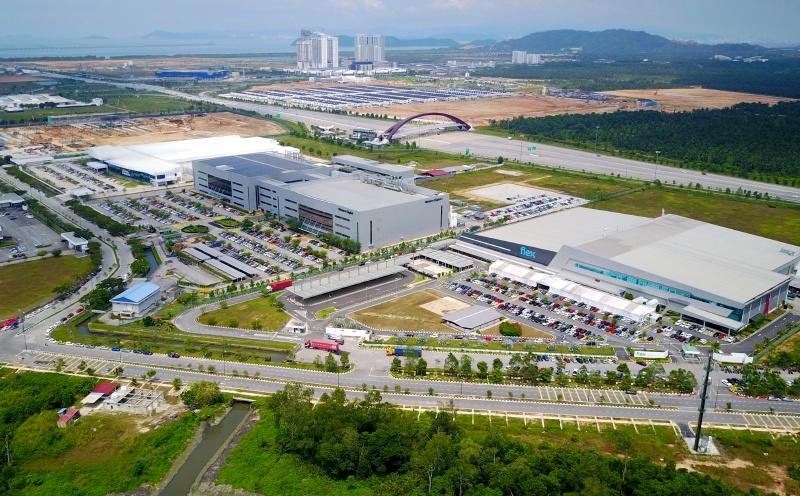
Penang Development Corporation (PDC) is developing the RM116 million Cassia Gardens workers’ accommodation project in Bandar Cassia, Batu Kawan.
The project will adopt a build-and-lease arrangement involving PDC and Penang-based manpower supplier Tasik Utara Services Sdn Bhd.
Key project details:
- Development value: RM116 million.
- Site area: approximately 5.31 acres.
- Accommodation capacity: up to 6,750 workers.
- Total units: 375.
- Buildings: four blocks of eight and nine storeys.
- Construction commencement: December 2026.
- Target completion: August 2028.
- Expected operations: March 2029.
The facilities will include a clinic, food courts, grocery shops, sports courts, a multipurpose hall and recreational areas.
The project supports the industrial ecosystem surrounding Batu Kawan Industrial Park, which covers approximately 1,151 acres and accommodates around 160 companies.
These include Lam Research, Micron, Bosch, Dexcom, ViTrox and Inari.
Other centralised labour quarters projects are also being planned at Penang Science Park South and Batu Kawan Industrial Park 3.
Why It Matters
Industrial property development does not end with factories and warehouses.
As industrial parks attract more companies, supporting infrastructure becomes increasingly important.
This includes:
- Workers’ accommodation.
- Transport connectivity.
- Food and retail facilities.
- Healthcare services.
- Utilities and essential infrastructure.
- Recreational and community facilities.
The availability of suitable workers’ accommodation can also influence how attractive an industrial location is to potential investors and employers.
For Penang, this is particularly relevant as the state continues to strengthen its electrical and electronics manufacturing ecosystem.
Miichael’s Review
This is an interesting development because it highlights an often-overlooked aspect of industrial property investment.
When we evaluate an industrial park, we usually look at land prices, factory specifications, road access, electricity supply and proximity to ports.
But what about the people working in those factories?
A company setting up a manufacturing operation needs more than an industrial building. It needs a functioning ecosystem that supports its workforce.
Batu Kawan’s development should therefore be assessed as part of a wider industrial growth story rather than simply another accommodation project.
I also see potential opportunities for businesses providing supporting services around industrial parks.
However, the actual impact on surrounding residential and commercial property will depend on employment growth, accessibility, local spending patterns and the successful delivery of supporting infrastructure.
Industrial growth creates opportunities beyond industrial land itself.
Worth Watching
- Will more companies expand their operations in Batu Kawan?
- How will the additional workers influence rental demand and local businesses?
- Can Penang develop a more integrated industrial ecosystem with suitable accommodation and transport?
Source: Penang Development Corporation / Buletin Mutiara, reported by EdgeProp Malaysia, 18 November 2026.
3. UOA REIT’s Third-Quarter Profit Rises 41% as Occupancy Improves
What Happened
UOA Real Estate Investment Trust (UOA REIT) reported a 41% increase in net profit for the third quarter ended 30 September 2026.
Its financial performance improved as property income increased and operating expenses declined.
Key financial figures:
| Financial indicator | 3Q 2026 |
|---|---|
| Net profit | RM14.74 million |
| Property income | RM31.98 million |
| Net property income | RM21.58 million |
| Earnings per unit | 2.18 sen |
Compared with the corresponding quarter in 2025:
- Net profit increased from RM10.45 million to RM14.74 million.
- Property income increased 6.4%.
- Net property income increased 22.4%.
- Property operating expenses declined 16.4%.
The REIT attributed the improved property income to better occupancy.
It also reported that borrowing costs increased, partly offsetting the improvement in operating performance.
For the nine months ended September 2026, net profit rose 40.3% to RM43.91 million.
Why It Matters
This result highlights the importance of occupancy and operating efficiency in commercial property investment.
A commercial building’s value is not determined solely by its location or physical specifications.
Its financial performance also depends on:
- Occupancy levels.
- Rental income.
- Tenant quality.
- Operating expenses.
- Maintenance requirements.
- Financing costs.
- Net property income.
For investors evaluating commercial properties, these indicators provide a more meaningful picture of performance than headline rental rates alone.
Miichael’s Review
This is a useful reminder that owning a commercial property and operating a profitable commercial property are two different things.
A building may have an attractive location, but if occupancy is weak or operating expenses are high, its financial performance can be disappointing.
I would pay particular attention to net property income because it gives us a better indication of how efficiently a property generates income from its operations.
For individual property investors, the same principle applies.
When evaluating an investment property, we should look beyond the advertised rental yield. We need to consider vacancies, maintenance, management fees, financing costs and the realistic rental demand in the area.
A good property investment should not only look attractive on paper. It should perform financially.
Worth Watching
- Will UOA REIT maintain its improved occupancy?
- Can rental income continue to grow?
- Will higher financing costs affect future distributions?
- How will commercial property performance differ across locations and building types?
Source: Bursa Malaysia filing, reported by EdgeProp Malaysia, 18 November 2026.
INTERNATIONAL PROPERTY MARKETS — 2 COUNTRIES
4. Singapore: Jurong Lake District Attracts S$1.82 Billion Development Bid
What Happened
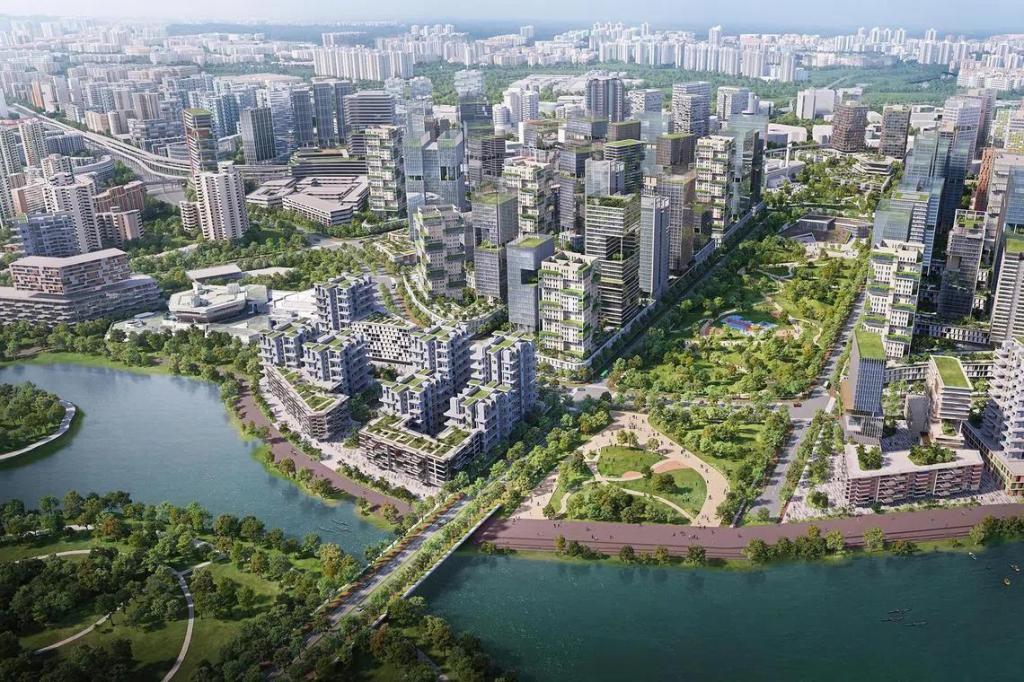
Singapore’s Jurong Lake District continues to attract significant developer interest.
A consortium comprising CapitaLand Development, Far East Organization and Sing Holdings submitted the highest bid of approximately S$1.82 billion for a mixed-use development site at Town Hall Link.
The tender closed on 17 November 2026.
The bid represents approximately S$910.25 per square foot per plot ratio (psf ppr).
The second bid, submitted by Sim Lian Land and Sim Lian Development, was approximately S$1.31 billion, or S$655.33 psf ppr.
The 3.72-hectare site can accommodate a maximum gross floor area of slightly more than 2 million square feet.
The proposed development can include:
- Office space.
- Up to 1,200 private residential units.
- Retail facilities.
- Hotels and serviced apartments.
- Recreational and community facilities.
- Medical and other supporting uses.
Importantly, the tender closing does not mean the site has been awarded. The Urban Redevelopment Authority (URA) will evaluate the bids before making its decision.
Why It Matters
Jurong Lake District is envisioned as Singapore’s largest mixed-use business district outside the city centre.
The development aims to integrate commercial, residential, retail and lifestyle facilities within a single urban district.
This approach is important because modern business districts increasingly compete on more than office space.
They need to offer accessibility, amenities, housing, recreation and a quality environment that attracts businesses, workers and residents.
The proposed development also demonstrates the continued interest of major developers in strategically located mixed-use sites.
Miichael’s Review
One thing I find interesting about Jurong Lake District is the long-term planning behind the development.
A successful business district should not simply consist of office towers.
It should create an environment where people can work, live, shop and spend time without having to travel long distances for everyday needs.
This is where integrated developments can create stronger economic and lifestyle value.
However, the S$1.82 billion bid also raises an important question: can the future development generate sufficient demand to justify the land acquisition cost?
Developers must carefully evaluate construction costs, future office demand, residential absorption, financing and the development timeline.
A strategic location creates potential, but the success of a development ultimately depends on its ability to attract and retain genuine demand.
Worth Watching
- Will URA accept the highest bid?
- How will the project influence land values in Jurong Lake District?
- Will the district attract more international businesses?
- How will future transport infrastructure support the development?
Source: Singapore Urban Redevelopment Authority and The Business Times, 17 November 2026.
5. UAE: Dubai Records AED7.75 Billion in Property Sales in One Week
What Happened
Dubai continued to record substantial property transaction activity during the week of 14–20 November 2026.
Based on Dubai Land Department transaction data, Dubai registered:
- 2,566 property sales.
- AED7.75 billion in total sales value.
- 1,519 off-plan sales.
- 1,047 ready-property sales.
- 1,284 mortgage transactions worth AED3.45 billion.
For comparison, the previous week, 7–13 November 2026, recorded 2,381 sales worth AED7.61 billion.
This represents an increase in both transaction volume and total sales value.
Off-plan transactions accounted for approximately 59% of the week’s sales.
Why It Matters
Dubai’s property market continues to demonstrate substantial activity across both new developments and completed properties.
The strong off-plan segment indicates that buyers remain interested in new developments and staged payment arrangements.
Meanwhile, the ready-property market continues to serve buyers looking for completed homes, immediate occupation or rental opportunities.
However, the two segments serve different buyer requirements and investment strategies.
Off-plan purchases involve construction, completion and delivery risks, while completed properties allow buyers to assess the actual building, surroundings and existing rental market.
Miichael’s Review
Dubai is an interesting market to observe because of its ability to attract international buyers and investors.
But I would caution against using transaction volume alone to determine whether a market is a good investment opportunity.
A high number of transactions tells us that buyers are active. It does not automatically tell us whether every property is fairly priced or whether future rental demand will support the purchase price.
For investors, I would examine three important factors:
- Location: Is the development supported by employment centres, transport and lifestyle infrastructure?
- Supply: How much competing property will enter the market?
- Exit strategy: Is there sufficient resale and rental demand when the property is completed?
Dubai provides an interesting case study of how international capital, developer activity and urban expansion can influence property-market growth.
However, every investment still requires individual assessment.
A busy property market does not necessarily mean every property is a good investment.
Worth Watching
- Will off-plan demand remain strong?
- How much new residential supply will enter the market?
- Will rental growth keep pace with property prices?
- Can transaction activity translate into sustainable long-term market performance?
Source: Dubai Land Department transaction records, compiled by Dubai in Numbers, updated 21 November 2026.
MY TAKEAWAY THIS WEEK
This week’s news reinforces an important principle:
Property growth is not driven by buildings alone. It is driven by the economic activity, people and infrastructure surrounding those buildings.
Malaysia’s RM47.9 billion in real estate investment approvals shows the continued importance of the property sector, although the decline against last year’s figure reminds us to look beyond headline numbers.
Penang’s Cassia Gardens project highlights the relationship between industrial expansion and supporting infrastructure. UOA REIT’s improved performance reminds us that occupancy and operating efficiency are essential to sustainable property income.
Internationally, Singapore demonstrates the importance of long-term urban planning, while Dubai highlights the continuing demand for both off-plan and completed properties.
For buyers, investors and developers, I believe five questions should always be considered:
- Is there genuine demand for the property?
- Is the location supported by sustainable economic activity?
- Is the property priced appropriately?
- Can it generate sustainable income or long-term value?
- Is there a realistic exit strategy?
These questions form part of the way we should evaluate property through the PDS™ philosophy and the HOME™ Property Discovery Framework.
A property decision should never be based on excitement alone.
It should be based on research, assessment and understanding.
Discover Better. Decide Smarter.
Miichael Yeoh
Property Strategist
Property Discovery System
DISCLAIMER
This article is intended for general information and educational purposes only. It does not constitute financial, investment, legal or property purchasing advice. Readers should conduct their own due diligence and seek advice from qualified professionals before making any property-related decisions.

