Week in Review | Saturday, 3 October – Friday, 9 October 2026
Explore five property updates from Malaysia, Australia and the UK, covering Budget 2027 housing measures, infrastructure delivery and changing market conditions.
🇲🇾 STORY 1 — Budget 2027: New Stamp Duty Relief for First-Time Homebuyers

What Happened?
On 9 October 2026, Prime Minister Anwar Ibrahim tabled Budget 2027, proposing stamp duty exemptions for eligible first-time homebuyers.
The proposed measures are:
- Homes priced up to RM500,000: Full stamp duty exemption on the loan agreement and instrument of transfer.
- Homes priced up to RM750,000: Full exemption on the first RM500,000, with a 50% exemption on the remaining amount.
- Proposed eligibility period: Sale and purchase agreements executed from 1 January 2027 to 31 December 2030.
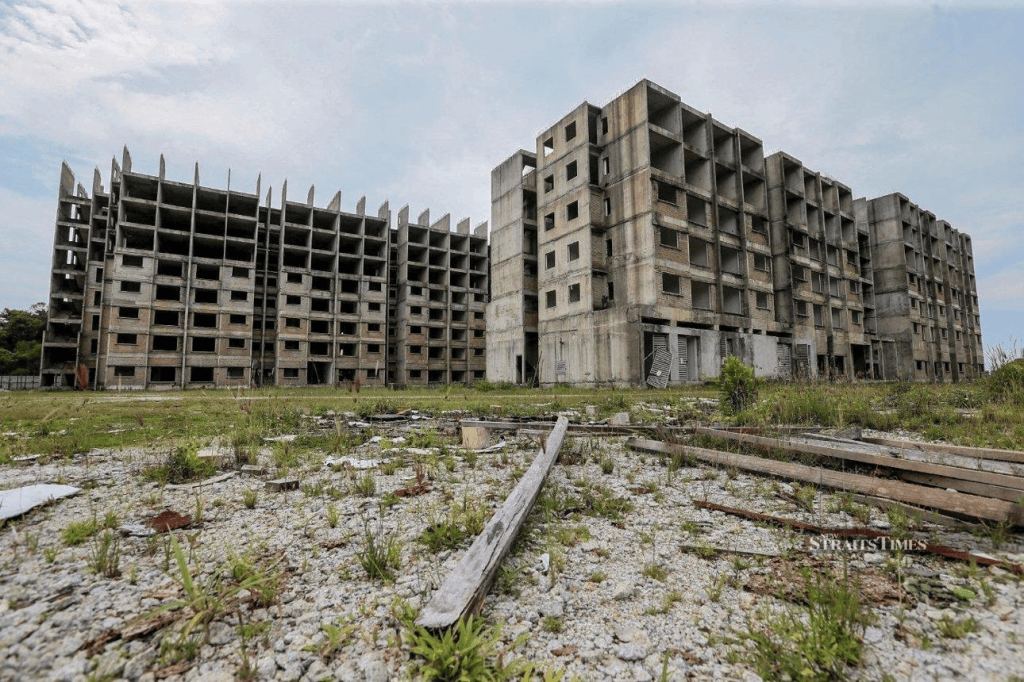
The government also proposed stamp duty relief for transactions involving the rehabilitation of abandoned housing projects. Prime Minister’s Office Malaysia
Sources: Prime Minister’s Office of Malaysia — Budget 2027 speech · The Star — First-home stamp duty announcement
Why It Matters
Stamp duty can be a significant upfront expense for a homebuyer.
Reducing this cost could make it easier for some first-time buyers to complete a purchase, particularly those already stretching their savings to cover the deposit, legal fees, moving expenses and basic furnishing.
However, there is an important distinction between making a home cheaper to purchase and making it affordable to own.
Monthly instalments, maintenance charges, insurance, repairs and emergency savings remain part of the equation.
Miichael’s Review
I welcome measures that reduce the barriers to homeownership.
But I would not advise anyone to rush into buying a property simply because an incentive is available.
Before making a decision, buyers should ask themselves three questions:
- Can I comfortably afford the monthly repayments?
- Will I still have sufficient cash reserves after completing the purchase?
- Is this the right property for my needs, location and long-term plans?
The proposed exemption is useful, but the final eligibility rules and implementation details must also be checked.
My view: A government incentive should improve a sound property decision, not become the reason for making one.
🇲🇾 STORY 2 — RM20 Billion Housing Guarantee to Support 80,000 First-Time Buyers
What Happened?
Budget 2027 provides for housing financing guarantees of up to RM20 billion through the Housing Credit Guarantee Scheme (SJKP), with the aim of assisting 80,000 first-time buyers.
The scheme particularly targets people who may struggle to obtain conventional housing financing because they are self-employed or do not receive a fixed monthly income.
The government also announced nearly RM1 billion for housing initiatives, including Rumah Mesra Rakyat and Program Residensi Rakyat. Four new housing projects were announced for Kulai in Johor, Nilai in Negeri Sembilan, Paya Rumput in Melaka and Pertang Valley in Terengganu. Prime Minister’s Office Malaysia
Sources: Prime Minister’s Office of Malaysia — Budget 2027 housing measures · The Star — RM20 billion SJKP guarantee
Why It Matters
This addresses one of the practical challenges facing Malaysian homebuyers: access to financing.
Some self-employed individuals have sufficient income to meet repayments but find it difficult to satisfy conventional lending requirements because their earnings fluctuate or are documented differently.
A financing guarantee can help eligible applicants access housing loans. However, it does not mean every applicant will automatically receive loan approval.
There is also a wider issue to consider.
Helping more people obtain financing is only part of the solution. The market must also provide homes that buyers can genuinely afford, in locations that suit their work, family needs and daily routines.
Miichael’s Review
This measure is particularly relevant to younger buyers, entrepreneurs and people with non-traditional income arrangements.
However, I would like to see how the scheme works in practice.
How accessible will it be? What are the eligibility conditions? Will the homes available to these buyers match their budgets?
Financing access and housing affordability must work together.
Otherwise, we may help people qualify for loans without necessarily helping them find suitable homes.

🇲🇾 STORY 3 — Sabah Pan Borneo Highway: Infrastructure Delivery Matters More Than Announcements
What Happened?
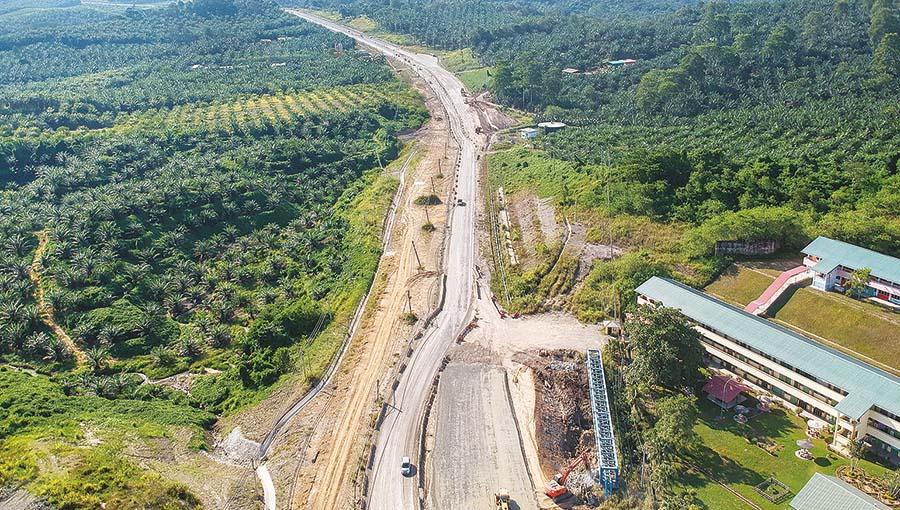
The Auditor-General’s Report 2/2026, tabled on 5 October, highlighted cost increases and delivery problems affecting Sabah Pan Borneo Highway Phase 1.
The report stated that contract costs had risen to RM18.96 billion, compared with the original RM17.91 billion.
As at 31 March 2026, only 4 of the 35 work packages had been completed.
The report also identified site-readiness and land-acquisition problems, RM513.99 million in variation orders approved beyond authorised limits, and RM41.37 million in delayed utility claims. These are figures reported in the audit, and the completion count relates to the position at the stated date. EdgeProp
Source: EdgeProp Malaysia — 5 October property and infrastructure digest, reporting on the Auditor-General’s Report 2/2026.
Why It Matters
Infrastructure can influence property values by improving access to employment, commercial centres, tourism destinations and essential services.
But there is a difference between a project being announced, a project being constructed and a project being completed and operational.
Delays can postpone the economic benefits that were expected to support surrounding areas.
For buyers and investors, this means that a property’s location should be evaluated against infrastructure that is actually available, as well as projects that remain under construction.
Miichael’s Review
When evaluating property near a major infrastructure project, I would not rely on a developer’s location map alone.
I would examine:
- Which sections of the road are already operational?
- How much travel time will actually be saved?
- Are employment opportunities and commercial activities growing nearby?
- Will utilities and public services be sufficient for future development?
- Is the property priced as though future improvements have already been delivered?
Infrastructure creates potential, but execution determines when—and whether—that potential becomes real.
This is an important lesson for property buyers in every state, not just Sabah.
🌏 INTERNATIONAL PROPERTY WATCH
🇦🇺 STORY 4 — Australia: Housing Prices Fall for a Sixth Consecutive Month
What Happened?
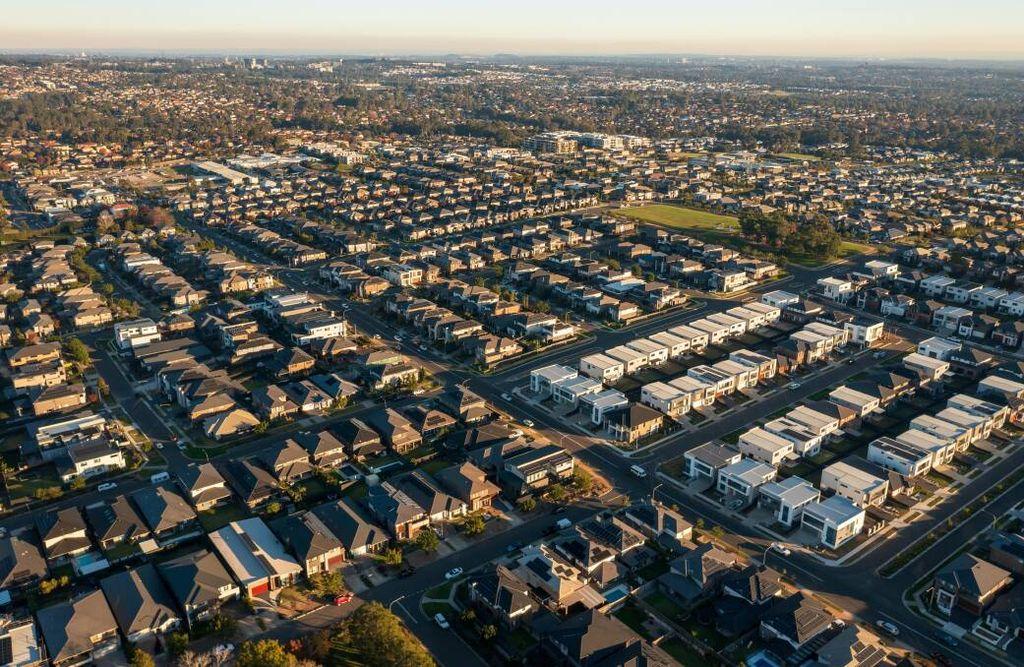
National Australia Bank’s October Housing Monitor, published on 7 October, reported that dwelling prices across Australia’s combined capital cities fell 1.2% month-on-month in September 2026.
This marked the sixth consecutive monthly decline. Prices were 6.4% below their March 2026 peak.
NAB also revised its forecast to an 8% decline in capital-city dwelling prices over 2026, with a possible peak-to-trough decline of 11%.
The median time a property spent on the market increased to 41 days, the highest level since late 2020. These figures reflect NAB’s analysis and forecasts, not guaranteed future outcomes. NAB
Source: National Australia Bank — October 2026 Housing Monitor
Why It Matters
The downturn has broadened beyond the markets that initially showed the greatest weakness.
For buyers, falling prices and longer selling periods may create more room for negotiation. Sellers may need to be more realistic about pricing and the time required to secure a buyer.
But a declining market does not automatically mean every property is a bargain.
A property bought at a lower price can still be a poor investment if rental demand is weak, financing costs are high or the local economy deteriorates.
Miichael’s Review
I would not look at falling prices in isolation.
For investors, the more important questions are:
- Is the purchase price attractive relative to comparable properties?
- Can rental income reasonably cover the holding costs?
- Is the local employment base resilient?
- Can the investment withstand a longer period of weak prices?
- Would I still want to own this property if the market took several years to recover?
The best buying opportunity is not necessarily when prices fall the most. It is when the price, risk and long-term fundamentals make sense together.
🇬🇧 STORY 5 — United Kingdom: Buyer Confidence Weakens While Rental Demand Remains Firm
What Happened?
The Royal Institution of Chartered Surveyors (RICS) published its September UK Residential Market Survey on 6 October.
The survey reported:
- New buyer enquiries: Net balance of -22%, compared with -18% in August.
- Agreed sales: Net balance of -18%, compared with -16% in August.
- House-price sentiment: Net balance of -32%, compared with -28% in August.
- Tenant demand: Net balance of +23%.
- Expected rental growth: Net balance of +37% for the following three months.
The figures suggest weaker buyer sentiment and sales activity alongside continued rental demand. RICS
Source: RICS — UK Residential Survey, September 2026
Why It Matters
The sales and rental markets do not always move in the same direction.
In the UK, buyers were becoming more cautious while rental demand remained comparatively strong.
One important clarification: RICS net balances measure the difference between respondents reporting increases and those reporting decreases. A -32% house-price balance does not mean that actual house prices fell by 32%.
For property investors, rental demand is only one part of the equation. Purchase price, mortgage costs, taxes, maintenance, regulation and net rental yield all matter.
Miichael’s Review
This is a good example of why property investors should separate capital-growth expectations from rental fundamentals.
A market may offer rental opportunities even when transaction activity is weak. But strong rental demand alone does not guarantee a good investment.
Investors need to understand what remains in their pocket after financing, maintenance, taxes and other expenses.
Rental demand is a useful signal. Net returns and the ability to sustain ownership are what ultimately matter.
WORTH WATCHING
Over the coming weeks, I would pay particular attention to four developments.
1. Malaysia’s Budget 2027 implementation
The proposed stamp duty exemptions are encouraging, but the final eligibility conditions and implementation documents will be important. Buyers should not assume that every transaction automatically qualifies.
2. Financing access for first-time buyers
The RM20 billion SJKP guarantee is a substantial measure. The next question is how effectively it translates into approved financing and sustainable homeownership.
3. Infrastructure execution in Malaysia
The Pan Borneo audit highlights the importance of monitoring actual construction progress, costs and completion dates. Future property decisions should be based on realistic delivery expectations.
4. International borrowing costs and market conditions
Australia and the UK show why buyers and investors must continue to monitor financing costs, transaction activity, prices and rental conditions rather than relying on a single market headline.
MY TAKEAWAY THIS WEEK
This week reinforces a principle I have always believed in: a property decision should never be based on price alone.
Malaysia is trying to reduce barriers to homeownership, but buyers still need sustainable financing and suitable homes.
Australia reminds us that prices can continue falling longer than investors expect.
The UK shows that sales and rental conditions can move in different directions.
And the Pan Borneo audit reminds us that infrastructure announcements only create lasting value when projects are delivered.
For buyers and investors, the questions remain the same:
- Can I afford it comfortably?
- Is there genuine demand?
- Does the location have the infrastructure and economic activity to support it?
- Do the numbers work under conservative assumptions?
- Would this still be a sensible decision if the market did not rise as quickly as I hoped?
Look beyond the price. Understand the fundamentals before making the decision.
Miichael Yeoh
PROPERTY STRATEGIST
www.miichaelyeoh.com