31 October – 6 November 2026
MALAYSIA · PROPERTY · GLOBAL MARKETS
This week’s roundup highlights an important message for the property industry: market activity does not automatically translate into successful property sales. Financing, affordability, product suitability and actual demand remain critical.
Malaysia saw fresh foreign participation in residential development, a rebound in property loan applications and renewed attention on the country’s unsold housing stock. Internationally, Singapore’s REIT sector showed encouraging rental performance, while institutional capital continued flowing into Dublin’s prime office market.
Malaysia – 3 stories
1. Malaysia’s property overhang: Why unsold homes remain a concern

What Happened
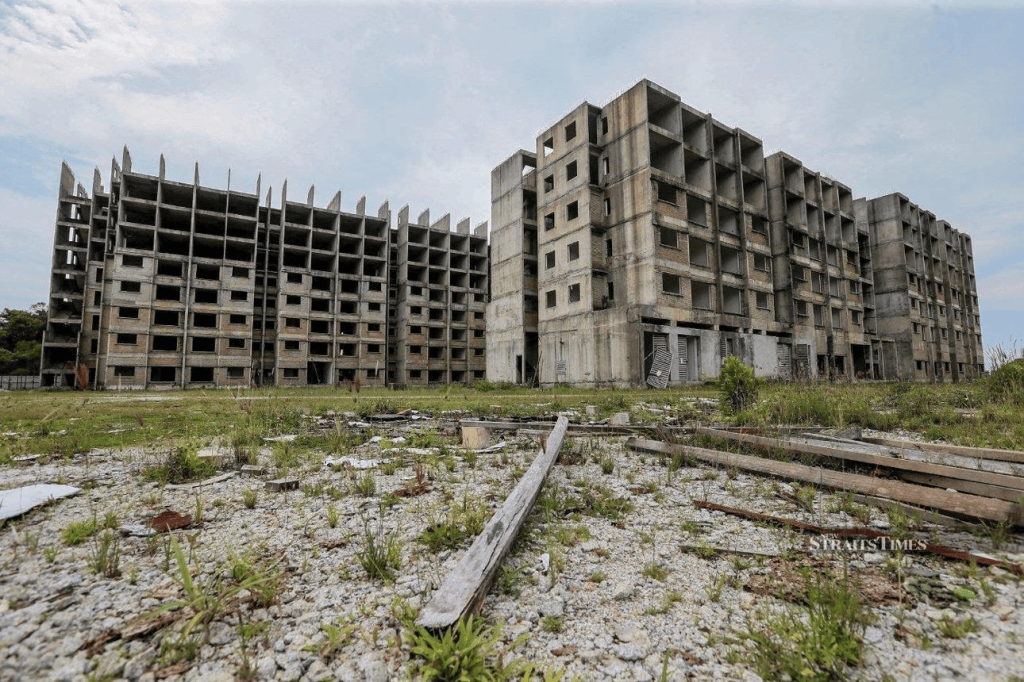
A report published by The Star on 2 November highlighted the continuing challenge of unsold completed properties in Malaysia.
According to JLL Malaysia, Kuala Lumpur had 6,343 completed, unsold serviced apartments valued at approximately RM6.41 billion, while Johor recorded 9,946 units valued at approximately RM6.29 billion.
One concern is the mismatch between the type of homes being developed and the needs of potential buyers. Some serviced apartments, particularly smaller units of around 500 sq ft, were designed with short-term accommodation or investment demand in mind. They may not necessarily meet the needs of young families looking for practical homes close to their workplaces. The Star
Why It Matters
The overhang issue is not simply about having too many properties in the market. It is about whether the available properties match what buyers can afford and genuinely need.
A development can have attractive facilities, a good marketing campaign and a prominent location, but still struggle if the product does not fit its target market.
Miichael’s Review
I have always believed that property development must begin with understanding the market, not simply identifying available land and deciding what to build.
Before launching a project, developers need to understand the local population, household income, employment patterns, affordability and competing supply.
The number of units sold during a launch is also not the only measure of success. We need to look at whether buyers can secure financing, whether the property meets their needs and whether there is genuine demand in the secondary and rental markets.
This is precisely why buyer education and proper property assessment matter.
Source: The Star – Targeted solutions to property overhang
2. Japanese developer Mitsui Fudosan joins Paramount’s 458-unit Kuala Lumpur project
What Happened
Japanese real estate group Mitsui Fudosan announced on 4 November that it would participate in The Ashbourne, a residential development in Ampang, Kuala Lumpur, together with Malaysian developer Paramount Corporation.
The project comprises:
- 458 residential units.
- A site area of approximately 161,179 sq ft.
- Unit sizes of approximately 1,491 to 2,661 sq ft.
- A 42-storey development.
- Approximately six minutes’ walk from Ampang Park LRT and MRT stations.
- Planned construction commencement in November 2026 and completion in 2030.
- Sales scheduled to begin in December 2026.
Mitsui Fudosan stated that its participation brings its Malaysian involvement to 12 projects in total, including residential, commercial, rental housing and logistics developments. News Releases
Why It Matters
This is a positive indication of continued foreign developer confidence in Malaysia’s property market.
More importantly, the partnership combines an established international developer’s experience with a local developer’s market knowledge.
The project’s location, proximity to public transport and relatively spacious unit sizes are also worth noting.
However, foreign participation alone does not guarantee project success. Pricing, buyer profile, product positioning and market absorption will still determine its performance.
Miichael’s Review
I see this as an encouraging development for the Malaysian property industry.
International developers bring different perspectives, capital, design approaches and operating experience. These partnerships can raise standards and introduce new ways of looking at residential development.
But I would still ask the same questions that I ask about every project:
Who is the intended buyer? Is the pricing supported by the surrounding market? Is there sufficient demand for the unit sizes being offered? And what will the resale and rental prospects look like?
A good developer and a good location are important. But buyers still need to assess the property based on its fundamentals.
Source: Mitsui Fudosan – Participation in The Ashbourne project
3. Property loan applications rebound, but approvals tell a different story

What Happened
According to MBSB Research, Malaysia’s property loan applications increased by 2.6% year-on-year to RM502.7 billion in the first nine months of 2026.
However, approved property loans declined by 0.6% to RM211.2 billion over the same period.
September showed a stronger improvement:
- Property loan applications increased 12.6% year-on-year.
- Approved loans rose 7.2%, following a 13.3% decline in August.
The figures suggest that buyer interest may be stabilising, but the overall approval trend remains a concern. EdgeProp.my
Why It Matters
This is an important distinction for both buyers and developers.
Loan applications represent interest and intention. Loan approvals indicate how much of that interest has successfully progressed through the financing process.
A buyer may like a property, submit an offer and even pay a booking fee. But if the financing is not approved, the transaction may not proceed.
For developers, this means that sales performance should not be assessed only by bookings or expressions of interest.
Miichael’s Review
This is one area I believe the property industry needs to pay much more attention to.
Understanding mortgage eligibility should be part of the buyer discovery process, not something buyers only start thinking about after selecting a property.
Before committing, buyers should understand their credit profile, debt commitments, income documentation, financing eligibility and affordability.
For developers and sales teams, educating buyers on financing can also help improve the quality of enquiries and reduce avoidable booking cancellations.
A property purchase is not just about whether someone wants to buy. It is also about whether that person is financially ready and able to complete the purchase.
Source: EdgeProp – Property loan rebound leaves developers facing mixed outlook
International – 2 stories from 2 countries
4. Singapore REITs: Positive rental reversions offer encouraging signs

What Happened
Singapore’s REIT sector reported encouraging rental trends during the latest reporting season.
According to the Singapore Exchange, of the 20 trusts reporting numerical rental reversion figures, 19 recorded at least one positive portfolio, market or segment measure.
The positive rental reversions were seen across several property categories, including:
- Retail
- Office
- Industrial
- Logistics
- Data centres
- Rental housing
For example, Suntec REIT recorded third-quarter 2026 rental reversions of 7.3% for Singapore office space and 11.2% for Singapore retail.
CapitaLand Integrated Commercial Trust reported 4.6% for retail and 7.1% for office over the first nine months of 2026. Singapore Exchange (SGX)
Why It Matters
Rental reversions indicate that landlords are securing higher rents when existing leases are renewed or new leases are signed.
This is an encouraging sign of tenant demand and the ability of certain properties to maintain or improve their income-generating potential.
However, positive rental reversions do not automatically mean higher distributions to investors. Occupancy, financing costs, currency movements and acquisitions also affect REIT performance.
Miichael’s Review
I find this particularly interesting because it reminds us that property investment is ultimately about income sustainability.
When evaluating an investment property, we should not focus only on its purchase price or potential capital appreciation.
We should also examine the rental market, tenant demand, occupancy levels, rental renewals and operating costs.
A property that consistently attracts tenants and maintains rental income may have stronger fundamentals than one that relies heavily on future price appreciation.
For investors, the quality of income matters.
Source: Singapore Exchange – S-REITs: Positive Rental Reversions, Mixed Distributions
5. Ireland: €100 million investment strengthens Dublin’s prime office development pipeline
What Happened
Irish property investment company IPUT Real Estate announced a further €100 million equity commitment from the Ireland Strategic Investment Fund (ISIF) on 2 November.
The investment will support the development of 29 Earlsfort Terrace in Dublin, forming part of IPUT’s wider €500 million prime office development programme.
Other highlights include:
- IPUT raised more than €400 million in new equity during 2026.
- It secured €300 million in new revolving credit facilities.
- Its portfolio includes 30 prime assets totalling more than 2 million sq ft in Dublin city centre.
- The development pipeline includes 350,000 sq ft of office space across two projects.
The company said demand for high-quality, well-equipped office space in Dublin remains strong, with prime supply struggling to keep pace. IPUT
Why It Matters
This is a good example of institutional capital supporting property development where investors see a clear demand and supply opportunity.
Rather than investing simply because a particular market is attractive, the funding is directed towards a specific type of asset: high-quality office space in a location where the developer believes demand exceeds available supply.
Miichael’s Review
What I find interesting is the emphasis on asset quality and actual occupier demand.
The office market has changed significantly over the years. Not every office building will perform equally well.
Businesses are increasingly selective about location, facilities, accessibility, sustainability and the overall working environment.
This reinforces an important investment principle: not all properties within the same market have the same potential.
The real opportunity often lies in identifying the right asset, in the right location, serving the right market.
Source: IPUT Real Estate – €100 million investment commitment
Worth Watching
A few other developments deserve attention beyond our five main stories:
1. Malaysia’s national planning direction: The Fifth National Physical Plan (RFN5) sets land-use priorities through 2040, while the Third National Urbanisation Policy (DPN3) sets out 90 actions through 2035. These frameworks cover housing, transport, climate resilience and urban development. EdgeProp
2. Malaysia’s industrial property pipeline: Daiso opened its RM1.2 billion global distribution centre in Pulau Indah, expected to serve 27 countries and territories. This is a tangible example of industrial and logistics investment moving into operation. EdgeProp
3. Penang’s cross-sea LRT connection: TRC Synergy confirmed a 30% participation interest in the RM2.69 billion contract for the Macallum–Penang Sentral extension. The proposed connection could improve island–mainland connectivity, although delivery remains subject to construction and commissioning. EdgeProp
My Takeaway This Week
There is a common thread running through this week’s property news.
Property success is not determined by supply, launches or marketing activity alone. It depends on whether a property meets genuine market demand.
Malaysia’s unsold housing stock reminds us that product-market mismatch can create long-term challenges. The mortgage figures show that buyer interest must be supported by financing ability. Meanwhile, the international stories demonstrate the importance of rental performance, asset quality and occupier demand.
For developers, this means understanding the market before building.
For investors, it means looking beyond projected returns.
For buyers, it means doing proper research before committing.
My approach remains simple:
Discover Better. Decide Smarter.
Disclaimer
This article is intended for general information and educational purposes only. It does not constitute financial, investment, legal or property purchasing advice. Readers should conduct their own due diligence and seek advice from qualified professionals before making any property-related decisions.
From the desk of
Miichael Yeoh
Property Strategist